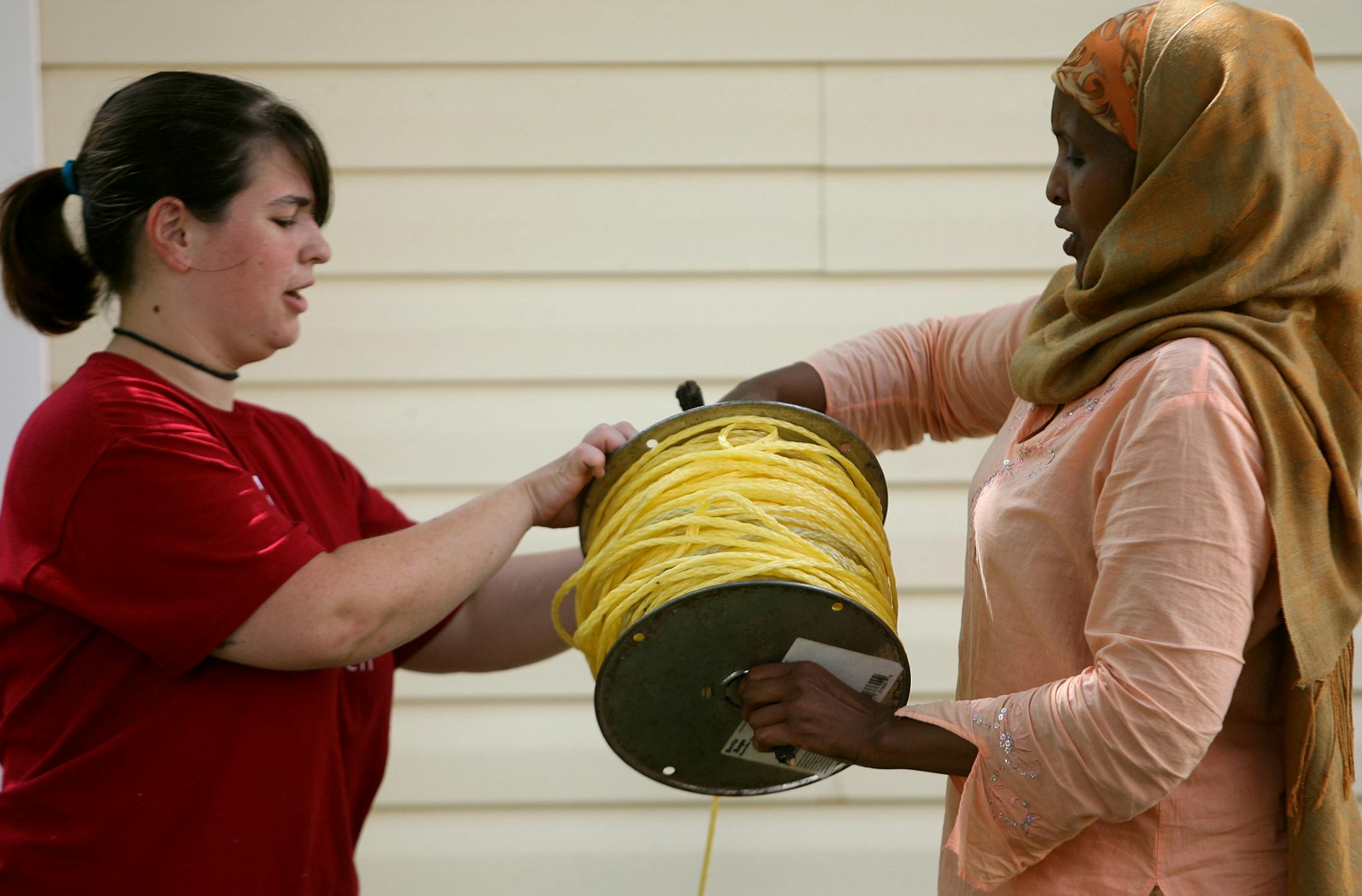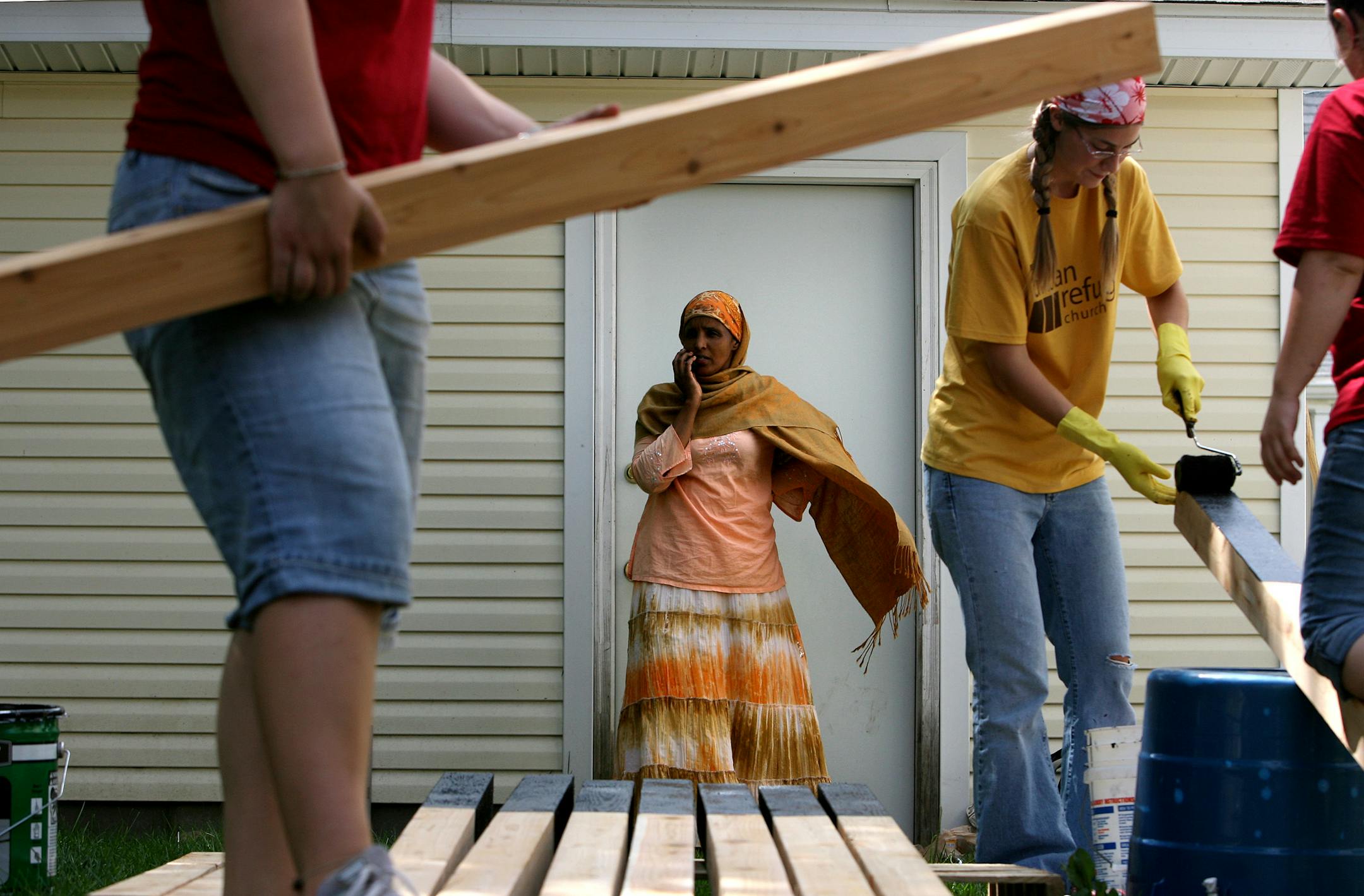
Steve and Alice Mohror are on vacation this week, but they haven't ventured far from their south Minneapolis home. It has nothing to do with one of those "staycations" motivated by a need to save money. Theirs is a higher calling: using their free time to help others.
"I want to give back to this neighborhood because it's my neighborhood," said Steve Mohror, part of a crew of volunteers building a privacy fence for a homeowner who was trying to put some distance -- both physical and symbolic -- between her well-maintained home and the abandoned, foreclosed house next door.
"I drive down these streets every day," Mohror continued. "Now when I drive by this place, I'm going to be able to say, 'I was there with a crew and helped make it better.'"
The Mohrors are part of a movement that's been around for decades, but has skyrocketed in the past few years, especially since Hurricane Katrina: using a week -- or more, in some cases -- of vacation to do volunteer labor for the less fortunate.
They're called "vacations with a purpose" or short-term mission trips. Once primarily the purview of church groups, they now also are arranged by service organizations reaching out to individuals and their families.
According to the Travel Industry Association, 2.1 million Americans will take "vacations with a purpose" this year, contributing the equivalent of $6 billion in labor. That number has doubled in five years, said Roger Peterson, CEO of STEM (Short-Term Evangelical Missions) International.
"In 2003, we were at about 1 million," said Peterson, who founded the Bloomington-based company in 1985 and often serves as a national spokesman for the industry. "Hurricane Katrina is responsible for much of that upsurge. On CNN and Fox [TV news], it was all Katrina, all the time, and people wanted to help."
In the process, a lot of people discovered that there's something addictive about it.