Usually, we recycle AFTER we publish

September 22, 2008 at 10:31PM
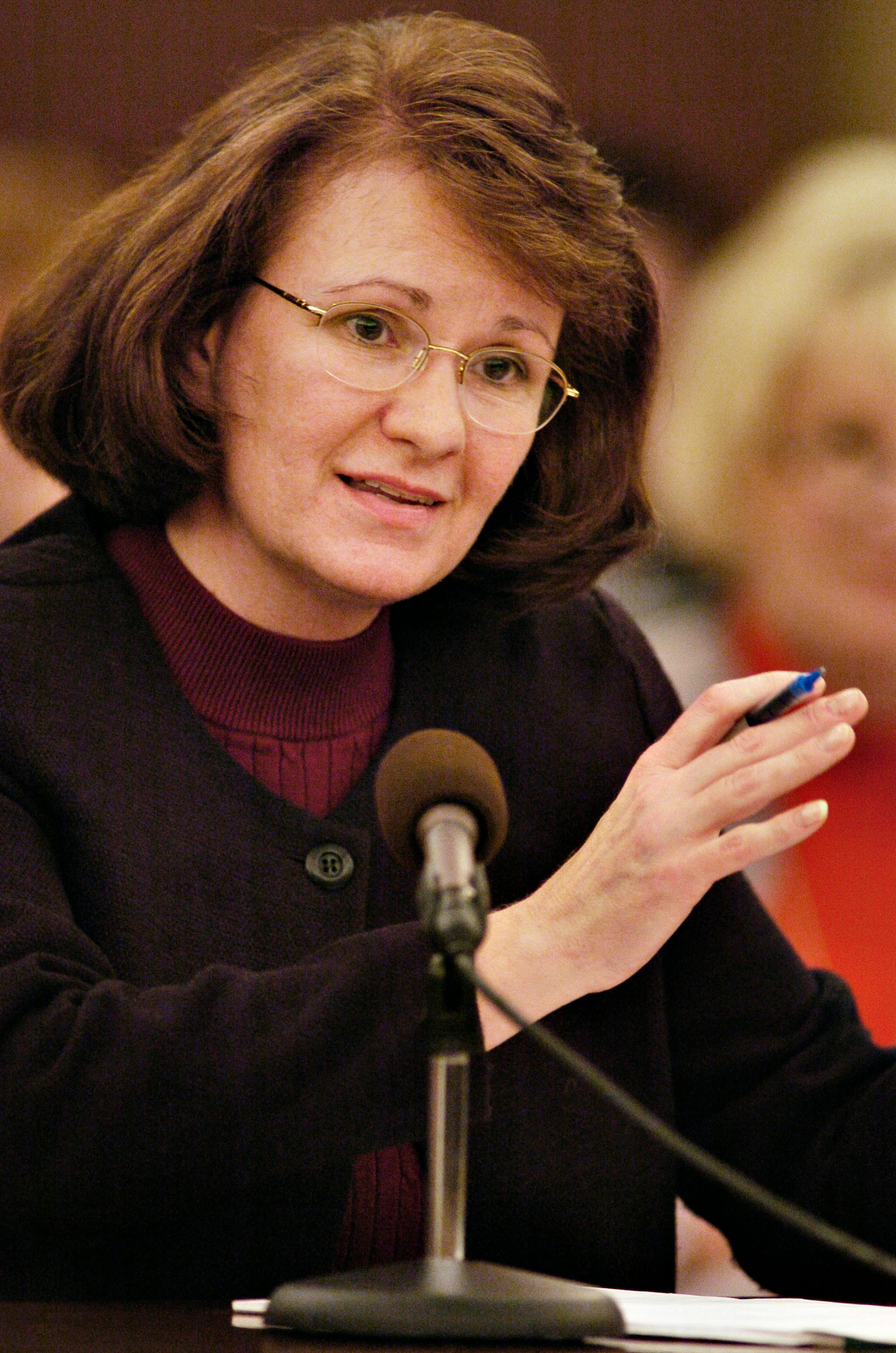
David Brewster_Star Tribune_Thursday_4/1/04_StateCapitol,St.Paul - - - Education Commissioneer Cheri Pierson Yecke speaks to the Edcation Committee (chaired by Sen. Kelley) considering her confirmation as commissioneer.
Former Education Commissioneer Cheri Pierson Yecke (Star Tribune/The Minnesota Star Tribune)

Monday morning brought an e-mail from Minnesota's former education commissioner, Cheri Pierson Yecke, now dean of graduate programs at Harding University in Arkansas. Yecke and I had a cordial relationship when she was in Minnesota, based in part on our shared interest in the "Little House" books. (Yes, "Little House." You want to step outside?)

"OK, so I can't help myself," Yecke wrote. "When I have something to say I have to let it out. See attached, and I hope all is fine with you, my fellow 'Little House' fan."

Attached was an op-ed piece criticizing the leftish-commentator crowd for bullying and belittling conservative figures, from Sarah Palin to Linda Tripp, on the basis of their appearance. The lead paragraphs were catchy:

I replied to Yecke that I'd like to use her piece and recommended that she see the "Little House" musical. Then I set to work editing her article. It needed little work; Yecke is a good and persuasive writer. For help with the biographical tagline that would appear at the end of the piece, I went to the Star Tribune's electronic archive and pulled up her earlier contributions for comparison.

And my eye fell on a lead from 2005:

Uh-oh.

I sent Yecke a new e-mail withdrawing my acceptance because we had already published the piece, in 2005.

"No, it is different," she replied. "I have changed it and updated it to include Cindy McCain and Sarah Palin. Is it still too close to the original??"

Huh? I had assumed there'd been some mistake, that she'd kept an unfinished draft in her computer or something. But she had meant to do it? I quickly read both versions; this one does refer to Palin and Mrs. McCain, and it drops the original's mention of a Star Tribune columnist. Those are about the only differences I could see.

The dean of graduate programs at Harding University would change a couple of paragraphs in a 992-word essay and turn it in as new work? The former commissioner of education for the state of Minnesota would take a shortcut that would get any 10th-grader in trouble? It can't be.

This is how I felt when I found out Laura Ingalls Wilder had a ghostwriter.

Read the whole articles and decide for yourself. Here are the complete texts of, first, the 2008 version:

When I was a seventh grade teacher, I confiscated a note written by a girl named Jennifer. It was titled "Everyone Hates Melissa" and Jennifer was collecting signatures. Melissa, a quiet and gentle girl who was the smartest in the class, was described as "a nerd," "ugly," and "weird." Her hair, her clothes, her looks were brutally criticized – but not her demeanor or her academic skill. After all, there was nothing to criticize there. Too often we see this same seventh grade behavior among adults. While healthy civic discourse involves disagreement on issues of policy, too often people are prone to bully and harass their opponents with attacks on physical appearances when they are unable to articulate a valid and logical opposing argument.

Consider the criticisms of Sarah Palin, John McCain's vice presidential running mate. Comments from the Boston Herald are indicative of the treatment she is receiving from the mainstream media: "Palin looks one humid day away from fronting a Kiss cover band." Her hairstyle, according to one article, "is about 20 years out of date, which goes to show how off she might be on current events." The writer later smugly pens, "What's her position on scrunchies vs. banana clips?"

Has a man ever been subjected to such demeaning comments about his appearance?

Although Palin is the most current target, she is by no means the only one. Sadly, bullying and belittling, behaviors that would send a second grader to the principal's office, are alive and well among adults in America.

Consider the criticisms hurled at the family of Supreme Court justice John Roberts. A fashion maven in the Washington Post looked down her nose and mocked the family, when dressed in their Sunday best, as "a trio of Easter eggs, a handful of Jelly Bellies, three little Necco wafers." They were then duly admonished with a sniff: "Please select all attire from the commonly accepted styles of this century."

Condoleezza Rice, our dignified Secretary of State who started college at age 15 and earned a doctorate in her early 20s, is one of the most powerful women in the world. Nonetheless, she has been mocked and ridiculed – not for her intellect or knowledge of international diplomacy – but for her hair. It has been likened to that of June Cleaver, but her critics are not content to stereotype her as a dowdy relic from the supposedly subservient 1950s. She has also been criticized as a "dominatrix" who oozes "sex and power" for wearing fashionable boots and a fitted black coat.

Katherine Harris, the Florida Secretary of State whose crime was interpreting Florida law in the 2000 election, was described by TIME magazine columnist Margaret Carlson as Cruella De Vil. An article about Harris in the New York Times was subtitled "Mascaragate 2000," and the Washington Post suggested that she "applied her makeup with a trowel."

And then there is Linda Tripp, whose appearance became a national joke. She looked like anyone you might bump into at the grocery store, but suddenly her looks and her weight became fodder for late night comedians. Her role in revealing President Clinton's affair with Monica Lewinsky would have made her a villain in the eyes of far-left partisans regardless of what she looked like, but for some reason her lack of a fashion-model appearance gave critics self-permission to attack with a viciousness that should have been a media embarrassment.

The attacks were relentless and clearly demoralizing to Tripp. In one interview she said: "I didn't realize how ugly I was until I saw the pictures. I was horrified as well as the rest of the nation."

The attacks must have hurt Tripp deeply, as she actually underwent major plastic surgery to remake her physical appearance. The result? Only more ridicule. According to one person: "It looks like she's had a head transplant." And that was a friend. Clearly, the stigma of "bad looks" remains even after a physical transformation.

The fact that women fought for many years to be taken seriously in the arenas of government and public policy makes the "lookism" attacks on successful women reveal a deep double standard. And where are the feminists? Their silence speaks volumes about their convictions and partisan leanings. After all, it is mainly conservative women who have been the victims of this sort of media slashing. Sad to say, with few exceptions, the circling vultures are left-leaning women.

Just this week, left winger Sandra Bernhard called Cindy McCain a "Barbie doll hooker" and after describing Sarah Palin as a "whore" who wears "cheap f*** new vision cheap a*** plastic glasses," she warns her to stay away from Manhattan lest she be "gang raped by blacks."

Such is political dialogue as we enter the twenty-first century.

Has our culture become so shallow, and our sensibilities so numb, that we will accept from adults the sort of vicious behavior that we would never accept from our children?

As for Jennifer, we ran into one another at a football game after she was out of college, and she told me there was something she had wanted to say for years. You see, on that day so long ago, after the rest of the class had left, I had Jennifer read her ugly note aloud – but I made her substitute "Jennifer" for every time she had written "Melissa."

She told me that this incident was the turning point in her life. From that point forward, she was determined to become a teacher so that she could prevent such bullying as she had once dished out.

I guess that's the difference between Jennifer and so many of the current "mean girls" in the media: Jennifer grew up.

And the 2005 version:

When I was a seventh-grade teacher, I confiscated a note written by a girl named Jennifer. It was titled "Everyone Hates Melissa," and Jennifer was collecting signatures.

Melissa, a quiet and gentle girl who was the smartest in the class, was described as "a nerd," "ugly" and "weird." Her hair, her clothes, her looks were brutally criticized - but not her demeanor or her academic skill. After all, there was nothing to criticize there.

Too often we see this same seventh-grade behavior among adults. While healthy civic discourse involves disagreement on issues of policy, too often people are prone to bully and harass their opponents with attacks on physical appearances when they are unable to articulate a valid and logical opposing argument.

Consider the criticisms of the president's new nominee to the Supreme Court. John Roberts has impeccable legal credentials, so what can the pundits attack? Why, the clothing of his wife and children, of course. A fashion maven in the Washington Post looked down her nose and mocked the family as "a trio of Easter eggs, a handful of Jelly Bellies, three little Necco wafers." They were then duly admonished with a sniff: "Please select all attire from the commonly accepted styles of this century."

Condoleezza Rice, our dignified secretary of state who started college at age 15 and earned a doctorate in her early 20s, is one of the most powerful women in the world.

Nonetheless, she has been mocked and ridiculed - not for her intellect or knowledge of international diplomacy, but for her hair. It has been likened to that of June Cleaver, but her critics are not content to stereotype her as a dowdy relic from the supposedly subservient `50s. She has also been criticized as a "dominatrix" who oozes "sex and power" for wearing fashionable boots and a fitted black coat.

Katherine Harris, the Florida secretary of state whose crime was correctly interpreting Florida law in the 2000 election, was described by Time magazine columnist Margaret Carlson as Cruella De Vil. An article about Harris in the New York Times was subtitled "Mascaragate 2000," and the Washington Post suggested that she "applied her makeup with a trowel."

And then there is Linda Tripp, whose appearance became a national joke. She looked like anyone you might bump into at the grocery store, but suddenly her looks and her weight became fodder for late-night comedians.

Her role in revealing President Bill Clinton's affair with Monica Lewinsky would have made her a villain in the eyes of far-left partisans regardless of what she looked like, but for some reason her lack of a fashion-model appearance gave critics self-permission to attack with a viciousness that should have been a media embarrassment.

The attacks were relentless and clearly demoralizing to Tripp. In one interview she said: "I didn't realize how ugly I was until I saw the pictures. I was horrified as well as the rest of the nation."

Tripp underwent major plastic surgery to remake her physical appearance, only to receive more ridicule. According to one person: "It looks like she's had a head transplant." And that was a friend. Clearly, the stigma of "bad looks" remains even after a physical transformation.

The hateful barbs being hurled at Star Tribune columnist Kathy Kersten from sources such as City Pages fall right into this genre: "Her online mugshot vaguely reassembles the witch from the Wizard of Oz."

Sadly, bullying and belittling by adults is alive and well in Lake Wobegon.

The fact that women fought for many years to be taken seriously in the arenas of government and public policy makes the "lookism" attacks on successful women reveal a deep double standard - not of men against women, but of women against their own gender.

Where are the feminists? Their silence speaks volumes about their convictions and partisan leanings. After all, it is mainly conservative women who have been the victims of this sort of media slashing. Sad to say, with few exceptions, the circling vultures are left-leaning women.

Has our culture become so shallow, and our sensibilities so numb, that we will accept from adults the sort of vicious behavior that we would never accept from our children?

As for Jennifer, we ran into each other at a football game after she was out of college, and she told me there was something she had wanted to say for years. You see, on that day so long ago, after the rest of the class had left, I had Jennifer read her ugly note aloud - but I made her substitute "Jennifer" for every time she had written "Melissa."

She told me that this incident was the turning point in her life. From that point forward, she was determined to become a teacher so that she could prevent such bullying as she had once dished out.

In other words, Jennifer grew up. It's a shame so many people in media and politics haven't.

about the writer

about the writer

Eric Ringham

More from Opinion

See More
card image
Minnesota Historical Society

It’s become something of a tradition, on New Year’s Day, to reprint old letters to the editor from Star Tribune days gone by.

card image
card image