

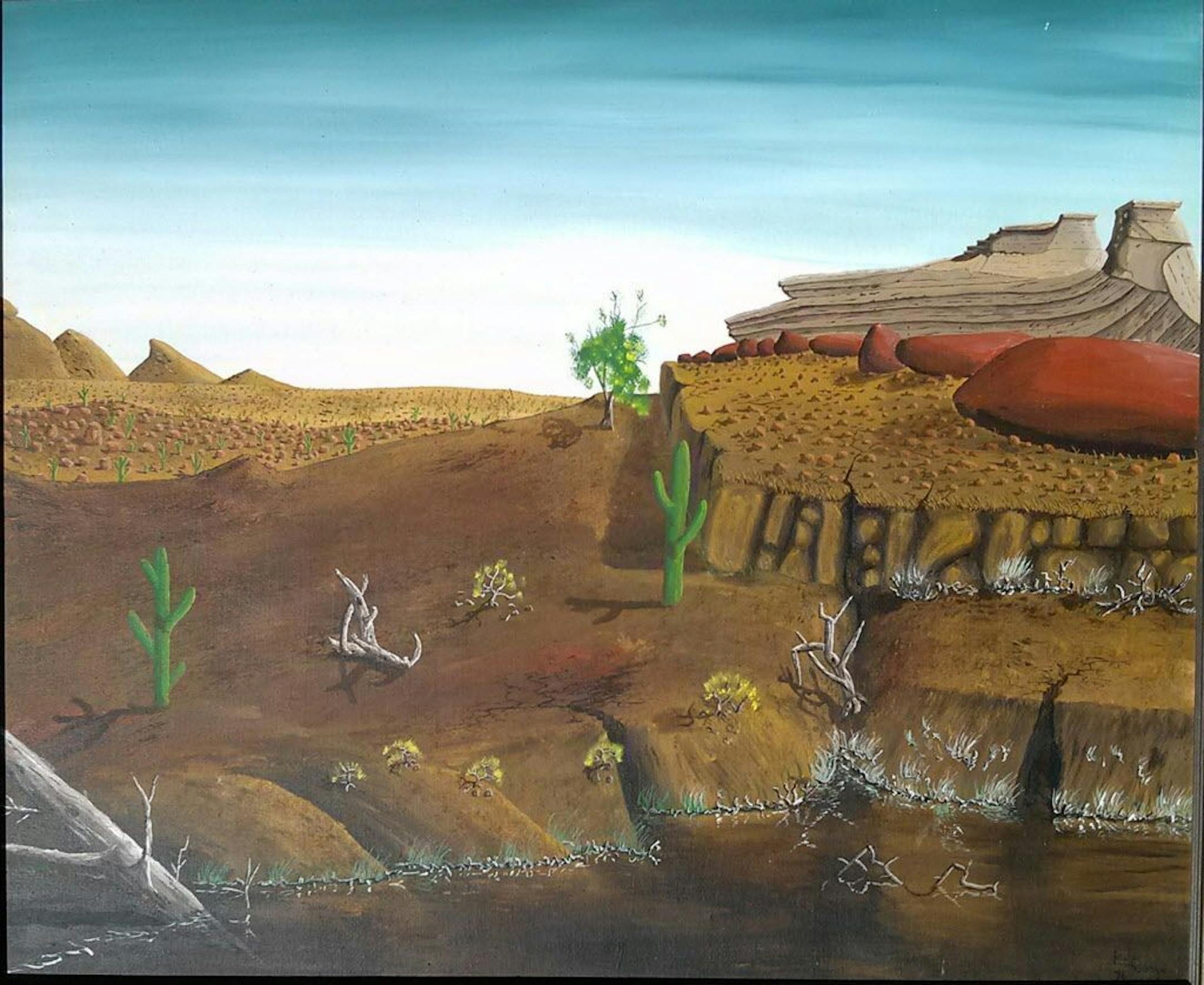
CHICAGO — A U.S. judge said Tuesday that a celebrated artist was right when he insisted he didn't paint a work now owned by a retired prison worker, a finding that likely ensures the piece will now be worth a fraction of the previous estimated value of $10 million or more.
The ruling came at the end of an unusual bench trial in Chicago that pitted Scottish-born Peter Doig against Canadian Robert Fletcher, who paid just $100 in the 1970s for the desert landscape painting and had hoped for a windfall of millions of dollars in retirement.
Authenticity disputes typically arise long after an artist dies, not when the artist is alive and flatly denies a work is his. This case created a stir in the art world, where the principle is widely accepted that artists' word on whether a work is theirs or not is final.
Presiding Judge Gary Feinerman spent nearly two hours explaining his decision and going through evidence, from high school yearbooks to prison records, all of which demonstrated, he said, that Doig "absolutely did not paint the work in question."
In a written statement after the verdict entirely in his favor, Doig, 57, said "justice prevailed, but it was way too long in coming."
"That a living artist has to defend the authorship of his own work should never have come to pass," he said.
The trial stemmed from Fletcher's 2013 lawsuit in Chicago, where one auctioneer was located, in which he sought millions in damages after the painting's projected sale price tanked following Doig's disavowal of it. The judge ruled Fletcher wasn't entitled to any money.
The evidence, the judge said, showed this was a case of imperfect memories, coincidences and mistaken identity. He said it was a different Peter Doige, who spelled his name with an "e," who created the artwork. Feinerman rejected the idea that Doig, the renowned artist, and Doige were the same person.


