
Rash: Tariffs are coming for your morning coffee

New trade policy poses risks to Minnesota’s exporters and consumers.

Columnist Icon
The Minnesota Star Tribune
July 23, 2025 at 9:00PM
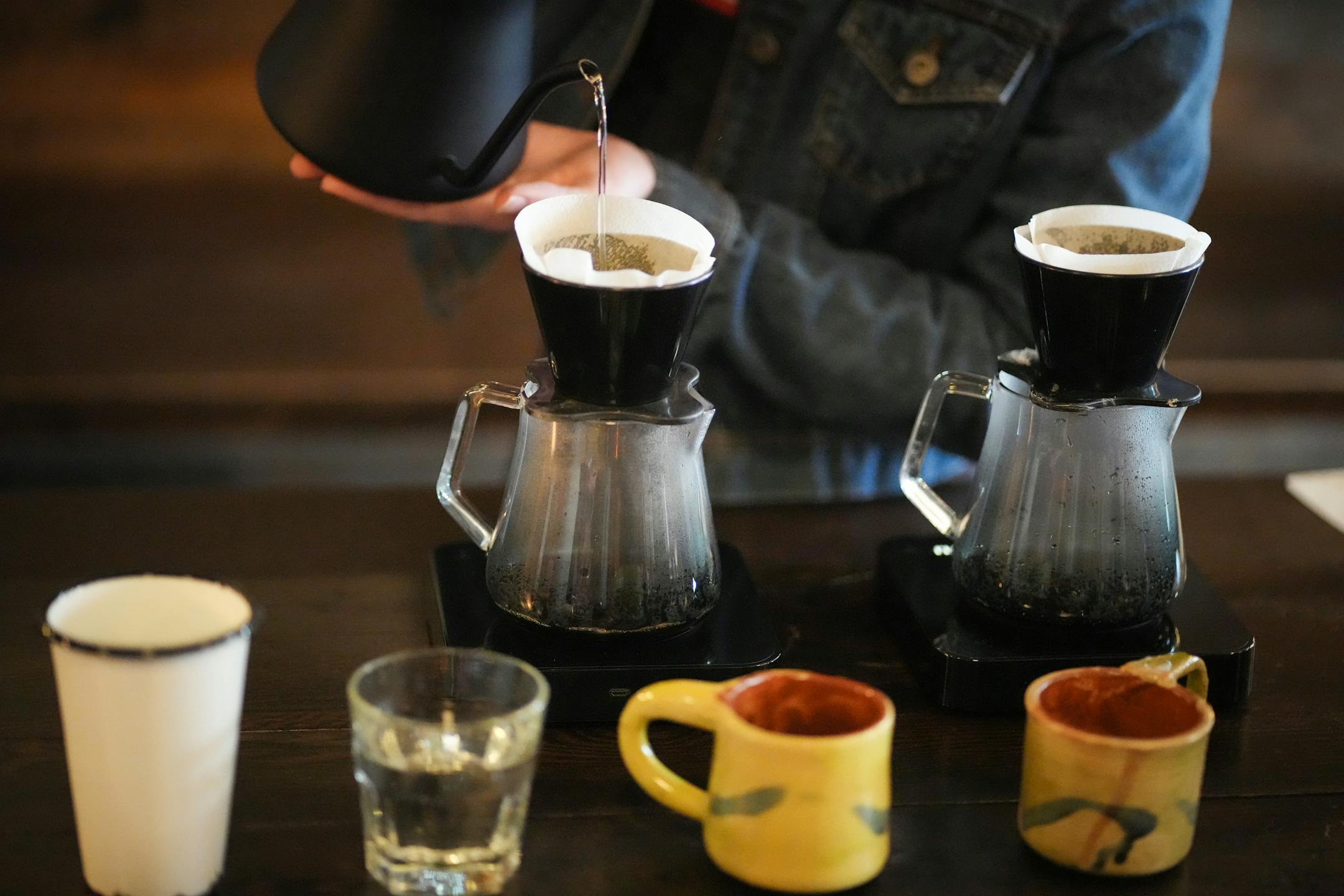
C. Hughes from Indianapolis competes in the Brewers Cup during the 2023 U.S. Coffee Championship Preliminaries at Spyhouse Coffee, in Minneapolis, Minn., on Saturday, Oct. 22, 2022.
A pound of coffee is 30% more expensive than a year ago. And it might rise even higher. (Shari L. Gross/The Minnesota Star Tribune)

Opinion editor’s note: Strib Voices publishes a mix of commentary online and in print each day. To contribute, click here.

•••

The cost of coffee has jumped to an average of $8.13 a pound, up from $6.25 a year ago, according to the Bureau of Labor Statistics.

Among the key reasons is natural disaster — particularly drought in Brazil. But a man-made disaster may jolt java prices even higher: President Donald Trump’s threat to impose 50% tariffs on Brazil by Aug. 1. About 30% of U.S. coffee imports come from the South American giant.

The tariff rate doesn’t correlate to trade imbalances like some other countries in Trump’s sights; the U.S. actually has a trade surplus with Brazil. Rather, it’s political pressure on behalf of former Brazilian President Jair Bolsonaro, often called “Trump of the Tropics” during a presidential tenure that overlapped part of Trump’s first term.

But like Trump in 2020, Bolsonaro lost his 2022 re-election bid. And like the aftermath of America’s disputed vote, Bolsonaro boosters stormed government buildings in Brasilia in their own version of a Jan. 6 insurrection. Prosecutors charge that Bolsonaro went much further, however: In an 884-page report unsealed last year Bolsonaro and several cohorts were charged with plotting “violent abolition of the democratic rule of law” and an attempted “coup d’état,” including a plan to assassinate Brazilian President Luiz Inácio Lula da Silva (commonly called “Lula”).

Trump’s tariff letter reflected the political, not commercial, nature of the complaint. “This trial should not be taking place,” Trump wrote. “It is a Witch Hunt that should end IMMEDIATELY!”

Just as Brazilians were steeled to reckon with the crimes of its 70s-era military dictatorship by last year’s Oscar-nominated film “I’m Still Here” (which won best international feature film and should have won as best film overall), a Trump tariff tied to Bolsonaro will likely backfire. “Brazil is a sovereign nation with independent institutions and will not accept any form of tutelage,” Lula said in a statement.

Politics play a role in several other recent threats to impose tariffs, including an additional 35% on Canada and 30% on Mexico and the European Union, the 27 countries comprising the world’s third-biggest economy.

These aren’t just abstract spats between Washington and Ottawa, Mexico City, Brasilia or Brussels, headquarters of the E.U. It’ll hit St. Paul and the rest of Minnesota, too.

Minnesota businesses exported $26.9 billion worth of manufactured, agricultural and mining goods last year, including more than $7.9 billion to Canada and $4.2 billion to Mexico, the state’s top-two trading countries, according to Minnesota Department of Employment and Economic Development data. As a bloc, state exports to the E.U. were over $4 billion. Each of these nations (or collection of countries, in the E.U.’s case) could impose reciprocal tariffs that would likely hurt Minnesota exporters as well as consumers already contending with an inflationary era.

Like “Liberation Day” tariffs previously announced and then paused by Trump, it’s uncertain these increased levies will ever be realized; some consider it a negotiation ploy, while others suggest it’s the lack of negotiation that’s spurring them as the hoped-for 90 deals in 90 days window is narrowing, with announcements of Japan, the Philippines, the U.K., Vietnam and Indonesia inking agreements. Negotiations with Washington were like “going through a labyrinth” and arriving “back to Square 1,” Indonesia’s minister for economic affairs told the New York Times.

Other countries’ representatives reeled from similar conditions, including some crucial in countering China’s rise.

“The messaging that’s coming out from the government has a number of different elements, reflecting the fact that they seem to be trying to use tariffs to accomplish several different things, and it’s a little bit unclear at times which of those elements are the most important to them,” said Murray Frank, a professor of finance at the University of Minnesota’s Carlson School of Management.

Trump, said Thomas Hanson, diplomat-in-residence at the University of Minnesota Duluth, “is starting to use tariffs like sanctions.” Hanson, a former Foreign Service Officer, added that “theoretically, tariffs are tied to trade imbalances and are understandable in that context.” However, “when you start using them like a sanction, then [other countries] come to see them like punishment; there’s no economic context really for what you’re doing and trust erodes seriously — you lose credibility.”

Regarding Brazil, Hanson said that the proposed tariff “is not linked to an economic situation inside that country, it’s linked to an internal, domestic political situation inside that country, and that creates more uncertainty and potentially more geopolitical drift from the U.S.”

The drift is apparent in a new Pew Research Center poll that should raise allied alarm about how citizens of several countries view the U.S. In 12 of the 24 non-U.S. countries polled, America holds its traditional place as their nation’s most important ally. But in five nations the U.S. is listed as both a top ally and top threat.

And in three — South Africa, Indonesia and Spain — the U.S. is listed as the top threat and not a top ally at all.

Among those split between ally and adversary are neighboring nations Canada and Mexico as well as what used to be a staunch South American ally: Brazil.

China seized upon Trump’s ultimatums, and for some countries, Hanson said, China is “coming across as a more reliable partner, for all [its] faults.” In a way, added Hanson, “we’re stimulating more trade deals among other countries.”

Who Needs Allies?” reads the provocative cover of the current issue of Foreign Affairs, which examines the diplomatic drift.

America does. And ultimately, said Hanson, channeling George Schultz, an economist who served as secretary of state in the Reagan administration, “trust is the coin of the realm.”

In other words, in trade and diplomacy, the U.S. wants to avoid the euphemism for one’s word being worthless: “That and a nickel will get you a cup of coffee.”

about the writer

about the writer

John Rash

Editorial Columnist

John Rash is an editorial writer and columnist. His Rash Report column analyzes media and politics, and his focus on foreign policy has taken him on international reporting trips to China, Japan, Rwanda, Kazakhstan, Turkey, Lithuania, Kuwait and Canada.

See Moreicon

More from Columnists

See More
card image
Yuri Gripas /Tribune News Service

Congress is a co-equal branch of government and must provide oversight on the use of the U.S. military ― and the possibility of war.