Minnesota will be adopting the 2012 International Residential Code (IRC) on January 24th, 2015. With this adoption will come a lot of changes to the existing building code, which was last updated in 2007 when we adopted the 2006 IRC. I've put together a list of the things that I feel are the most notable changes.
One Code Book
This change is extremely helpful. Instead of having to use a copy of the 2012 IRC and then look through the Minnesota Amendments to figure out what's what, there is now a single book available that combines the 2012 IRC with the Minnesota Amendments. This makes it far easier to look up building codes. This book can be purchased directly from ICC or from Minnesota's Bookstore.
Less Ceiling Height Needed on Alterations to Existing Homes (R305.2)
The old building code said that habitable rooms, hallways, corridors, bathrooms, toilet rooms, laundry rooms, and basements had to have a ceiling height of not less that 7 feet. This made it impossible to add code-compliant bedrooms in old homes with low basement ceilings. If you had a basement with a ceiling height of 6 feet 10 inches and you wanted to add a bedroom, your options were to either not add a bedroom or just add a bedroom and not pull permits for it.
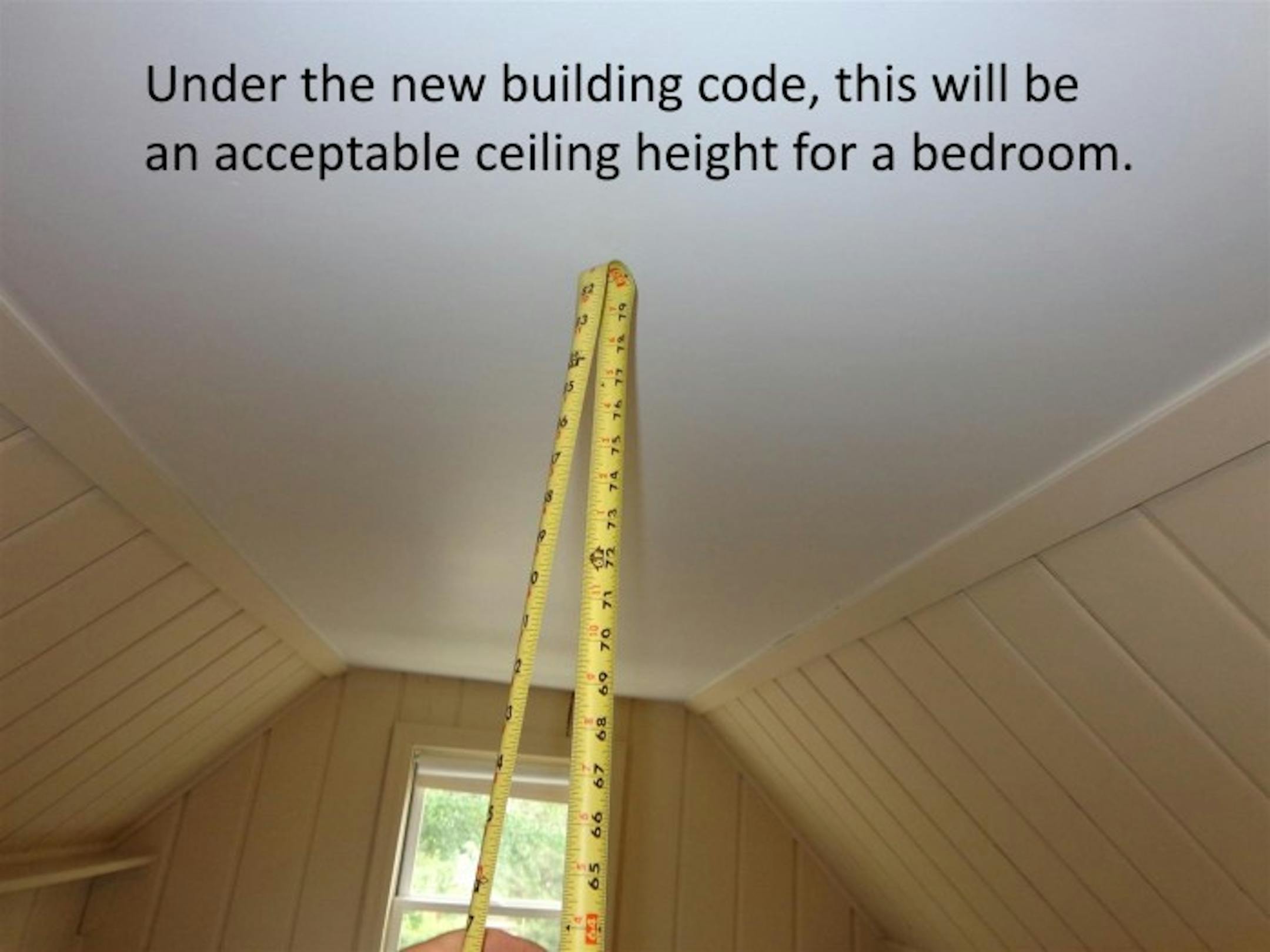
The new code allows for a basement ceiling height of 6 feet 4 inches on alterations to existing homes. The purpose of this change is to legally allow for habitable use of these basements. Here's the exact text:
The really interesting part is going to be how this affects TISH evaluation reports. One of the most common comments I put on TISH evaluation reports is about stairways lacking the required headroom of 6 feet 8 inches. Now that the headroom requirement for existing stairways is going to be 6 feet 4 inches, does this mean we won't have to put down this comment on future TISH reports? I don't know yet.

Sprinkler Systems (R313)
Automatic fire sprinkler systems are now required in all new townhouses and all new one- and two-family dwellings with 4,500 sf of floor area or more. This new requirement actually made the news last year: http://minnesota.cbslocal.com/2014/07/28/in-home-sprinkler-systems-now-required-in-new-homes/ . I suspect we'll be seeing a lot of homes being built just under 4,500 sf. For more info on this new requirement, click here: Residential Fire Sprinkler Systems FAQs
Carbon Monoxide Alarms (R315)
Carbon monoxide alarms have been required by statute in Minnesota for many years now, but it's finally going to become a rule. This means that CO alarms are going to be required by the building code, which means building officials will be enforcing this rule. Most building officials have already been telling folks they need CO alarms, but they haven't had any legal right to enforce the installation of CO alarms. Now they do. One interesting part of this requirement is that carbon monoxide alarms are "required outside and not more than 10 feet from each separate sleeping area or bedroom."
Fire Protection of Floors (501.3)
For new homes built without automatic fire sprinkler systems, it will no longer be acceptable to leave the unfinished basement floor framing exposed when using an engineered flooring system, which is pretty much the only thing ever used in new construction. This requirement went into effect because floor structures can burn out very quickly on new homes, making it unsafe for fire fighters to enter the building. Here's the exact code text: