

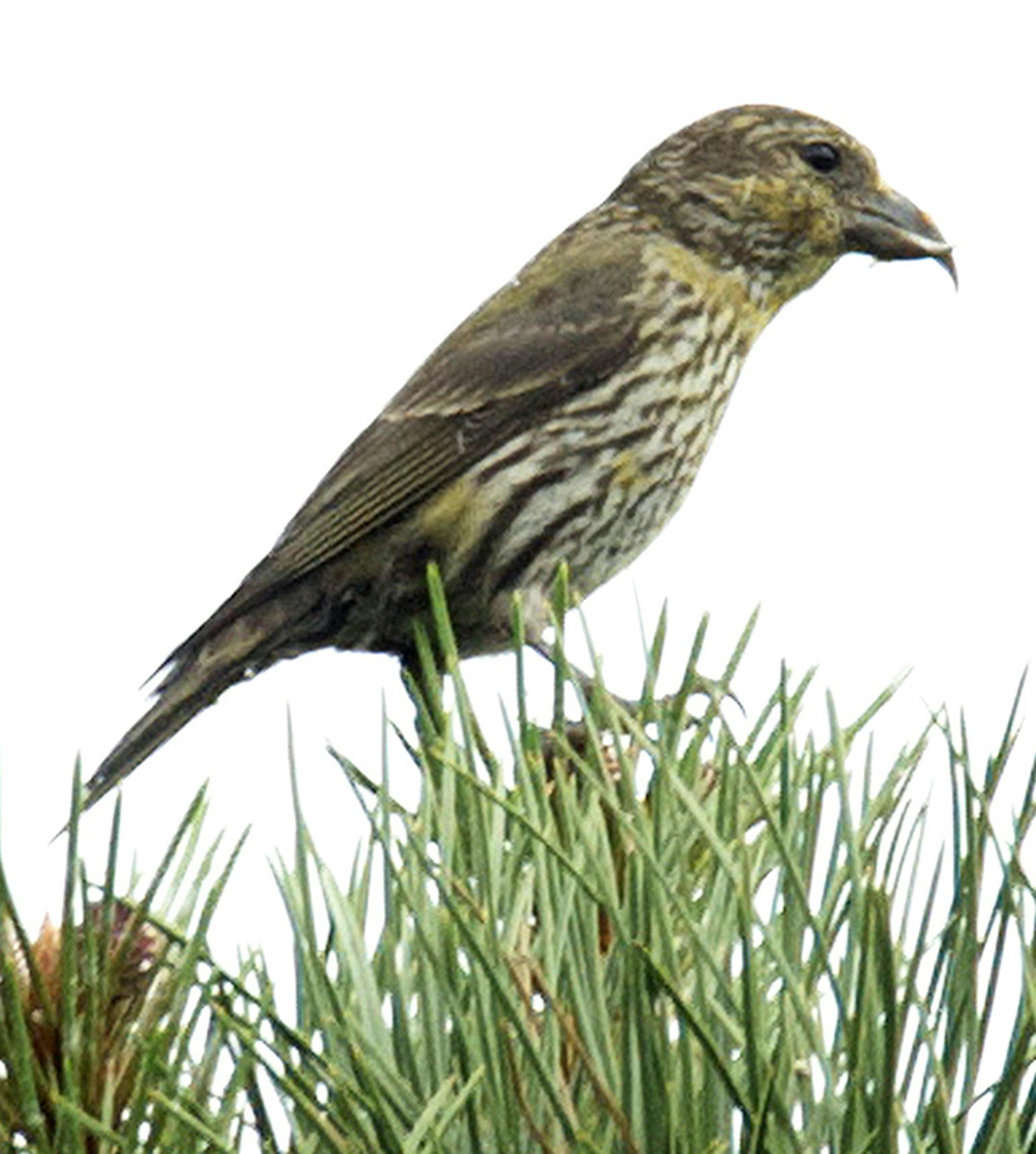
An old European legend says red crossbills shaped their peculiar bills by attempting to remove the nails from Christ's hands and feet when he was on the cross.
In reality, the birds evolved bills of different size and shape to match food preferences.
Crossbills are nomadic species usually found in boreal forests and western mountains, including small numbers in northern Minnesota.
An unusual number of them are now being seen in west central Minnesota corn and bean country.
The birds are here in search of food, the variable conifer seeds on which they feed having a thin year. Where do you find a good supply of conifers amid the fields? Cemeteries, where most of the birds are being spotted in conifers used for landscaping.
We are experiencing what ornithologists call an irruption, a migration of a bird species outside its normal range. It might grow as fall and winter progress, bringing more of the birds over a wider area.
There are at least 10 types of red crossbill. Each type prefers a particular species of pine, spruce or fir. The various tree species have different cones and seeds.
The birds eat seeds tucked deep in the cone. Each red crossbill type has evolved a bill appropriate to removing a particular seed. Different trees, different seeds, different bills.


