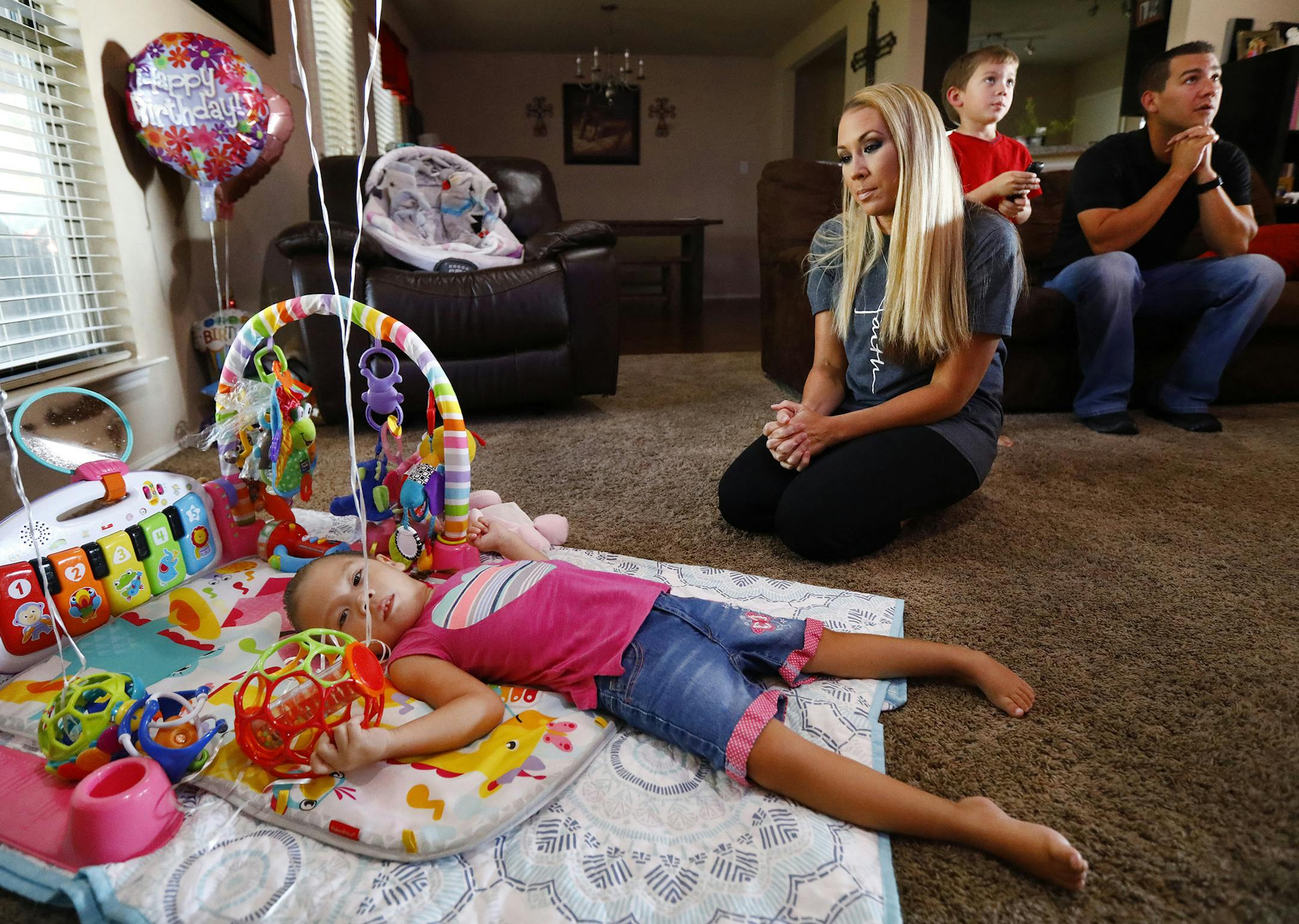
Three-year-old Annalynne Magallon has cerebral palsy, but her family is ineligible for Medicaid to help pay for her care because her father earns too much at the Fort Worth Police Department.
"He's putting criminals away who are getting Medicaid and federal benefits that we can't get," said Brandon Magallon's wife, Jayme.
They're among couples in North Texas who said they have been pushed to consider divorce as a way to provide long-term care for disabled and ill children.
Jayme Magallon knows what benefits would be available to her if she were a single mother, so she and her husband discussed divorcing to qualify for coverage that would pay for Annalynne's equipment.
They decided against splitting up. Now Jayme Magallon just tries to ignore the bruises she gets every time she lifts Annalynne's heavy wheelchair.
Working families with disabled children can get help from the Medicaid buy-in program, but they can't qualify for it if they earn more than 150 percent of the federal poverty level.
"There are a lot of families who find themselves in situations like this where they either have to get rid of assets or leave jobs," said Hannah Mehta, executive director of Protect TX Fragile Kids. "Unless they've ever been exposed to this world, it's not something most people even consider."
In recent years, families have been able to register on first-come, first-served lists for equipment, home care and other services. But financing has fallen short, and many families may wait more than 10 years to be considered for aid.