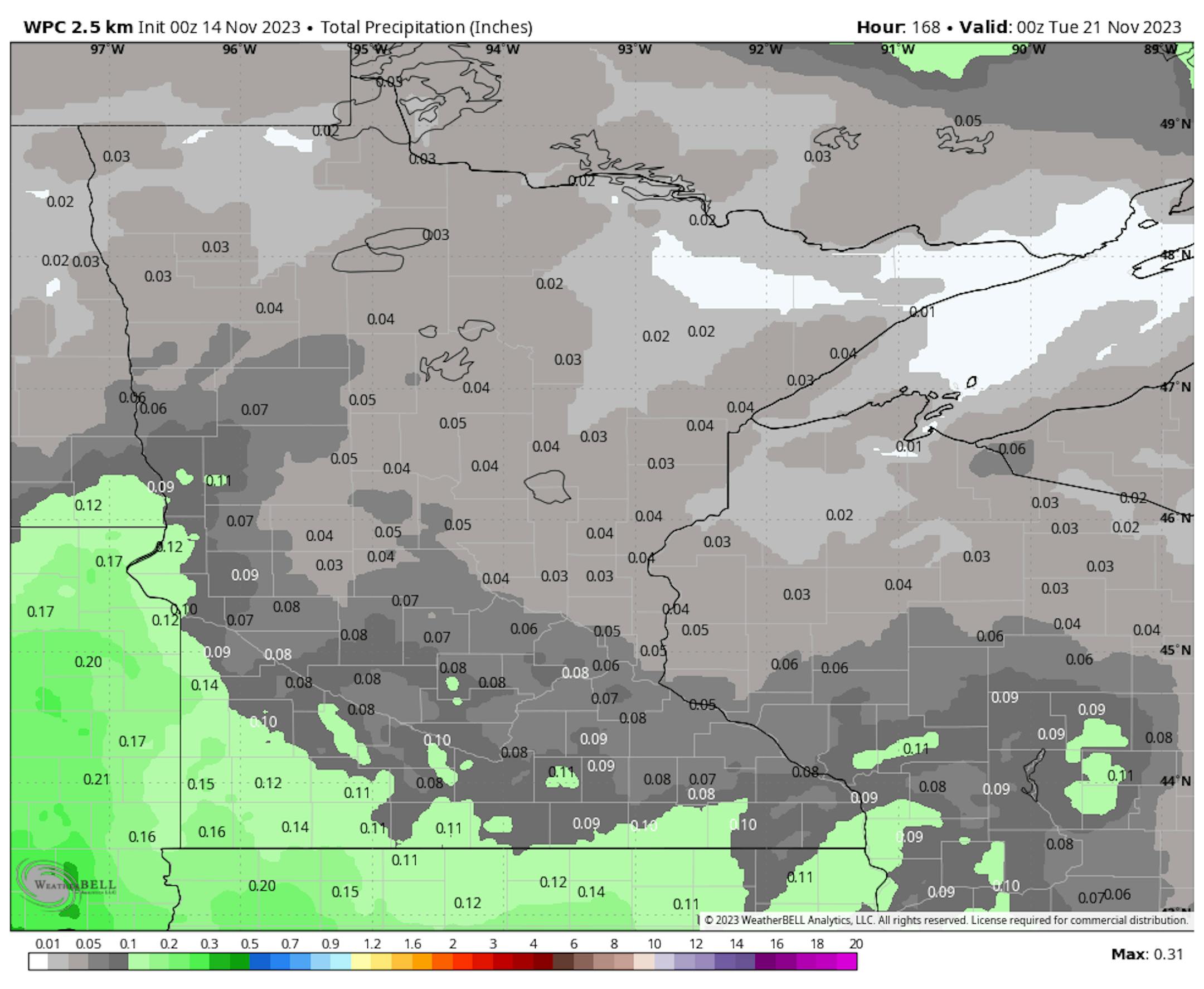
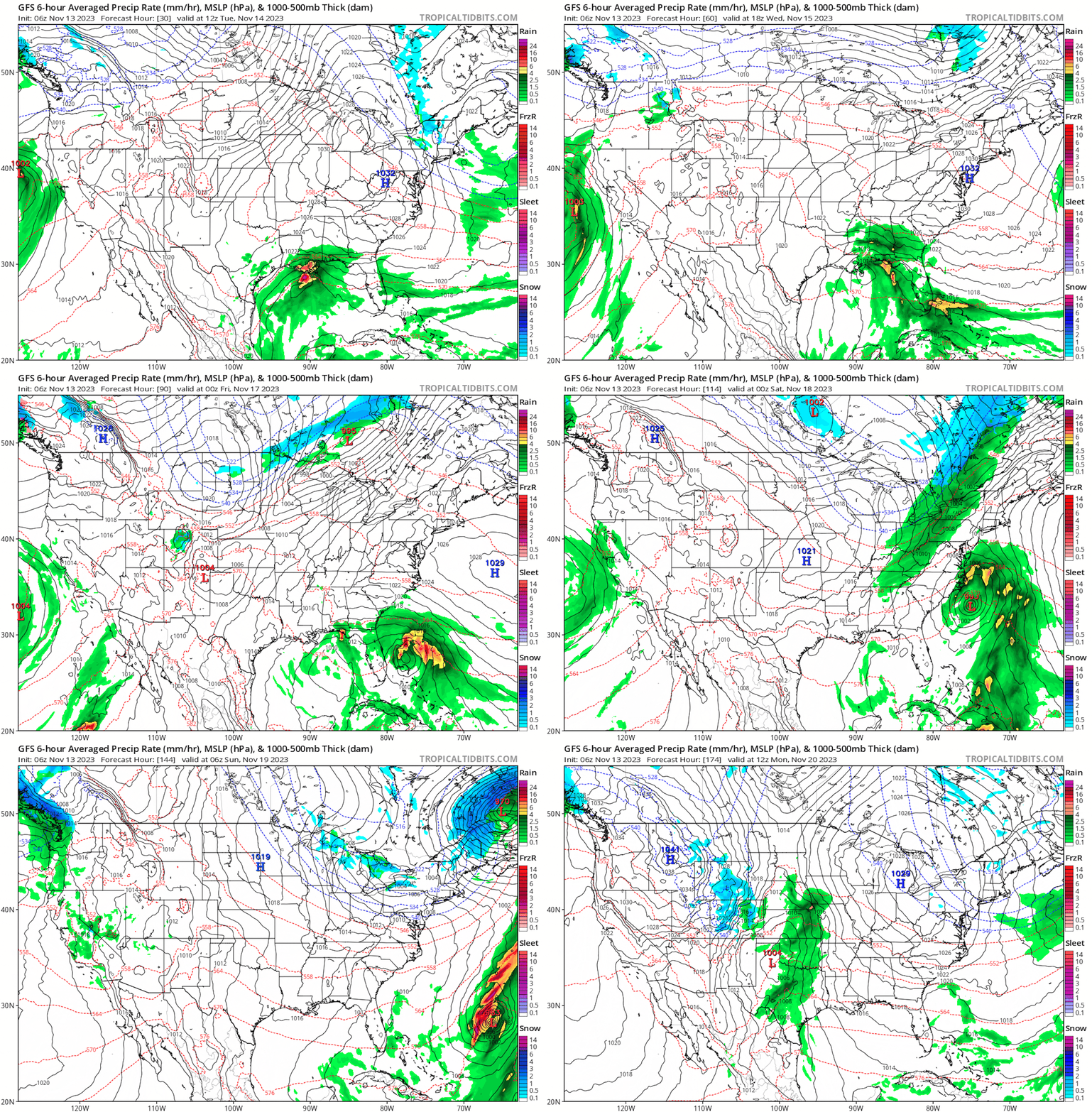
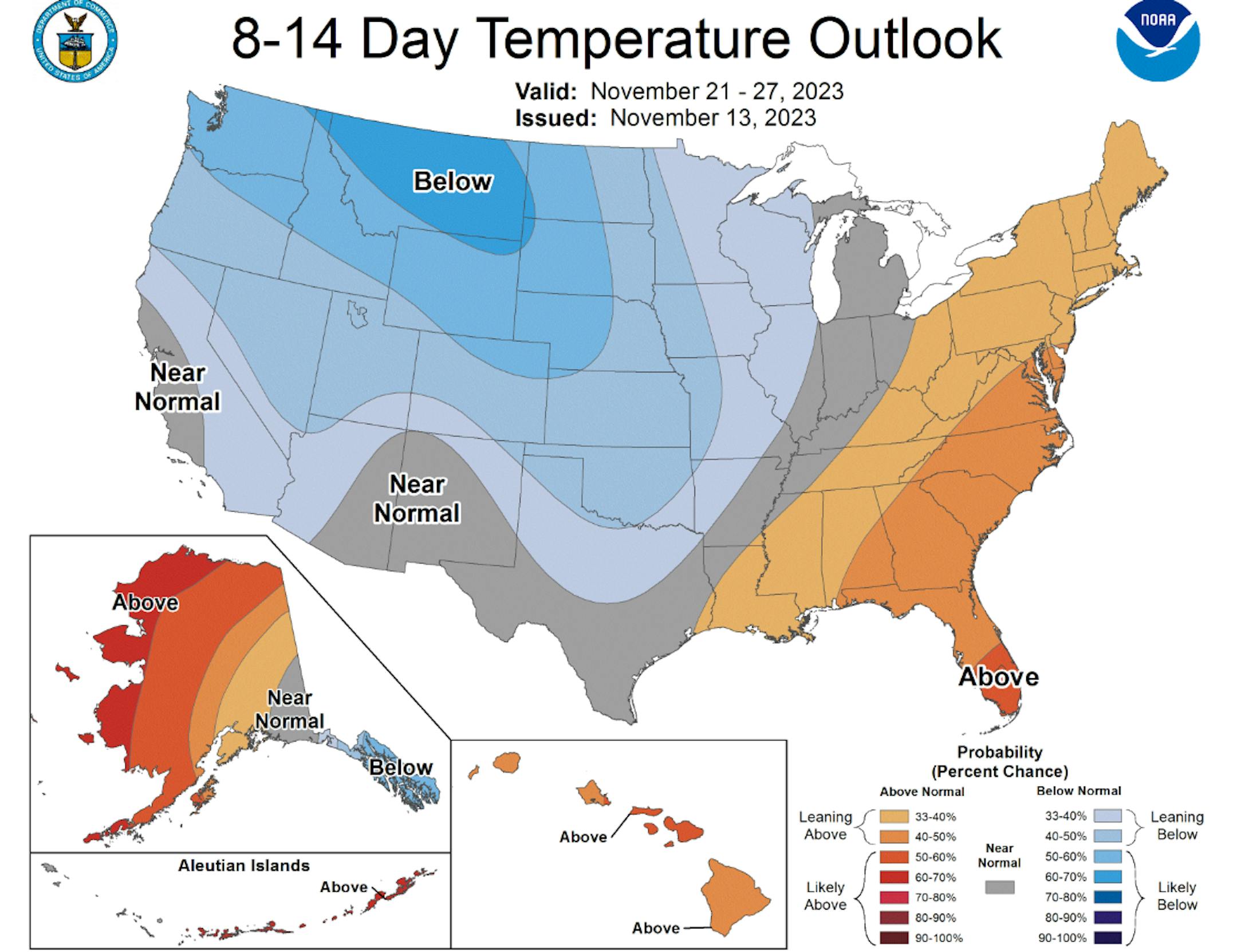
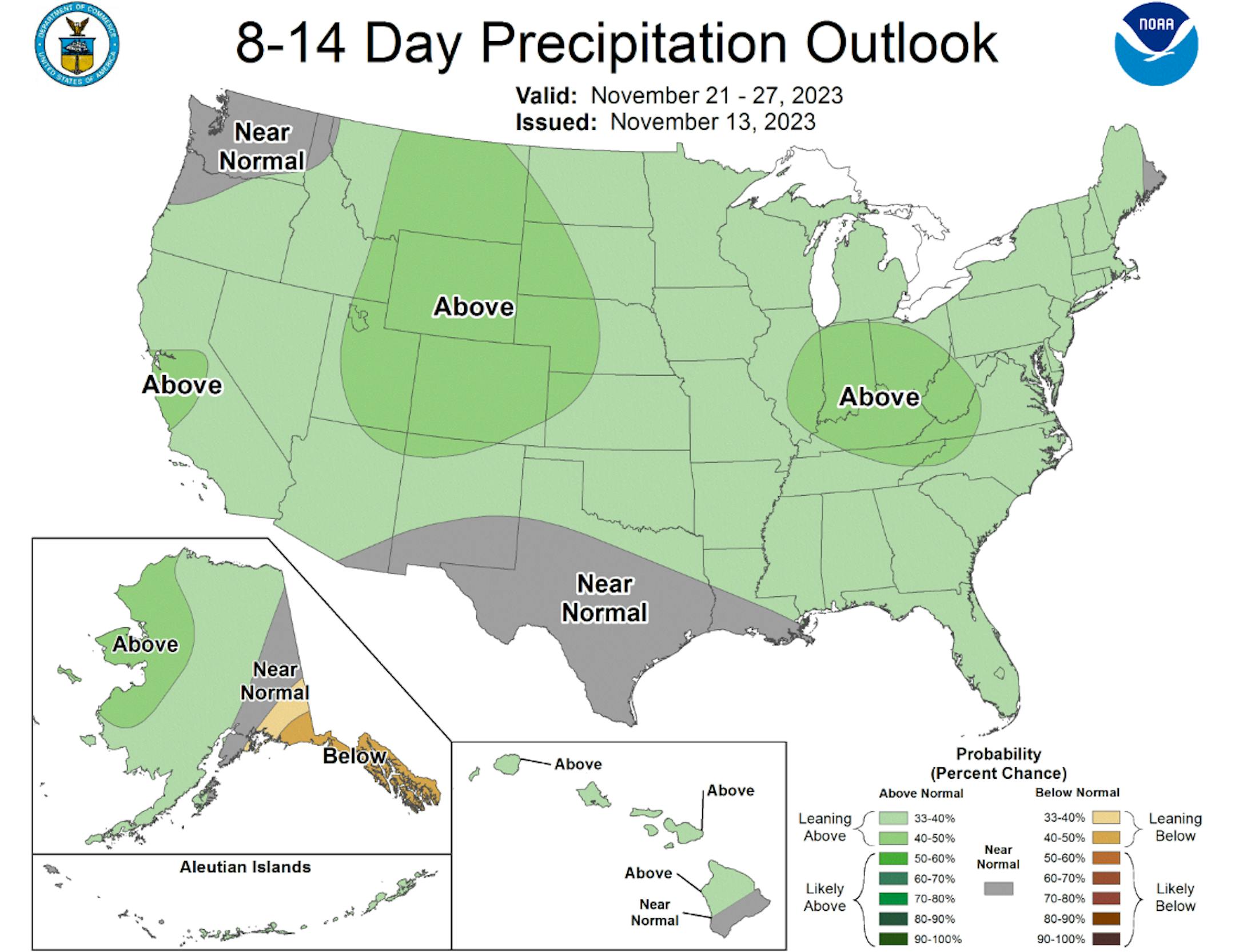
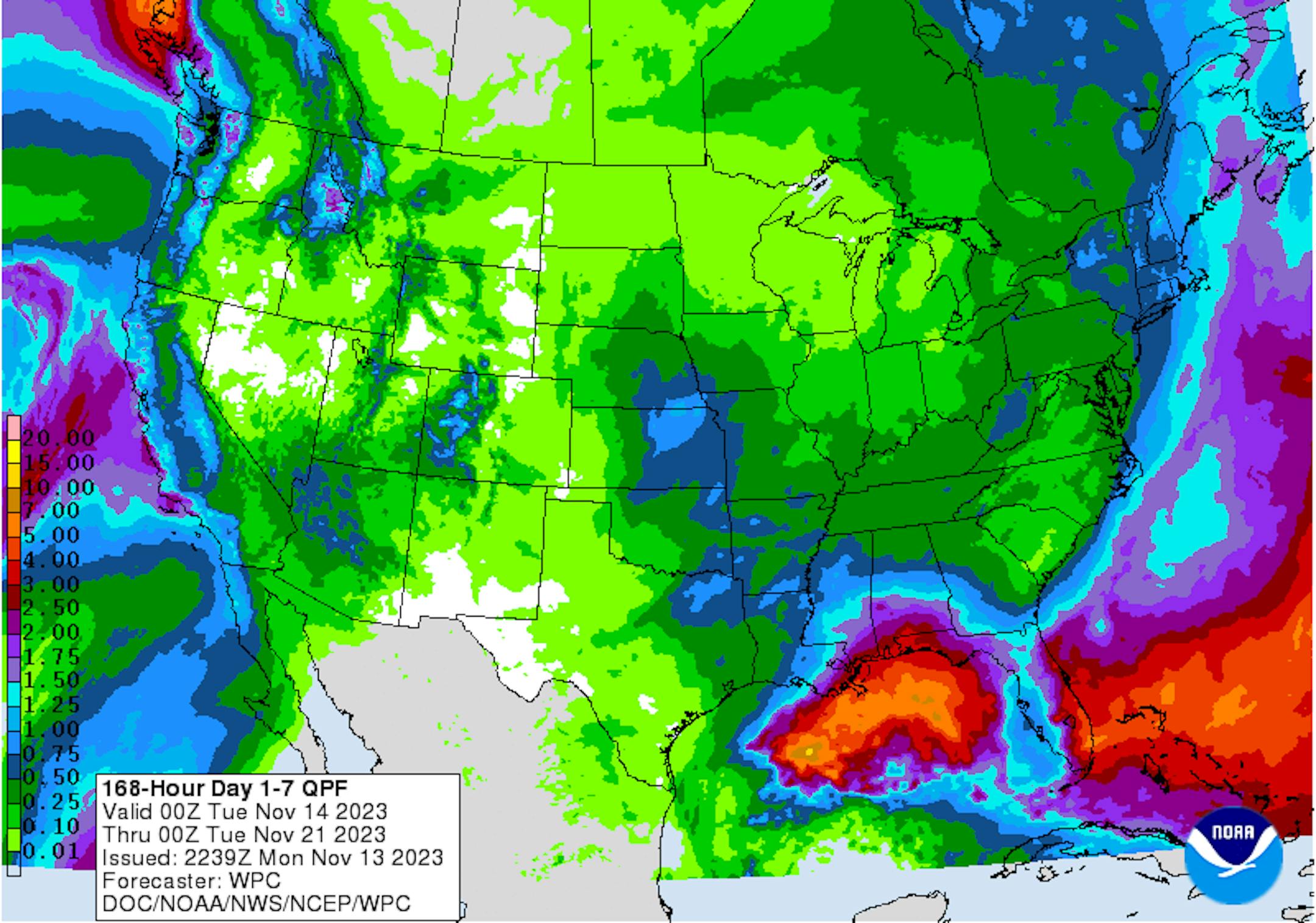
Extended Precipitation Outlook (NOAA WPC/The Minnesota Star Tribune)
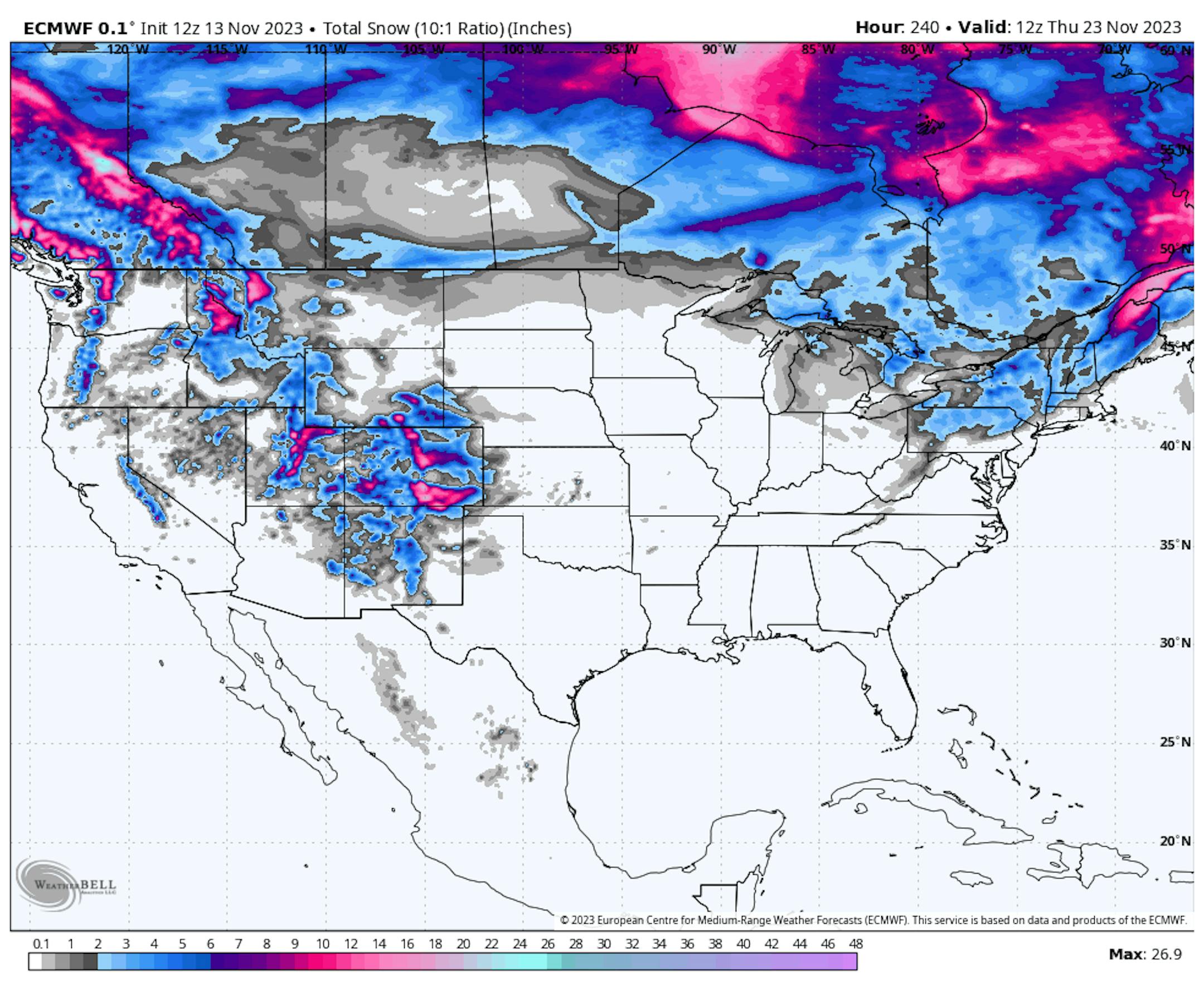
According to the ECMWF weather model, areas of snow will be found across the high elevations in the Western US. There will also be some decent snowfall along the international border and just north into Canada.
ECWMF Extended Snowfall Outlook (WeatherBell/The Minnesota Star Tribune)
(NOAA/The Minnesota Star Tribune)
"Homes built in areas with grasslands and shrublands face a greater risk of fire as development expands and the effects of climate change intensify. However, a new report published Thursday finds that the number of homes inside widening wildfire perimeters have doubled since the 1990s. According to researchers, of the 55,000 homes that burned between 2010 and 2022, two-thirds burned in grassland and shrubland fires. But according to Volker Radeloff, professor of forest life and ecology at the University of Wisconsin-Madison and co-author of the paper, while climate change and drought play a major role, the expansion of housing developments on the outskirts of urban areas are driving risk: Between 1990 and 2020, nearly 44 million homes were built in these wildland-urban interface areas."
"An analysis by NASA's sea level change science team finds that if a strong El Niño develops this winter, cities along the western coasts of the Americas could see an increase in the frequency of high-tide flooding that can swamp roads and spill into low-lying buildings. El Niño is a periodic climate phenomenon characterized by higher-than-normal sea levels and warmer-than-average ocean temperatures along the equatorial Pacific. These conditions can spread poleward along the western coasts of the Americas. El Niño, which is still developing this year, can bring more rain than usual to the U.S. Southwest and drought to countries in the western Pacific like Indonesia. These impacts typically occur in January through March."
"The 12 months between November 2022 and October 2023 saw global average temperatures rise 1.32°C above the preindustrial average – that is 0.03°C above the previous record set between October 2015 and September 2016. "This is the hottest temperature our planet has experienced in something like 125,000 years," says Andrew Pershing at Climate Central, a climate science nonprofit in the US. Pershing and his colleagues based their analysis on surface temperature data from the European Centre for Medium-Range Weather Forecasts. They found that the main driver of the heat was global warming due to rising concentrations of greenhouse gases in the atmosphere. Attributing the exact amount of warming to different factors is challenging, but Friederike Otto at Imperial College London says about 1.28°C of the rise in average temperatures can be attributed to climate change."