On a cool August morning at Fort Snelling State Park, the bright songs of crickets drifted up from tall grasses. In the background, the din of hundreds of cars vibrated on nearby Hwy. 5 and Hwy. 55, with the occasional airplane adding to the clamor.
The urban park, right next to a source of pollution, was the perfect spot for Natalia Mossmann Koch. The University of Minnesota researcher was looking for a tree to place air pollution monitors.
But the technology she is using is novel, for Minnesota: Mossmann Koch will rely on measurements taken from chunks of lichen, tied to the outside of two eastern cottonwoods in this park. And by analyzing the specimens over a year, she hopes to glimpse the heavy metals they may have absorbed from the surrounding air.
Mossmann Koch said she plans to do the same in urban parks around the state. Her study will focus both on examining which lichens are naturally present — giving an idea of whether the air is clean enough to support more sensitive types — and testing her transplants to see how many heavy metals they absorb.
A year of repeated intrusions of wildfire smoke in Minnesota and other parts of the country has heightened public awareness about what's in the air. Mossmann Koch hopes to develop a cheaper and more accessible way for people to measure air pollution by introducing them to the complex world of lichens.
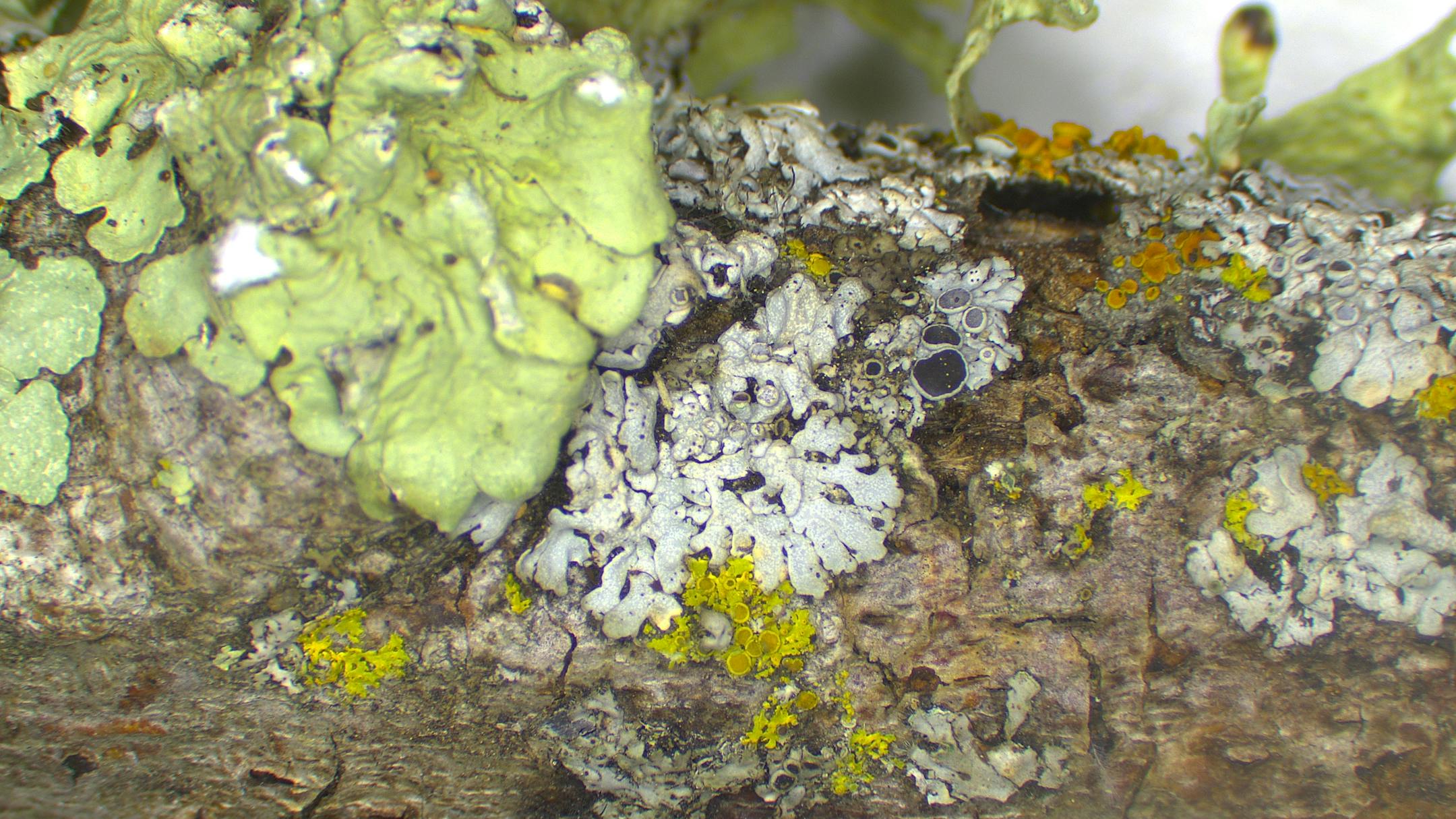
Lichens are assemblages of fungi and algae that slowly propagate on tree bark, rocks and railings. With no roots, the plants are entirely reliant on air and the humidity drifting through it for water and nutrients. That means they can suck up toxic substances, too.
Scientific literature is full of examples of other researchers who have used lichen as a broad proxy for air quality. One 1997 paper from Italian academics compared a map of lung cancer rates in the Veneto region with areas where there was a low diversity of lichens. In a near-perfect correlation, fewer lichen species meant more cancer cases.
In Minnesota, Mossmann Koch wants to know how clean the air is inside city parks, and help park visitors use the lichens they see as their own kind of air monitor. And she got $341,000 for her three-year study on the recommendation of the state's Legislative-Citizen Commission on Minnesota Resources. While she's starting the research in ten locations, eventually she plans to start planting lichen all over the state.