

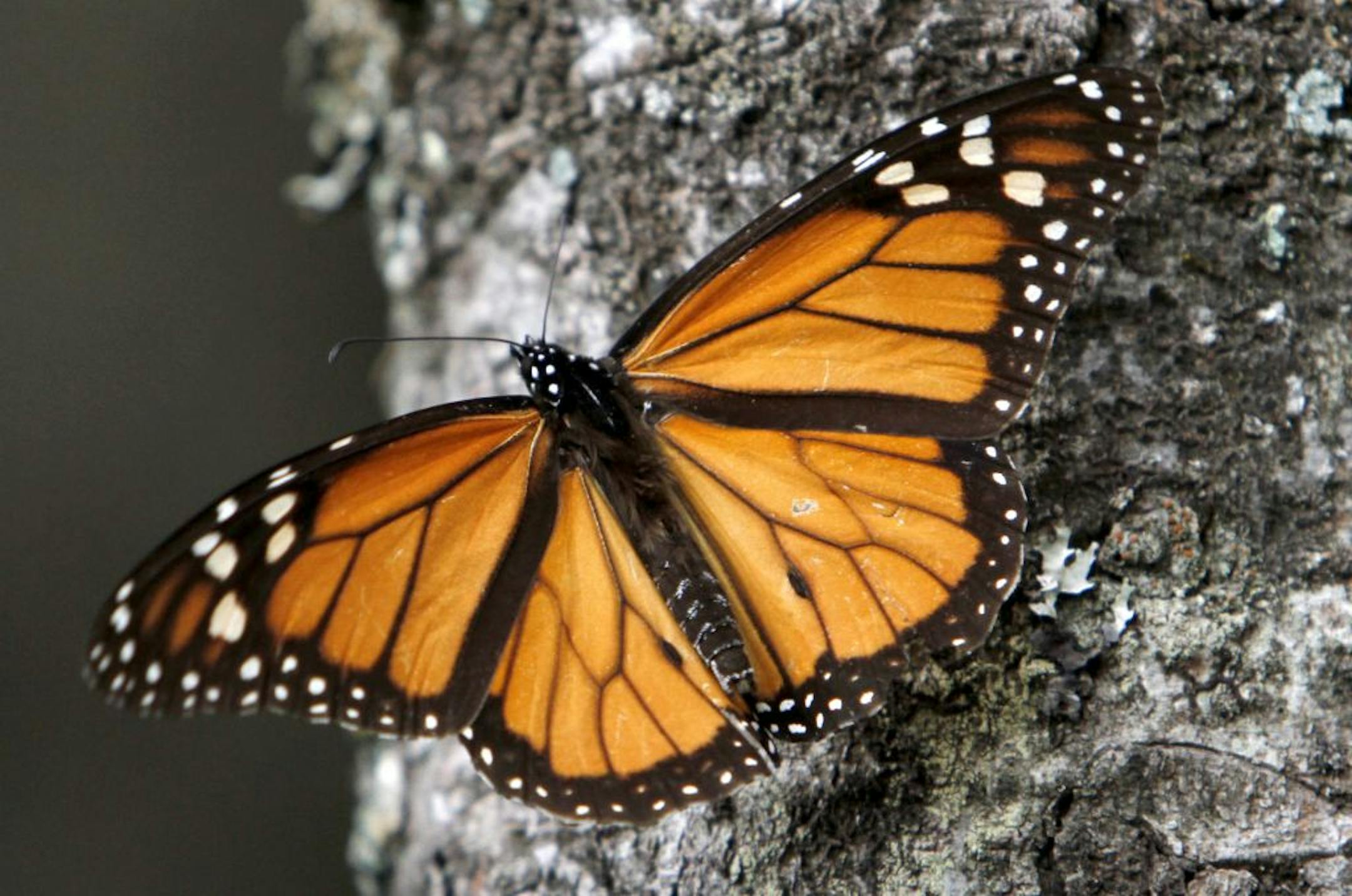
Every time a monarch butterfly emerges from its chrysalis and unfurls its delicate wings, Karen Oberhauser stops to watch.
For Oberhauser, a University of Minnesota conservation biologist, an insect that weighs no more than a paper clip but flies to the mountains of central Mexico is a symbol of resiliency.
"Think about the relationship of this individual butterfly to the big picture of the phenomenon," she said. "It is such a fragile organism that does such an amazing thing."
Oberhauser has dedicated her life's work to that fragile organism.
The 57-year-old Roseville woman runs the university's Monarch Lab, as well as a series of projects that have uncovered some of the monarch's mysteries. She's rallied conservationists, engaged educators and galvanized a community of "citizen scientists" to track and count monarchs. This summer, she earned the White House's "Champion of Change" award.
"Karen melds different worlds," said Scott Black, executive director of the Xerces Society, which aims to preserve invertebrates and their habitat. "She's a top-notch researcher who can balance her hard science with teaching and outreach. She really is this shining light that has helped us all get together."
But while her career has blossomed, a bitter irony underlies it: Despite her efforts, monarchs are in steep decline in Minnesota and most of the nation.
Monarch larvae feed exclusively on milkweed, which has seen a 58 percent decrease across the Midwest between 1999 and 2010 because of herbicide use and loss of habitat. On what milkweed remains, Oberhauser's Monarch Larva Monitoring Project has found record low rates of larvae and caterpillars. She and other conservation biologists say that while the monarch probably won't go extinct, the future of its migration could be in jeopardy.
 djoles@startribune.com Monarch butterfly expert and University of Minnesota professor Karen Oberhauser was recently honored by the White House as a champion of change. In almost 30 years studying monarchs, she has rallied an army of conservation in citizen scientists who track and count monarchs](https://arc.stimg.co/startribunemedia/XAZVUVAYKI2UKJDULJGL2UMPYM.jpg?&w=1080)

