

Before joining our union a few years ago, Camika Lewis was making just $7.25 an hour working for a subcontracting company as a customer service representative at Newark International Airport. For more than two decades, she had been putting in a full 40 hours a week at the airport, but was forced to pursue extra hours at nursing assistant and cosmetology jobs to make ends meet. After paying her student loans and utility bills, she struggled to buy enough groceries.
It was a sense of despair, and a drive to lift herself out of poverty, that compelled Lewis to become a leader in our union's effort to raise wages and working conditions at Newark International in New Jersey, as well as at JFK and LaGuardia airports in New York. She participated in years of strikes, marches into management offices, rallies, civil disobedience and demonstrations at public meetings of the Port Authority that runs the airports.
Now, Lewis and 40,000 of her co-workers in security, fueling, baggage handling, customer support and cleaning are on the path to a $19 minimum wage. On this Labor Day, that is a victory worth celebrating — and one of many recent signs of resurgence within the American labor movement.
For the first time in years, the percentage of union membership held steady in 2017, thanks in part to young people's burgeoning enthusiasm for unions. The total number of union members grew by 262,000 last year, and three-quarters of these gains were among workers under 34.
The appeal of unions is growing among young workers like Lewis who are struggling with student loan debt, rising housing costs, lack of benefits, grueling hours, capricious work environments, discrimination, harassment and precarious job security.
In North Carolina, West Virginia, Oklahoma, Arizona, Kentucky and Colorado, teachers have pulled off a series of highly successful strikes involving students and their parents, filled state capitols, and effectively persuaded elected official to invest in children's futures.
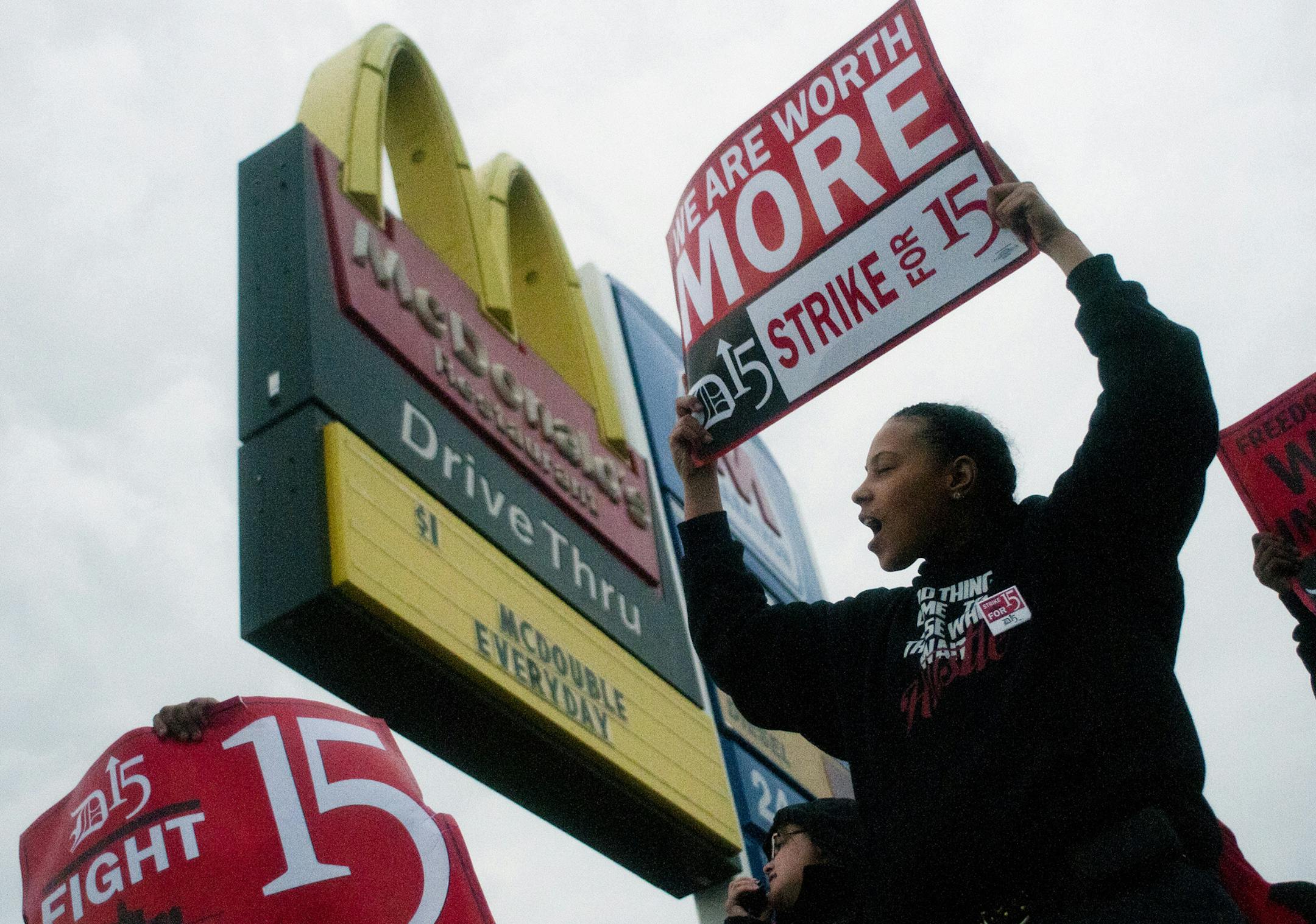
Another example of unions' renewed militancy and efficacy is the Fight for $15, which had its first successes advocating for higher pay for fast-food workers. A movement that started with a strike at a New York City McDonald's has spread like wildfire, and now 17 percent of Americans will live in a city or state with a $15 minimum wage by 2022, and 22 million workers have seen raises as a result of the campaign.
The union for which I work, 32BJ, has adopted innovative multi-employer agreements to create a higher wage floor for entire industry sectors. Over the past 20 years, we have used this approach to organize nearly 100,000 new members up and down the East Coast in the airport, security, cleaning, residential building and food service industries.


