

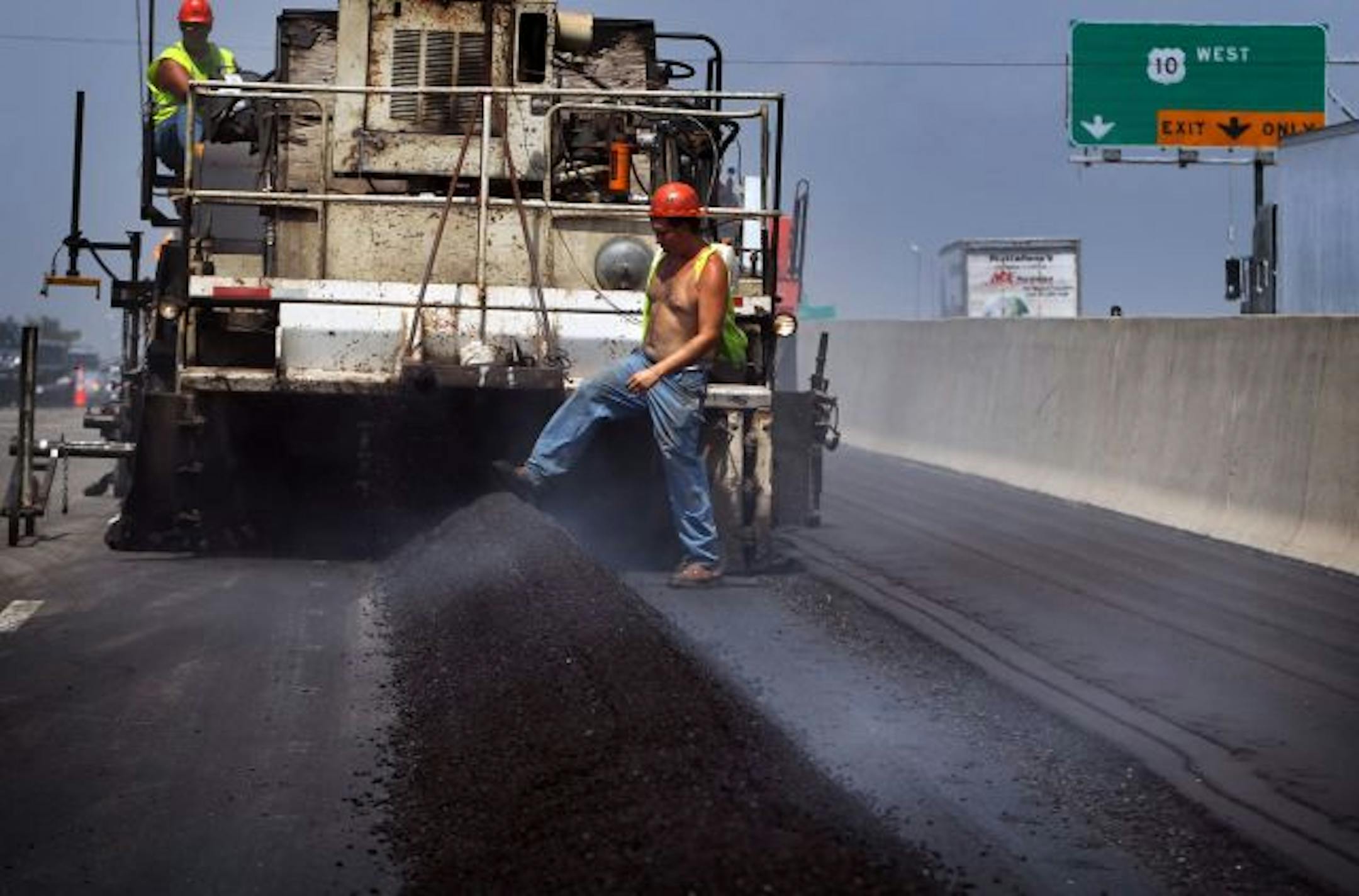
Asphalt is one of those things, like electricity, that few Americans could live without. Most U.S. roads (96 percent) are paved in asphalt, meaning that our commutes and our shopping trips depend on it. Everything we buy at the store arrives via truck on those same roads, so without asphalt there would be nothing to buy. Millions of tons of the stuff is made and laid every year in the United States.
Yet we tend to take asphalt completely for granted. Let's give asphalt its due and take a look at how this essential material works.
An asphalt road starts with crude oil pumped out of the ground. The oil is sent to a refinery, where it is boiled. The refinery takes the crude oil vapor and captures it at different temperatures to separate the molecules in the oil into groups. There are short, lightweight molecules like propane and butane with 3 or 4 carbons in the carbon chain. Gasoline molecules typically have 10 carbons. Motor oil has 20 to 50 carbon atoms. The longest chains -- typically 150 carbon atoms or more -- are asphalt. These are the heaviest molecules in crude oil -- the sludge at the bottom of the barrel.
Asphalt is black and solid at room temperature. Heat must be applied to turn it into a liquid.
To make the hot mix asphalt found on most roads, workers start with a big rotating, heated drum. Into it, they put gravel and sand and raise the temperature to 300 degrees or so. Then they add 5 to 6 percent asphalt from the refinery and mix until all the gravel is thoroughly coated. The drum dumps this hot mixture into the back of a dump truck, and it gets laid by an asphalt spreading machine to make a road. After several hours the mixture cools off, the asphalt solidifies and the result is a hard surface that will last for years.
An interstate highway that handles thousands of cars and trucks a day uses a lot of asphalt. The layer of asphalt might be a foot thick, sitting atop a gravel base up to 2 feet thick. A normal road through your neighborhood has only a few inches of asphalt in two layers. The base layer uses chunkier gravel. The surface layer uses smaller pieces of gravel to provide a smoother surface that cuts down on noise and repels water better.
One interesting thing about asphalt is that it is the nation's most recycled material, by weight. Old asphalt roads can be ground up, reheated and remixed to make new asphalt in a process that is highly efficient.
About the only problem is that asphalt does wear out eventually -- one obvious sign of this being the infamous pothole.

