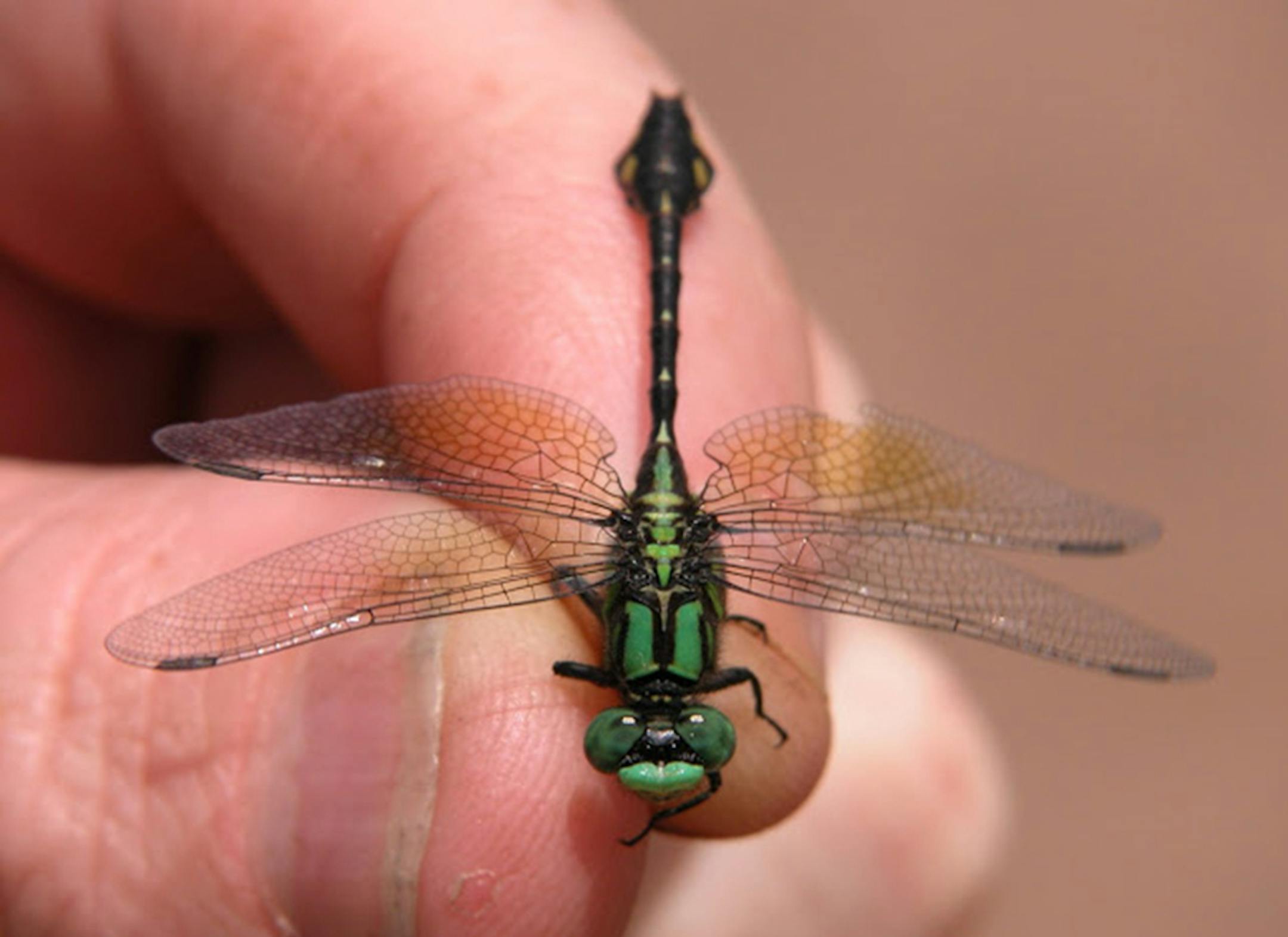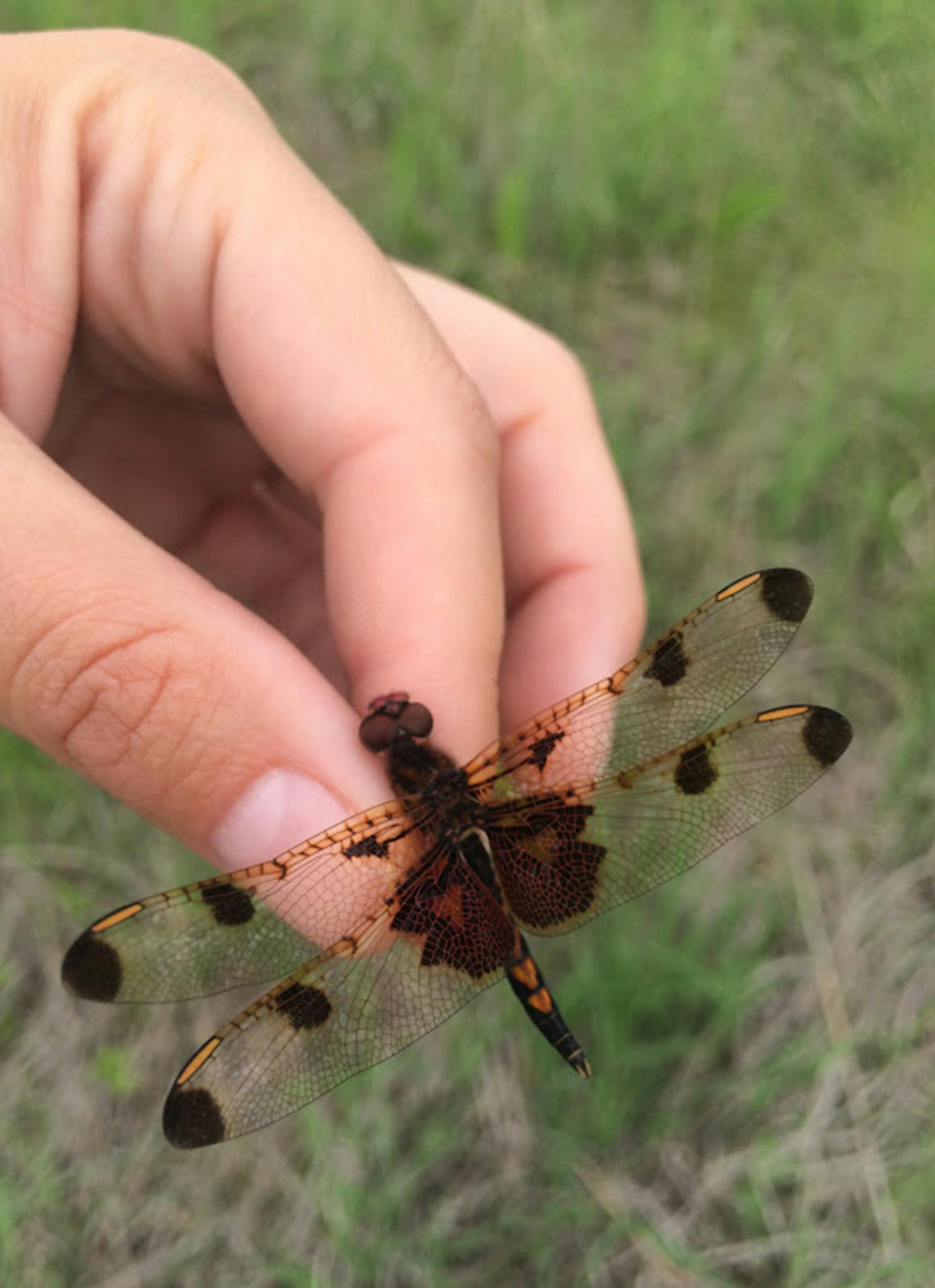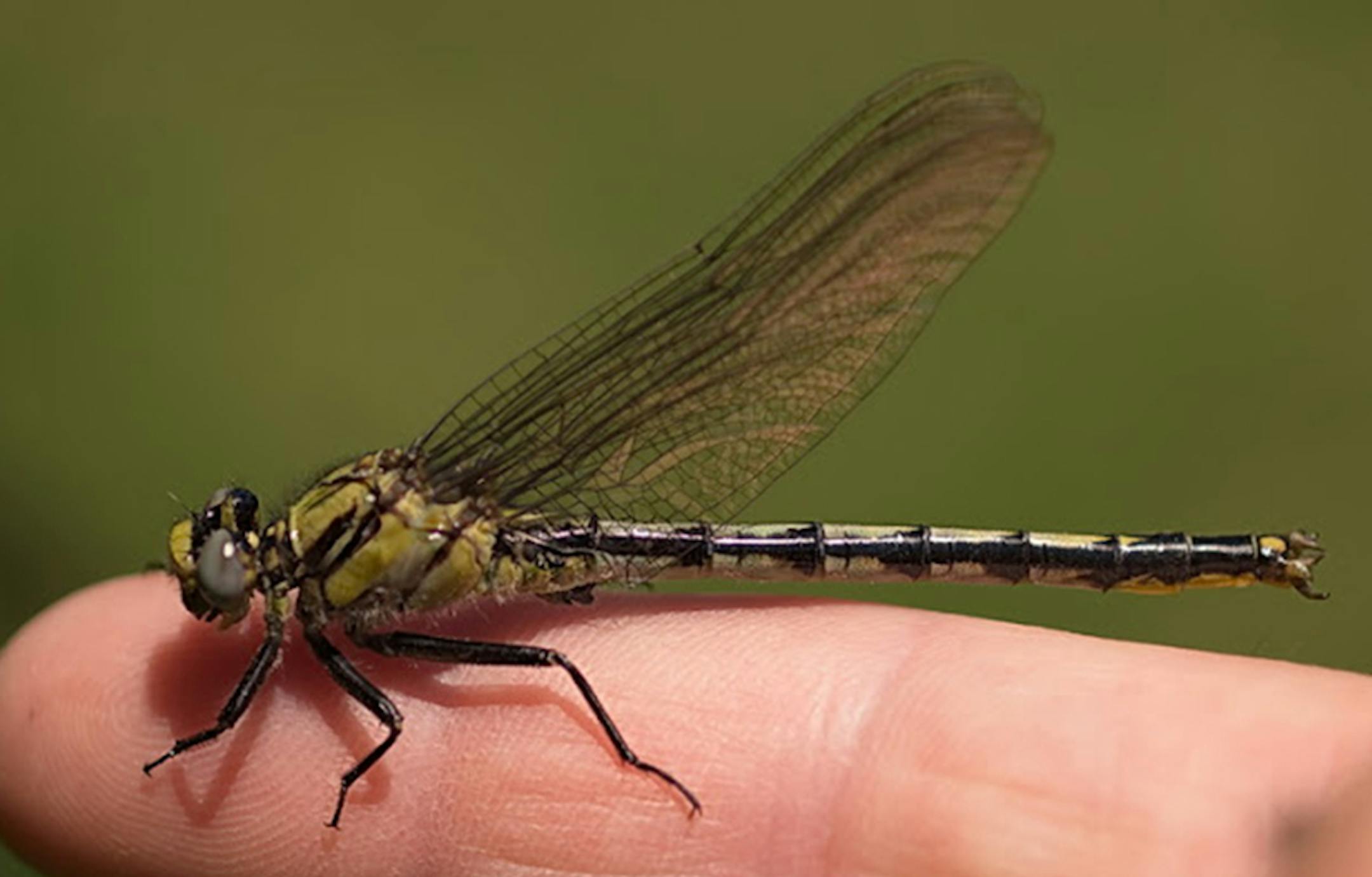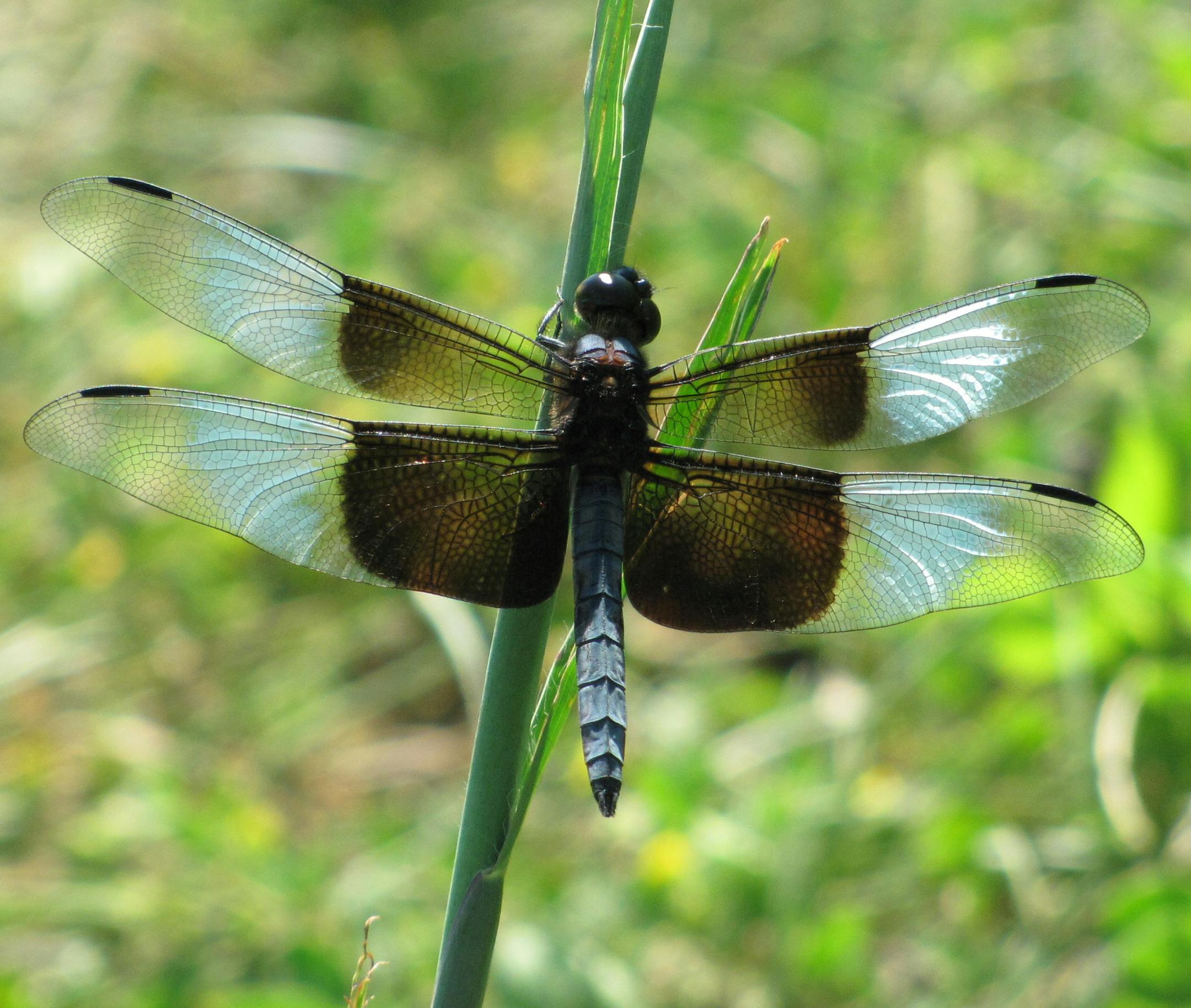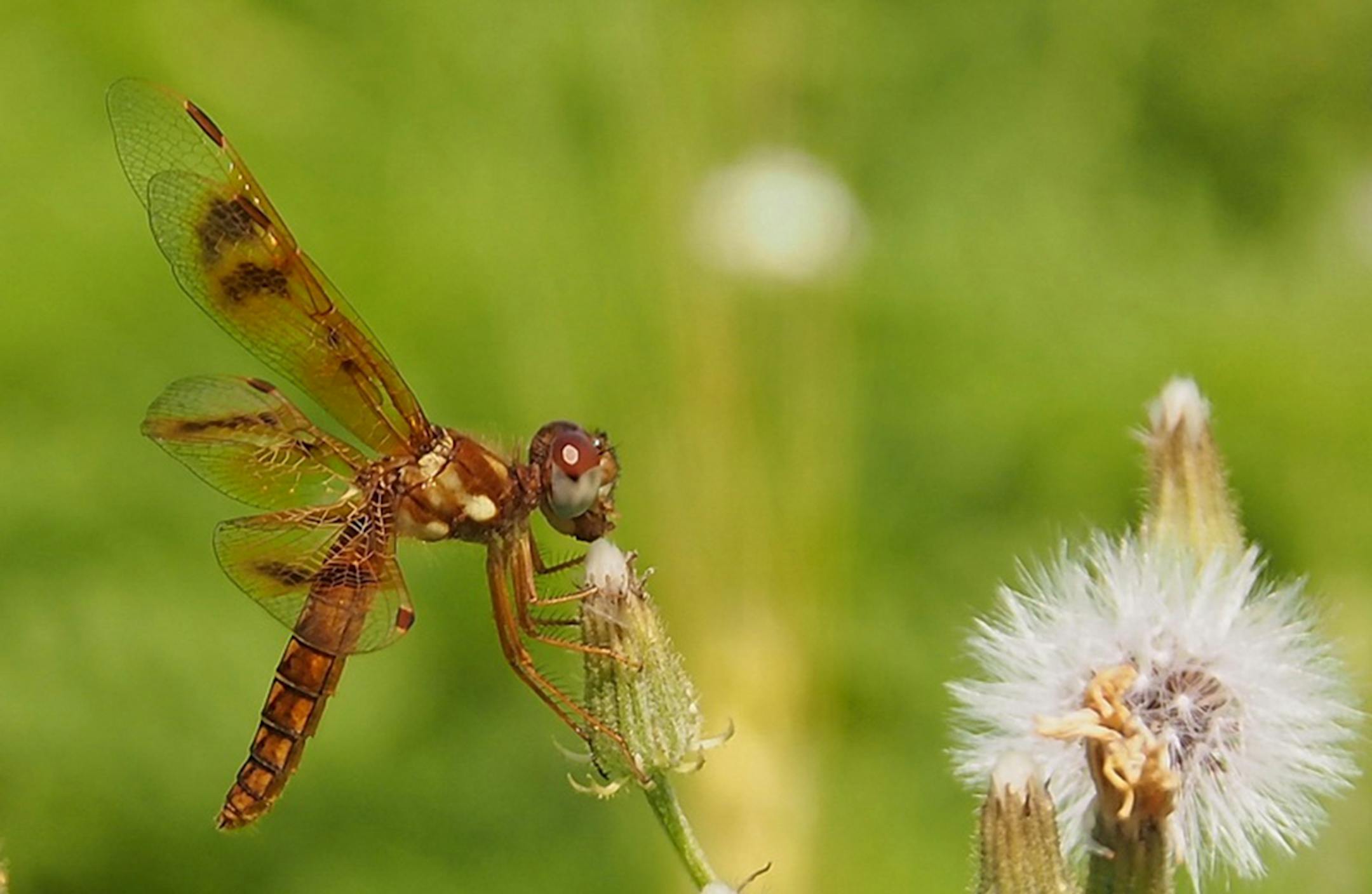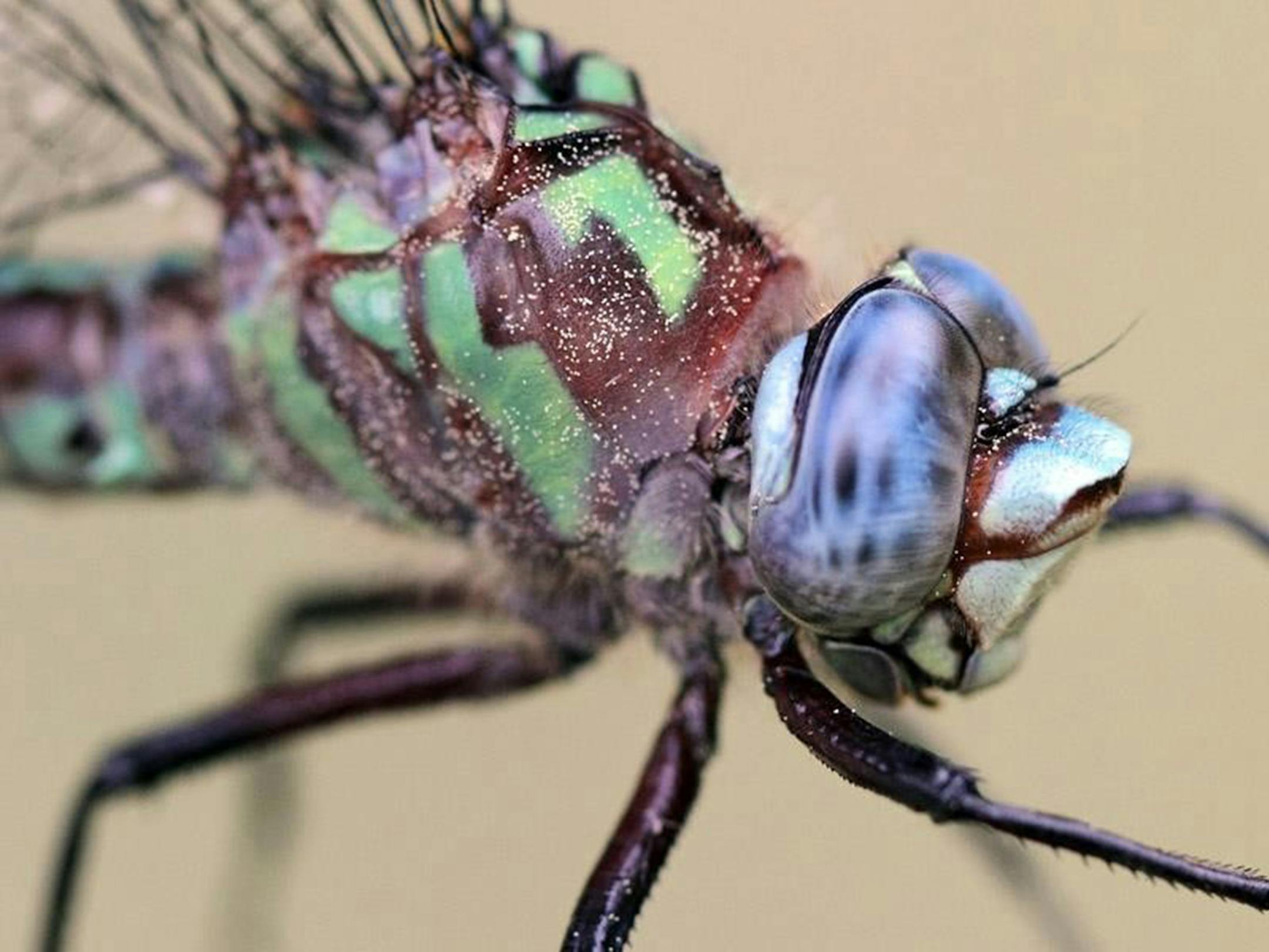
A delicate bluet damselfly with gossamer wings drifts and perches among yellow coneflowers and purple blazing star. A spotted-wing skimmer hitches a ride on a kayak gliding across a lake, keeping a paddler company. Then come the supercharged dragonflies — sturdy, strong darners — that buzz with authority across backyards and ball fields, hovering like helicopters, diving like jet fighters on the hunt for mosquitoes, midges and more.¶ Fans of dragonflies and the more delicate damselflies (which together comprise the group called odonata) are spreading the word about these often overlooked and underappreciated insects. Programs and dragonfly field studies have been popping up across the state all summer.¶ "They are the best fliers, bar none, on the planet," said Ron Lawrenz, director of the Lee and Rose Warner Nature Center in Marine on St. Croix and president of the Minnesota Dragonfly Society. "We want to show people how amazing they are."
Lawrenz and other volunteers with biology and education backgrounds or simply a passion for dragonflies have been studying and tracking Minnesota's population for the past 10 years.
While the lacy-winged insects are often depicted on clothing and in décor with their emerald, sapphire and amber colors, they haven't garnered anywhere near the scientific popularity or attention of butterflies. Minnesota dragonflies in particular were among the least-studied in the nation, said Kurt Mead, naturalist at Tettegouche State Park in Silver Bay, Minn., and author of "Dragonflies of the North Woods."
That began to change in 2006 when he received a seven-year grant to help train volunteers for research, equipping them with large nets, identification guides and magnifying lenses. The project's momentum morphed into the nonprofit Minnesota Dragonfly Society to keep research moving forward.
Angela Isackson, invasive species coordinator with the Three Rivers Park District, eagerly studied birds and plants and didn't pay much attention to dragonflies until she attended her first workshop led by Mead about five years ago.
"People get over-the-top excited," she recalled. "Once I started swinging the net, I understood. It's addictive, and it makes you feel like a kid again."
Try a dragonfly treasure hunt
For many, capturing a dragonfly can be the ultimate treasure hunt — a playfully competitive search for a speedy golden snitch with names like baskettails, clubtails, spiketails, bog haunters, shadowdragons, amberwings and cruisers.
A docile damselfly flitting among wildflowers might be an easy prey, Isackson said, but "if you're trying to get something like a green darner or black saddlebag, you're going to be running."