
Review: Love words? ‘Unabridged’ may be for you

Nonfiction: The book about how dictionaries have shaped the English language is perfect for word nerds.

Columnist Icon
The Minnesota Star Tribune
October 9, 2025 at 4:00PM
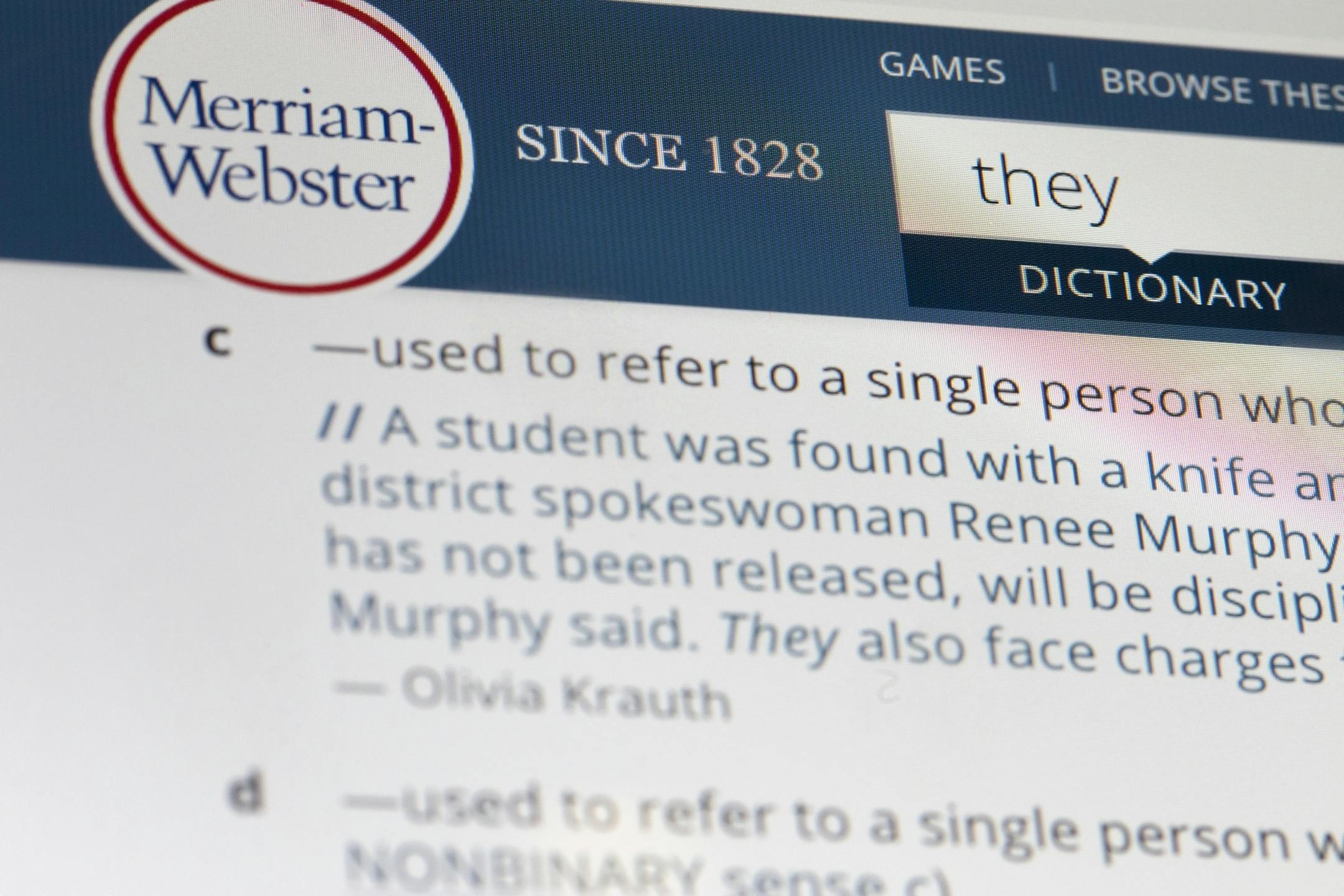
The word "they" is displayed on a computer screen on Friday, Dec. 6, 2019, in New York. The language mavens at Merriam-Webster have declared the personal pronoun their word of the year based on a 313 percent increase in look-ups on the company's search site, Merriam-Webster.com, this year when compared with 2018. Merriam-Webster recently added a new definition to its online dictionary to reflect use of "they" as relating to a person whose gender identity is nonbinary.
The word "they," Merriam-Webster's word of the year for 2019, gets a whole chapter in Stefan Fatsis' book about dictionaries and language evolution, "Unabridged." (Associated Press/The Minnesota Star Tribune)

Are dictionaries going the way of dodos, pocket calculators and civil discourse?

Some dictionaries are still printed but, increasingly, the reference books have moved online. And, as Stefan Fatsis describes it in “Unabridged” — his lively history of dictionaries that also looks at how they reflect and ratify changes in our language — their days may be numbered.

The word-obsessed Fatsis, who wrote the wildly entertaining “Word Freak” about competitive Scrabble, chatted with numerous dictionary authorities for “Unabridged.” He also did time as a staffer at Merriam-Webster, writing definitions and helping determine not only what counted as a new word but also what counted as a new word that was worth including in the dictionary. He managed to get “microaggressions” in, for instance, but struck out with “sportocrat,” meaning owners and power brokers along the lines of the Pohlads.

I am a huge fan of “Word Freak,” probably because I’m a huge fan of Scrabble, so I devoured its portraits of Scrabble dabblers on their suspenseful journey to the national championships. “Unabridged” does not have that kind of narrative spine, so it may be enjoyed more easily by dipping in and out of its fairly discrete chapters.

For instance, the chapter on usage of “they/them” as singular pronouns for people who do not identify as either “he” or “she,” going all the way back to Shakespeare, may appeal to one sort of reader. Others may be more compelled by a deep dive into the ways social media is transforming English or how artificial intelligence could change how we think about dictionaries.

One mildly infuriating impediment to enjoying specific chapters? It’s cute that Fatsis titles each of his chapters with the (lower-case) dictionary definition of words such as “collection” or “slip,” but those vague titles don’t make it easy to find specific pieces of information. A fascinating look at the rapid acceptance of the word “woke,” for instance, is buried in a chapter with the nondescript title “news.”

“Unabridged” is subtitled “The Thrill of (and Threat to) the Modern Dictionary,” which may seem like a reach to some. But, if the perfect word has ever popped into your head while you were struggling to write about something or if you were ever a fourth grader, hiding between shelves and paging through an unabridged dictionary to find the “dirty” words, you probably get what Fatsis means by “thrill.”

A fair amount of “Unabridged” has to do with what you could think of as gatekeeping in the world of dictionaries. Who decides that “microaggression” is a word worthy of inclusion but “sportocrat” is not?
Fatsis takes us into those decisions, which involve how often new words have appeared in print and whether they contribute anything noteworthy. But he also checks in with Erin McKean, founder of an online dictionary called Wordnik that is based on the premise that the 400-years-and-counting dictionary business should be about including new words, not excluding them.

“Human opinion on whether something is a word is worthless,” says McKean. “Because if they’re discussing it, it’s a word.”

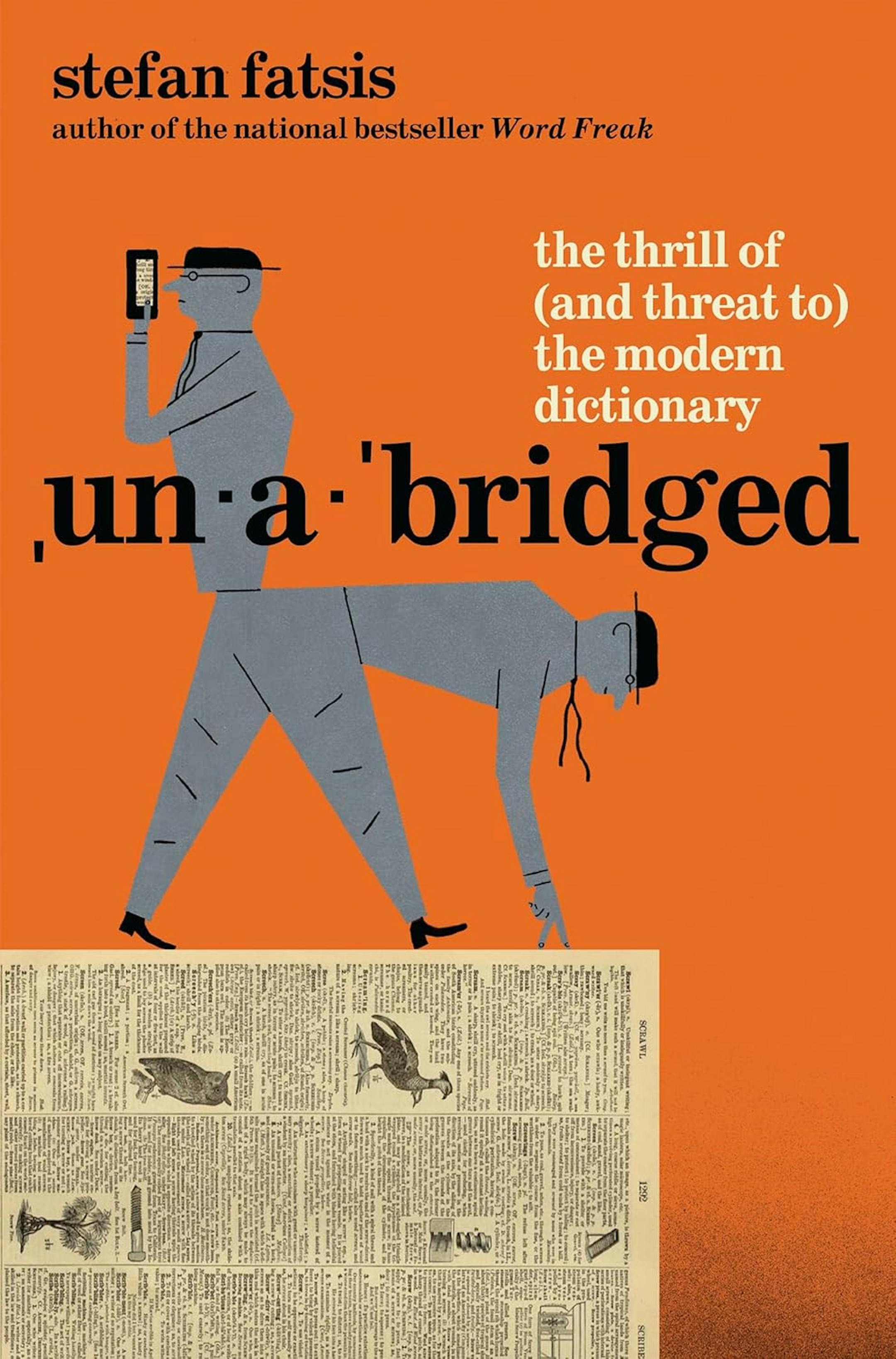
cover of Unabridged features a '50s-style illustration of a man divided in half at the waist, one half walking on a page of a dictionary, the other consulting a dictionary on his smartphone
Unabridged (Grove Atlantic)

That makes sense. Her why-not-include-everything notion is analogous, in fact, to the idea that newspapers once had to decide what stories they had space for in print but, now, the sky is theoretically the limit on news sites. Another thing dictionaries and newspaper have in common? Both are endangered.

“Noah Webster invented the American dictionary,” Fatsis writes. “George and Charles Merriam reinvented it as a consumer product. And their twenty-first century heirs needed to re-reinvent it for the digital future.”

Unabridged: The Thrill (and Threat to) the Modern Dictionary

By: Stefan Fatsis.

Publisher: Grove Atlantic, 382 pages.

about the writer

about the writer

Chris Hewitt

Critic / Editor

Interim books editor Chris Hewitt previously worked at the Pioneer Press in St. Paul, where he wrote about movies and theater.

See Moreicon

More from Books

See More
The Abbey Church is a landmark on the St. John's University campus located in Collegeville.
The Minnesota Star Tribune

Local nonfiction: “Greater Minnesota” travelogue details a home-grown returnee’s conversion.

photo of author Tilar Mazzeo
card image