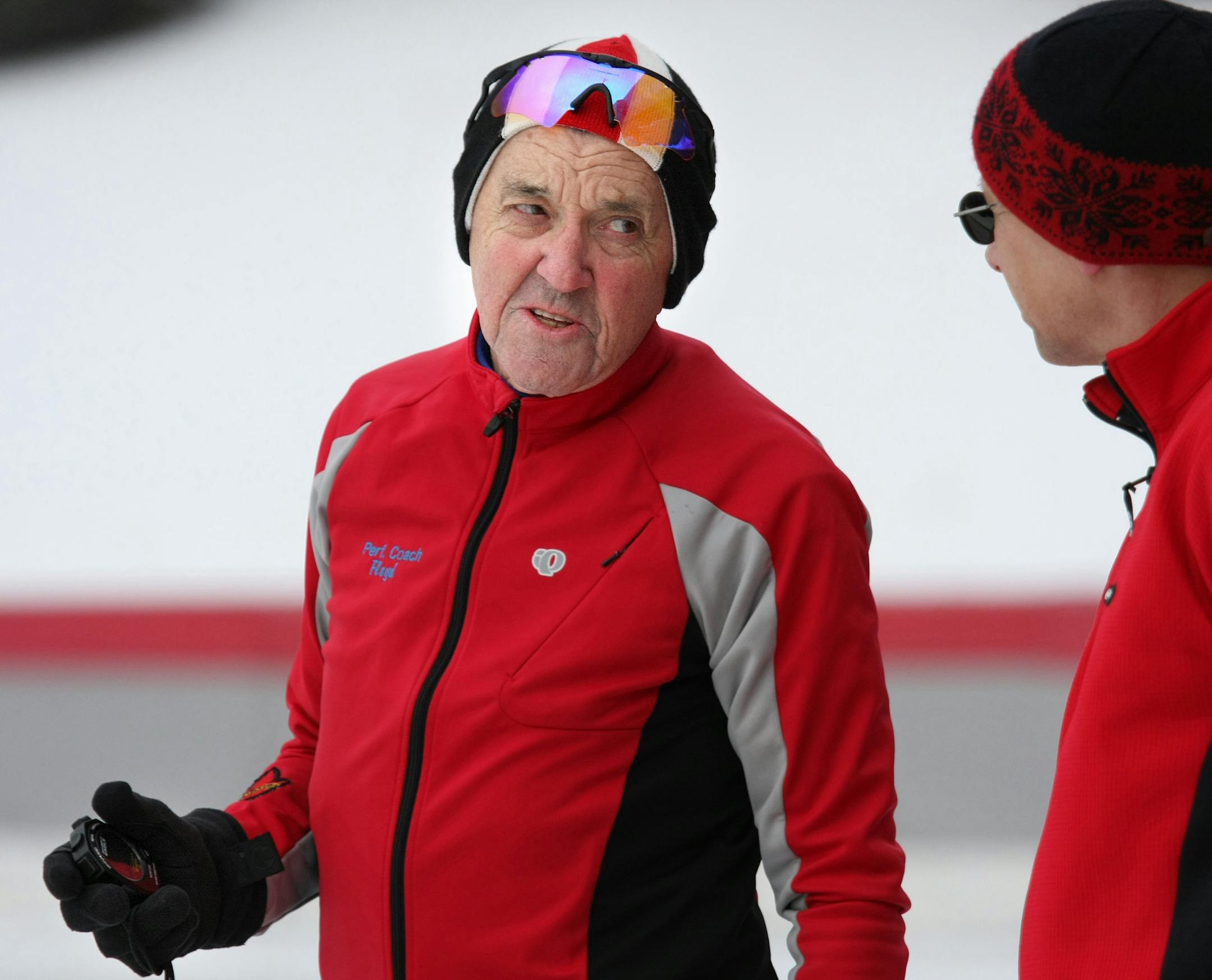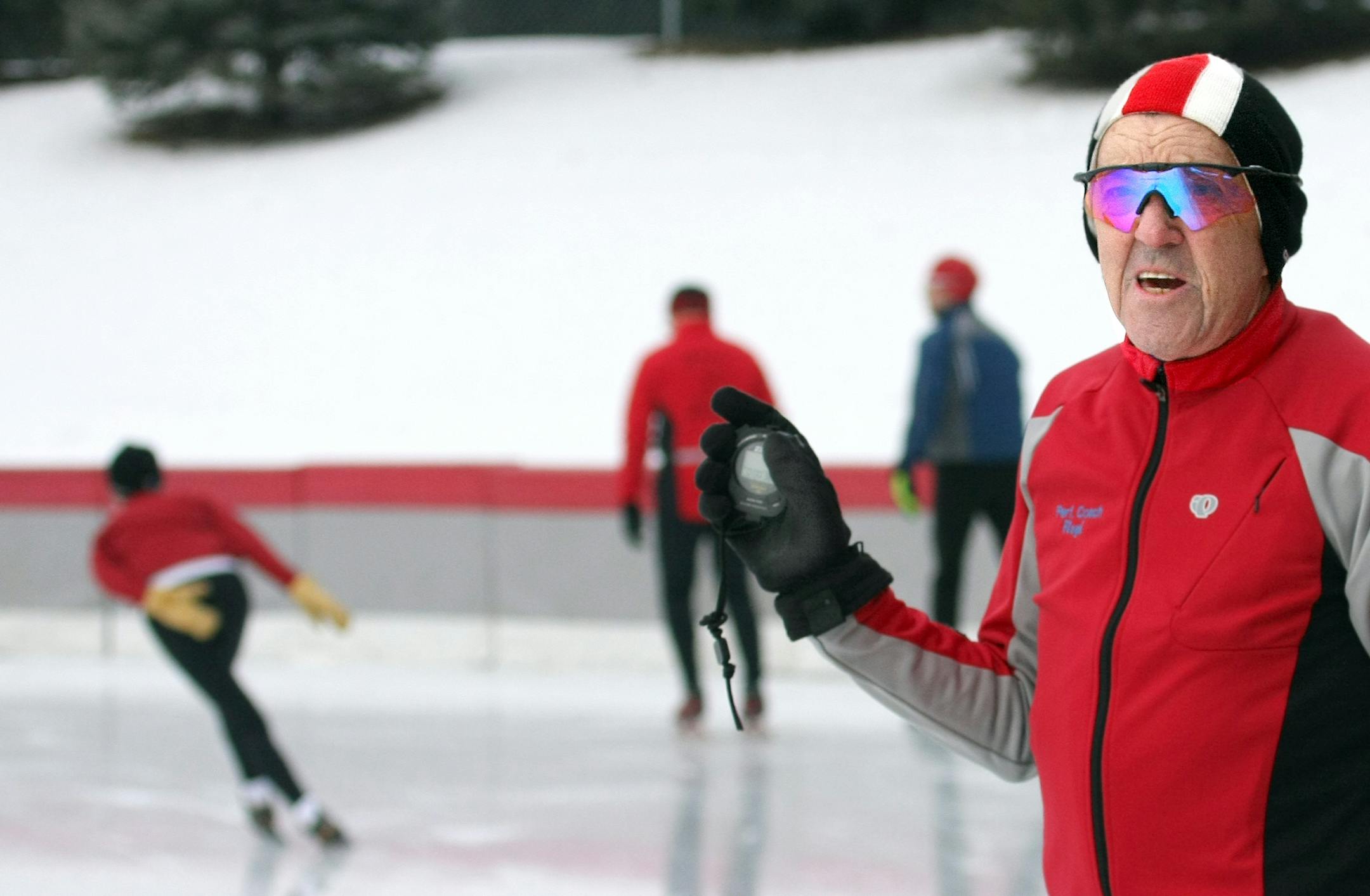
Floyd Bedbury first put on speed skates in 1946. He was 9 years old, fit and looking to race on a plowed circle of ice at Como Park in St. Paul. "It's been 62 years now," he said.
In those decades, long blades on ice have propelled Bedbury around the planet, including speed skating world championships and, in 1960 and 1964, to the Olympic Games. And he's still at it.
"My whole life I've just wanted to race," Bedbury, now 70, told me last week at the John Rose Oval skating track in Roseville.
It was a Wednesday afternoon, and Bedbury's team, the Twin City Speedskating club, was lacing up on benches in a building beside the track. I'd come at Bedbury's invitation to try the sport during an hour of open ice training time.
Outside, the Oval was gaining a gloss, a Zamboni polishing its 400-meter loop. This colossal rink makes up North America's largest continuous sheet of refrigerated ice. Skaters waddled toward the track, blade guards clacking on cement as they approached the immaculate medium of their sport.
Speed skating has roots in 19th-century Scandinavia, where athletes sprinting on ice drew huge crowds. By the 1920s it was an Olympic sport, and the United States had top competitors who hailed from Lake Placid, New York and other northern cities.
Minnesota, with its long winters and abundant lake ice, has long been a hot spot, producing dozens of national champions and Olympic speed skaters over the decades.
There's been a Minnesota skater on almost every Olympic team since 1960, according to Bill Cushman, head coach with the St. Paul-based Midway Skating Club, an organization founded in 1945.