

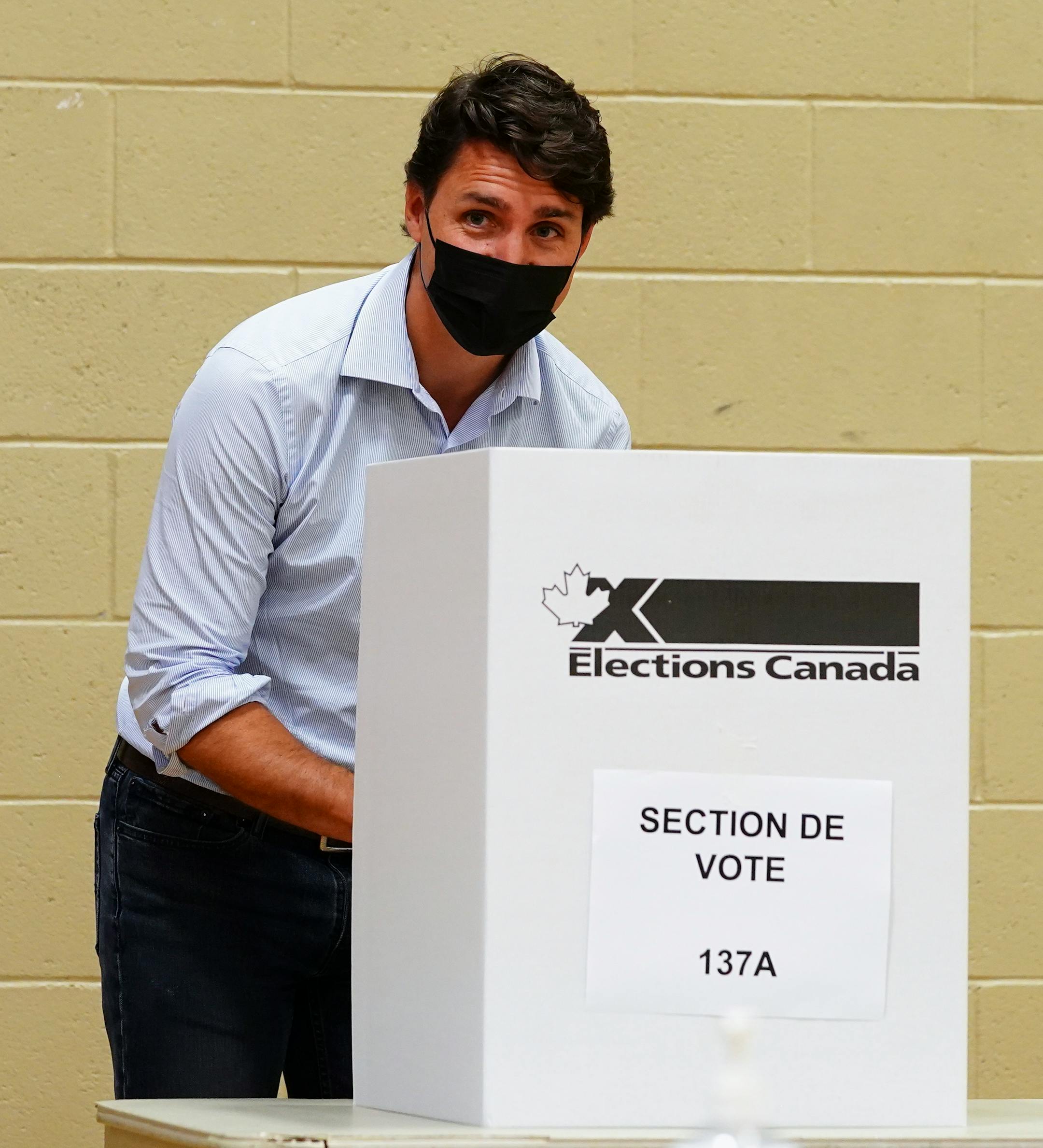
Canadians went to the polls on Monday. Germans will vote on Sunday. Each country's election results are important beyond their borders, with the outcome in Germany especially profound because voters are choosing a successor to Chancellor Angela Merkel.
In Canada, voters delivered a largely status-quo result: Justin Trudeau will remain prime minister. But Canada's leader leaves the race a diminished figure, as his gambit to gain a clear governing majority by calling a needlessly early election during a resurgent pandemic alienated many.
In Canada's most expensive and lowest turnout election ever, Trudeau's Liberal Party ended with a lower vote percentage than the Conservatives, but the third-place New Democratic Party will likely again align with the Liberals, giving the bloc a parliamentary majority.
Voters sore about trudging to the polls seemed to grudgingly accept that Trudeau has managed the nation relatively well — especially in contrast to the chaos south of their border. And while the Conservatives fielded a congenial candidate in Erin O'Toole, the party lost some votes to the populist People's Party.
The electoral stasis isn't necessarily a political one. Trudeau was tarnished domestically, and initial thoughts that he may emerge as a key transatlantic leader seem to have lagged, too. That's particularly unfortunate for beleaguered Western relations because Merkel, the continent's most consequential leader, is stepping down.
Germans appear split, according to recent polls. Merkel's party, the Christian Democratic Union (and its Bavarian partner party, the Christian Social Union), settled on a chancellor candidate, Armin Laschet, who's widely seen as lackluster. This has provided an opening for the once-moribund Social Democratic Party, led by Olaf Scholz, a centrist in the left-leaning party who has effectively served as Germany's finance minister in the current coalition government.
A range of combinations exist to form a government, and one led by either Laschet or Scholz would not be a sharp departure from the sensible centrism Merkel has represented. But it's unlikely that either would have the international stature Merkel earned — although her strong leadership at times grated within Europe — from countries like Greece during the eurozone crisis, or at home when Merkel set a global example by accepting so many Mideast (mostly Syrian) refugees at the height of 2015's migration crisis.
Merkel also was a staunch ally of the U.S. but, like a true friend, not afraid to call out counterproductive policies, as she famously did in meetings with former President Donald Trump.


