

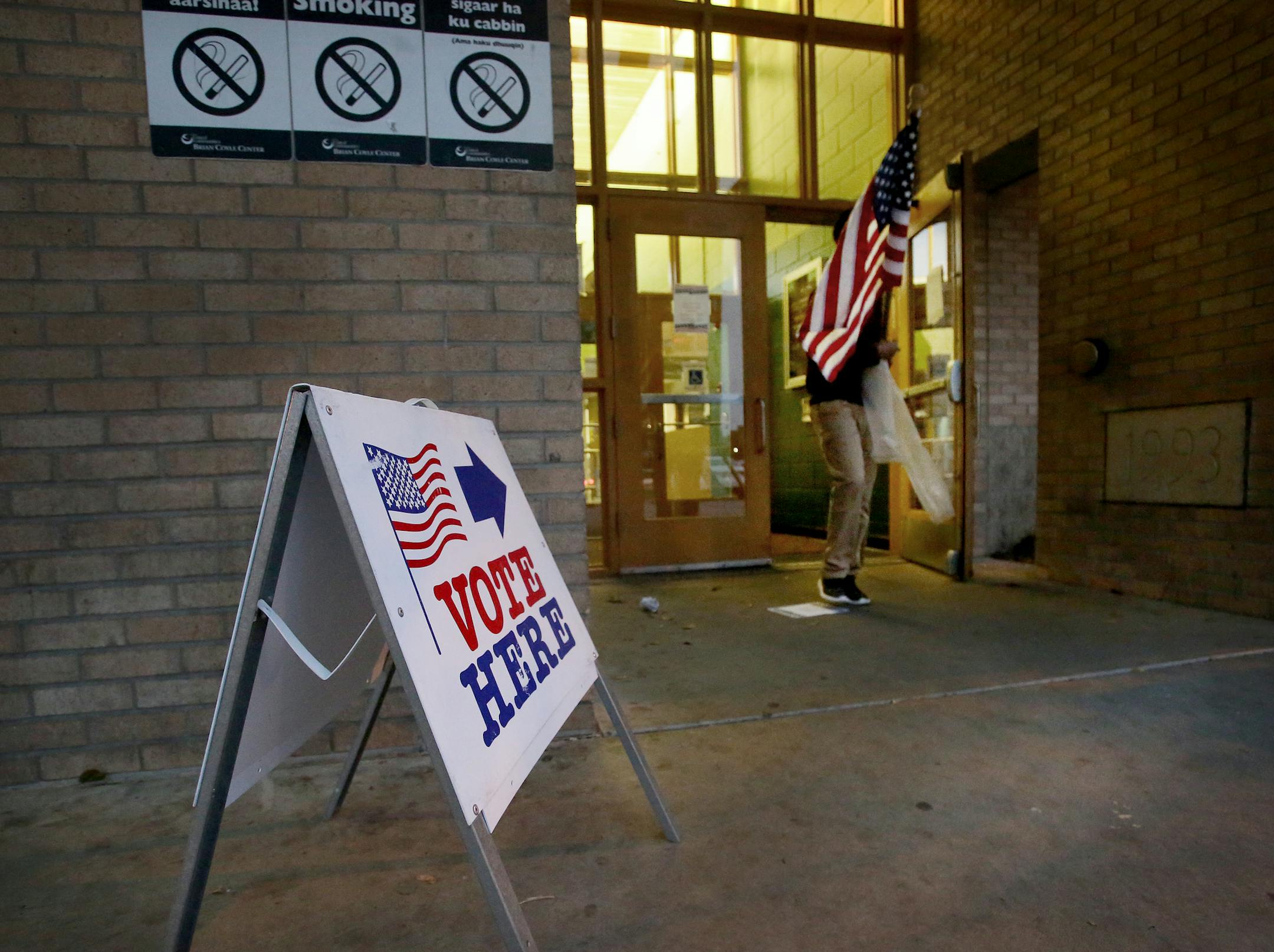
The U.S. Supreme Court has agreed to consider whether a Minnesota law that prohibits political clothing or buttons at polling places violates voters' free-speech rights.
The court will take up a case originally filed in 2010 by three conservative or libertarian groups: the Minnesota North Star Tea Party Patriots, the Minnesota Majority and the Minnesota Voters Alliance. Members of those organizations, concerned about ineligible voters casting ballots, turned up on Election Day wearing buttons reading "Please ID me," and at least one person wore a T-shirt with a Tea Party logo that said "Don't tread on me."
Elections officials in Hennepin and Ramsey counties challenged the group members over their shirts. In the lawsuit challenging that, they argued that the state law is too broad and leaves room for polling-place workers to limit the rights of people who turn up to vote in a variety of apparel. Lower courts found that the law did not violate the Constitution, but the Minnesota groups that launched the legal battle are now hoping the country's highest court sees things differently.
"The state of Minnesota and election managers have been so intentional in targeting conservative opponents of their policies," said Erick Kaardal, the attorney for the Minnesota Voters Alliance. "We're so thankful that the First Amendment is there and that the U.S. Supreme Court is taking interest in this case."
The case was filed against former Minnesota Secretary of State Mark Ritchie and the election managers and county attorneys in Hennepin and Ramsey counties. Several of those officials declined to comment, citing the pending litigation, or they could not be reached.
But Daniel Rogan, the civil division manager in the Hennepin County attorney's office, who argued the case before the Eighth Circuit Court of Appeals, said his office believes the lower courts' rulings were correct. He said the law related to what voters can wear or carry at polling places dates to 1893 and aims to preserve the "integrity" of elections.
"The statute is to allow voters the right to vote in a neutral place," Rogan said. "We believe it provides reasonable limitations on political speech to ensure there is peace, order and decorum in the polling place."
The Minnesota groups that filed the lawsuit will get help from attorneys with the Pacific Legal Foundation, a California-based firm focused on libertarian issues.


