

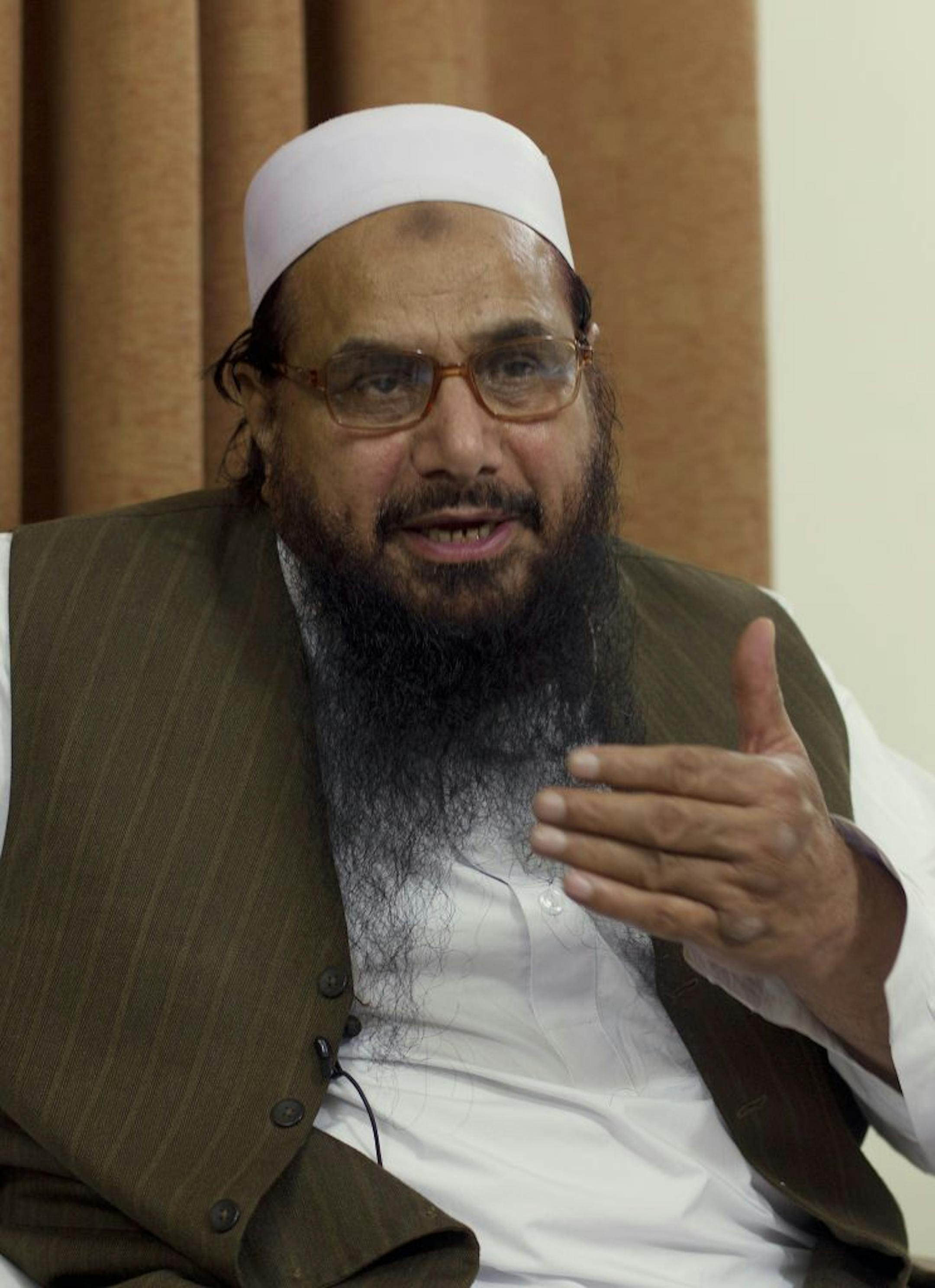
ISLAMABAD, PAKISTAN - Pakistan was stung on Tuesday by the U.S. State Department's announcement of a $10 million reward for the capture or conviction of the founder of a Pakistani militant group that allegedly carried out the November 2008 terrorist attacks on Mumbai, India's largest city.
The size of the bounty for Hafiz Mohammad Saeed, founder of the Lashkar-e-Taiba organization, is on par with what the United States is offering for Mullah Mohammad Omar, the leader of Afghanistan's Taliban.
To their consternation, Pakistani officials didn't learn of the U.S. decision until newspaper websites in India, Pakistan's archenemy, reported it early Tuesday. That prompted analysts in Islamabad to conclude that it was a pressure tactic by Washington aimed at forcing Pakistan to reopen NATO supply routes to Afghanistan that were suspended last fall after a friendly-fire incident in which U.S. forces killed two dozen Pakistani soldiers.
"The U.S. has upped the ante. It's as if they're saying: You blocked the NATO supplies, so we've done this," said Imtiaz Gul, the director of the Center for Research and Security Studies, an independent research center in Pakistan. "It's a very strong message."
Pakistan has previously said it can't act against Saeed because the country's fiercely independent judiciary has cleared him of involvement in the Mumbai attacks. Saeed faces no criminal charges in Pakistan, and he's often appeared in public in recent months, denouncing the United States and calling for Islamabad to end counter-terrorism cooperation with Washington.
The State Department said in a news release that "Saeed and his organization continue to spread ideology advocating terrorism, as well as virulent rhetoric condemning the U.S., India, Israel and other perceived enemies."
In Washington, spokeswoman Victoria Nuland said the decision to name Saeed had been in the works for months and wasn't related to NATO supplies but rather was because he'd helped plan the four-day assault on Mumbai, in which 166 people were killed, including six U.S. citizens.
"This is a case that's been going on for a long time," Nuland said. "This is with regard to justice being served on people who have killed Americans, so that there's no impunity for them anywhere in the world."


