

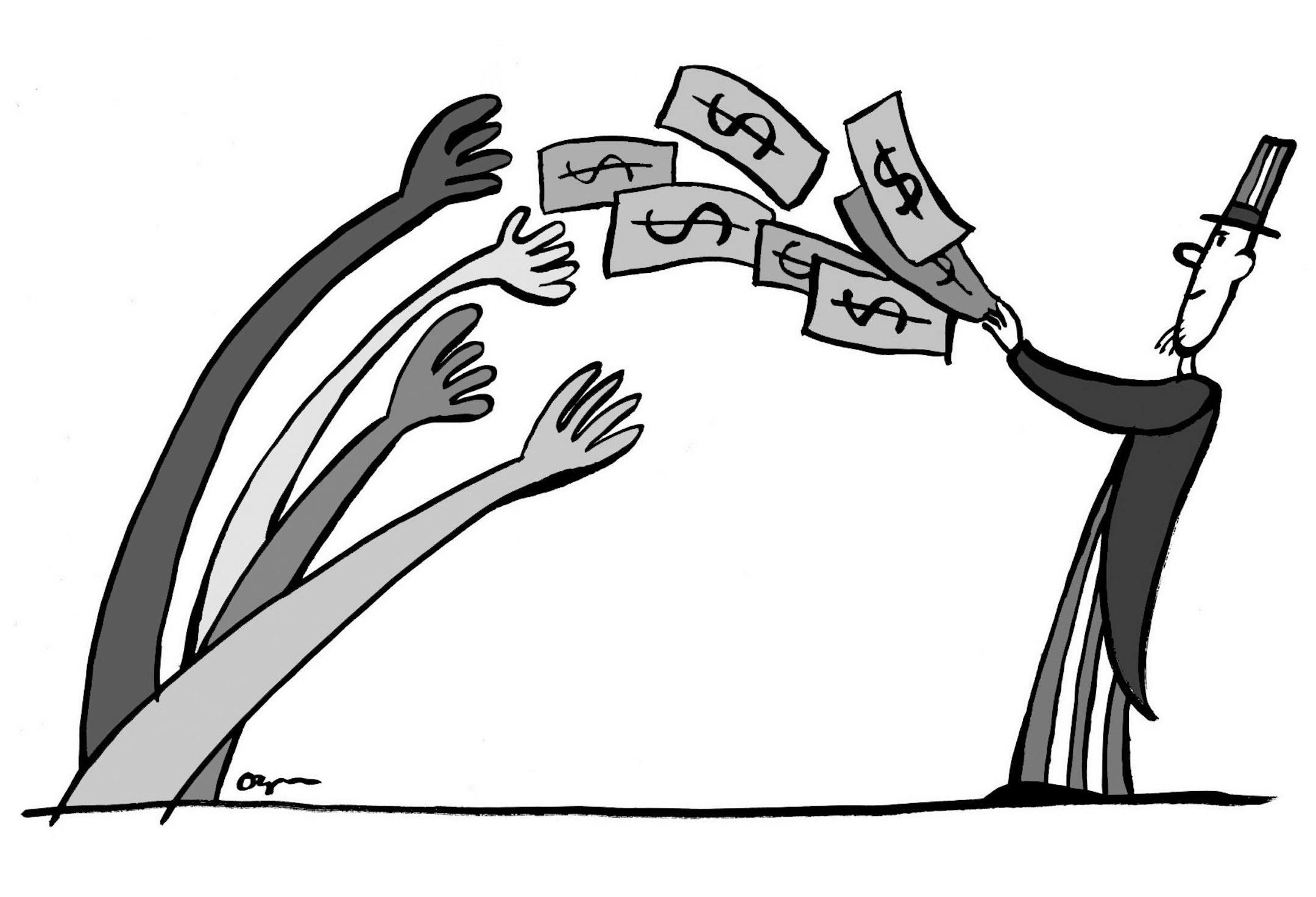
Conservatives say that 50 years after President Lyndon Johnson declared war on poverty, the lesson is that more government spending isn't the best way to solve the problem — at least the way anti-poverty programs are set up today. The data suggest they have a point.
In 2009, the United States shelled out $8,713 in government social spending per resident, according to the Organization for Economic Cooperation and Development. That didn't put the U.S. at the top of the list; 12 countries spent more, led by Luxembourg at $19,556. (All amounts are in U.S. dollars and are adjusted to control for differences in purchasing power.)
But the United States was more generous than most. Its per-person social spending was 15 percent higher than the OECD average, topping countries traditionally viewed as welfare states, including Britain, Spain, Canada, Greece and Portugal.
(Gauging generosity isn't straightforward. By another measure — share of gross domestic product — the United States was below the OECD average in 2009. Using that approach, the United States directed 19 percent of its wealth toward social spending that year, slightly less than the 22 percent average across OECD countries. That gap remained constant through 2013.)
What did the United States get for all that money? According to OECD statistics, the share of the U.S. population living at or below 50 percent of the median income, after taxes and transfers, was 17 percent in 2010. That's the fifth-highest among OECD countries for which 2010 data are available, trailing only Israel, Mexico, Turkey and Chile. The average across all OECD countries was just 11 percent.
So whether you measure social spending in dollars or as a share of GDP, the United States is doing a worse job of fighting poverty than its level of spending would suggest.
The method of comparing poverty used by the OECD isn't perfect. It fails to reflect, among other things, that a person with just below 50 percent of the median income in a high-income country, such as the United States, might be able to buy more than somebody just above that cutoff in a low-income country. Even so, the comparisons are revealing.
Aside from Spain, with a level of 15 percent, no European country even came close to the U.S. incidence of poverty. Britain, where government social spending per person was 4 percent lower than in the United States, had a poverty rate of 10 percent, just over half that of the United States. Meanwhile, Canada, which spent 16 percent less on social programs, had a poverty rate about two-thirds the U.S. level.


