

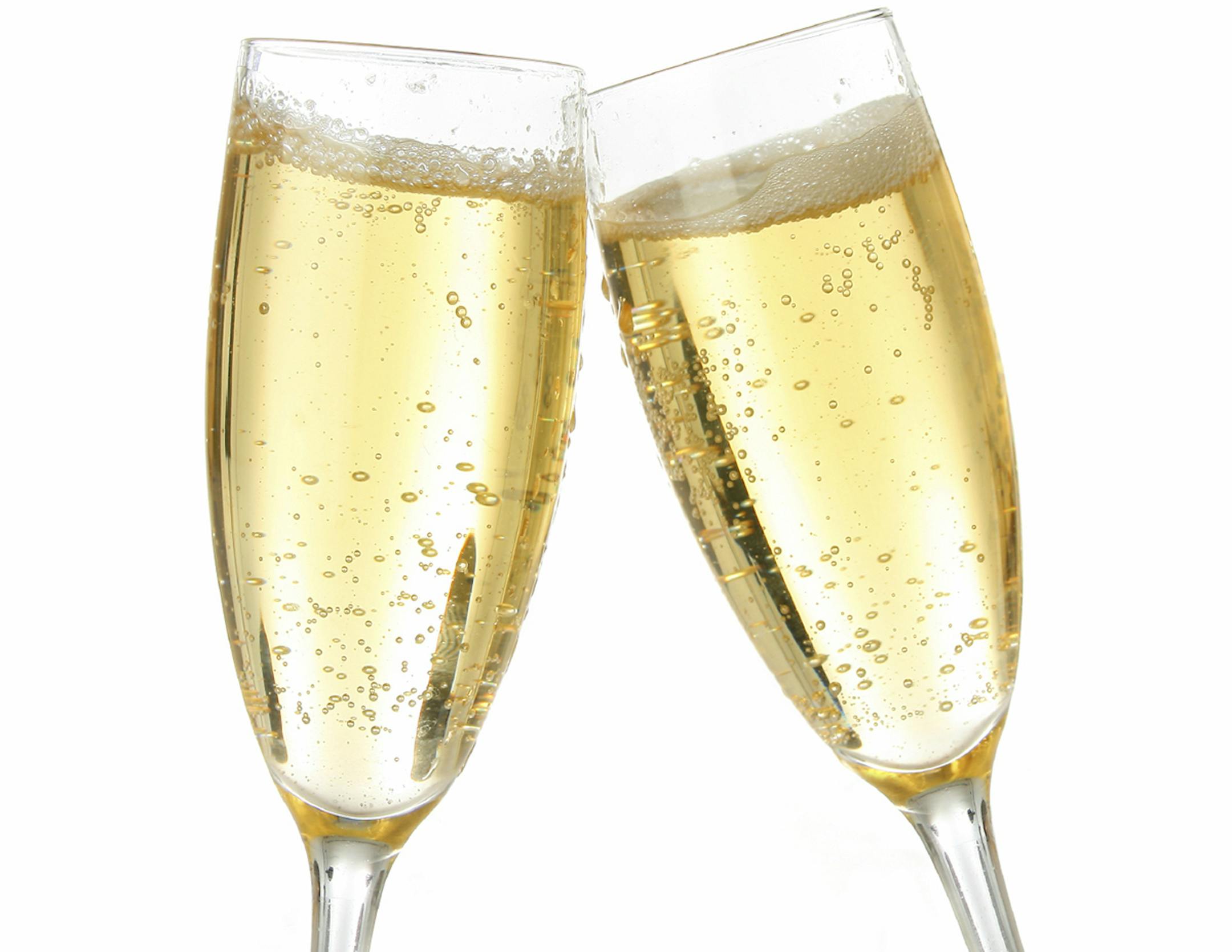
First, let's get this out of the way: Domestic sparkling wines are not Champagne, even if it might indicate that on the label. Some labels might say that, but only wines from France's Champagne region are the real thing. (Korbel's use of the word was grandfathered in, but those wines are nothing like Champagne in quality and style.)
But they do share this with their French brethren and sistren: Most of the bottles are made at good-sized houses that blend juice from many vineyards (and often vintages) — and they're better than ever.
They're also, in almost all cases, less expensive, coming in well under "special occasion" prices.
Which means they can fulfill the role that sparkling wines should play: as an oft-served, incredibly food-friendly beverage that adds vim and vigor, literally and figuratively, to any occasion.
A quick refresher on these bubbly delights:
• The wines usually are made in one of two ways: The méthode Champenoise finds the mixture of still wine, sugar and yeast undergoing a second fermentation in each bottle; in the Charmat process, the second fermentation takes place in a pressurized tank before bottling. The first practice is used throughout the region of Champagne, the second for Prosecco.
• The terminology denoting the sweetness is often counterintuitive, running from very dry (Natural) and dry (Brut) to slightly sweet (Extra Dry) and sweet (Sec and Demi-Sec).
• "Blanc de Blancs" (white from whites) and "Blanc de Noirs" (white from reds) indicate that the wine is made entirely with grapes of one color.


