

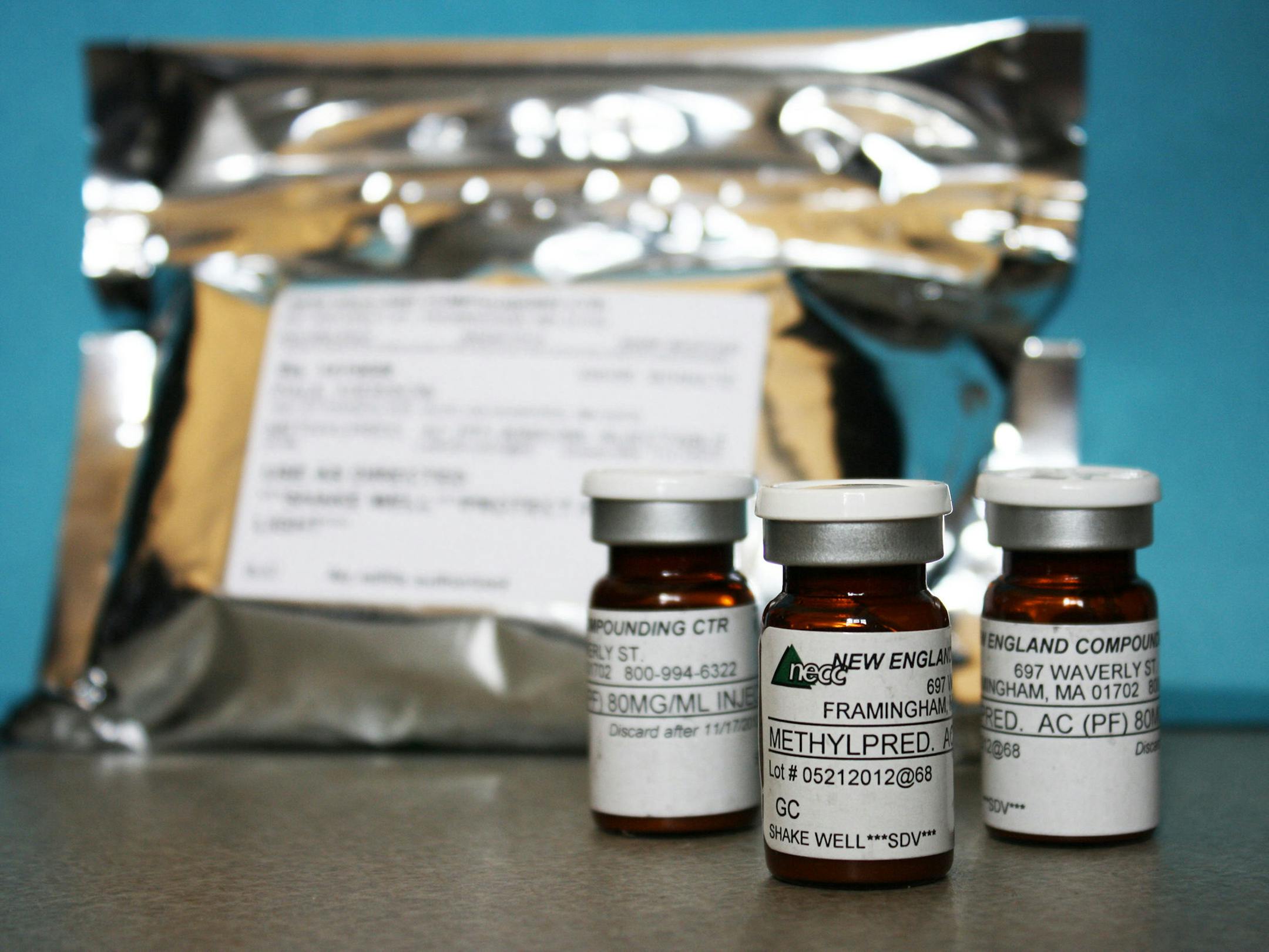
It's been more than a year since a deadly fungal meningitis outbreak traced to a filthy New England compounding pharmacy put a shocking spotlight on the risks of medications mass-produced by underregulated firms.
Yet despite the outrage and calls for action, small drug manufacturers masquerading as pharmacies have continue to ship contaminated products. In late October, the U.S. Food and Drug Administration (FDA) advised hospitals and other clients of a Michigan-based compounding pharmacy not to use any of its sterile products after "unidentified particulate matter" was found floating in a product intended for hospital use.
Over the past year, products made by other compounders have been linked to eye infections, skin and soft-tissue abscesses, and bacterial bloodstream infections.
The millions of Americans who rely on compounded medications each year, particularly injectable treatments, shouldn't have to worry about these products' safety or purity. That's why the U.S. Senate should move swiftly to put the common-sense "Drug Quality and Security Act," which will enhance federal oversight of compounding pharmacies, on President Obama's desk for his signature.
The legislation also calls for implementing a "track and trace" system to put unique identifiers on drugs as they move through the supply chain — another reason to support its passage. This system would help protect consumers from the growing problem of counterfeit or stolen drugs. It would also help ensure that contaminated products are taken off the shelves before they're dispensed to consumers.
The U.S. House passed the bipartisan legislation shortly before last month's federal government shutdown. The U.S. Senate was expected to take up this measure in early November. But the potentially lifesaving legislation is still awaiting action in the upper chamber despite the best efforts of Minnesota's Sen. Al Franken and Iowa's Sen. Tom Harkin, both Democrats, along with others who have pushed to strengthen oversight.
As of late October, 751 people nationwide had become ill in the fungal meningitis outbreak that began last fall and was linked to the New England Compounding Center. Sixty-four people have died. The U.S. Centers for Disease Control and Prevention called it "the largest outbreak of health-care associated infections in the United States."
With the ongoing illnesses this year linked to other compounding pharmacies' products, it's a good bet that every senator has at least one constituent affected by this disturbing public health threat. And there will be more unless action is taken.


