
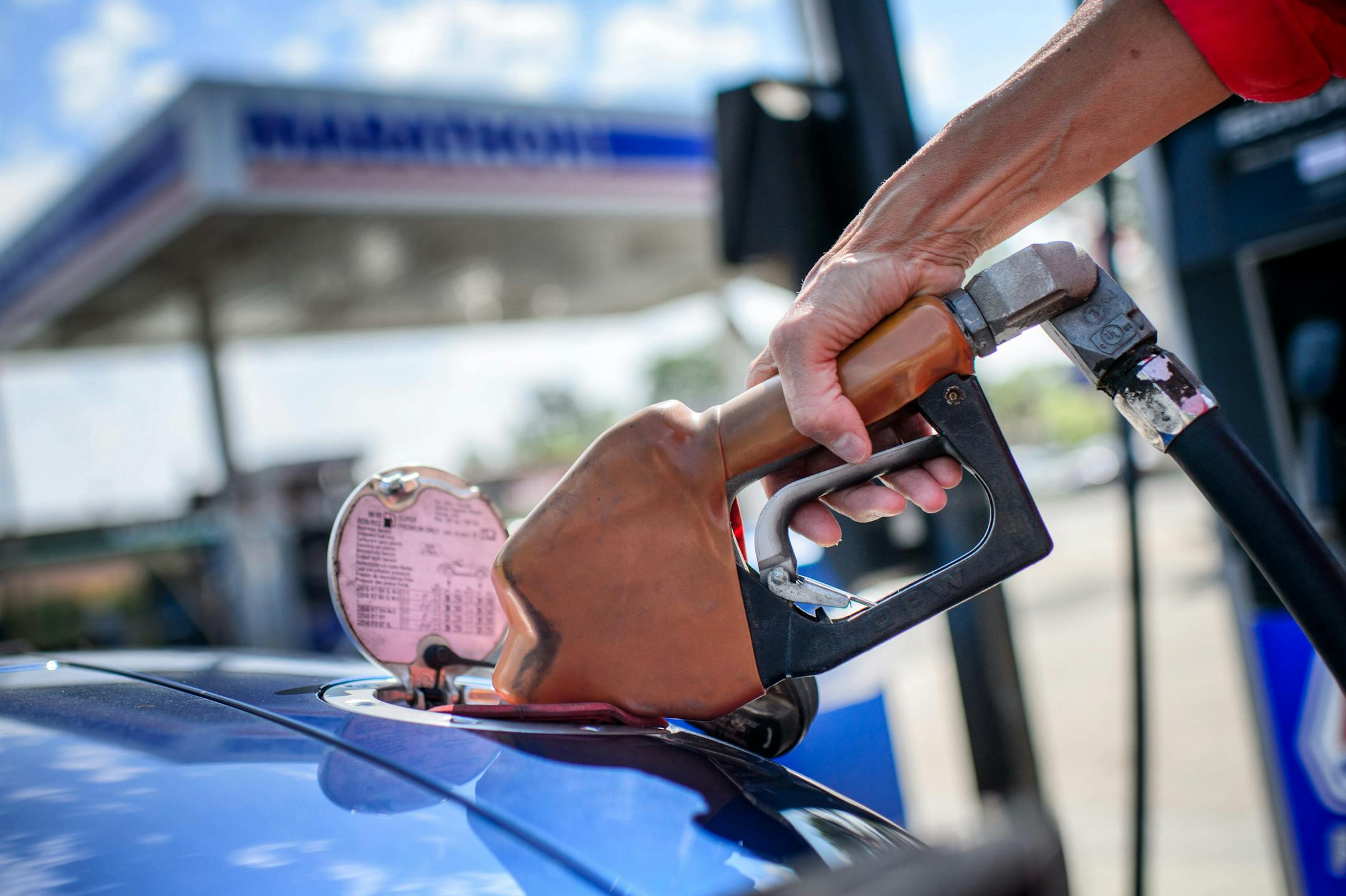
U.S. Sen. Tina Smith: It's time for some real talk on gas prices

If you're looking to cast blame, know that it's complex. If you're looking to make a difference, think about demand.

March 31, 2022 at 10:30PM
On Thursday, President Joe Biden announced an unprecedented release of oil from U.S. reserves to help ease gas prices at the pump. (Glen Stubbe, Star Tribune/The Minnesota Star Tribune)

Gas prices are too high, and because of the unjust and unprovoked Russian invasion of Ukraine, the wild ride at the pump is likely to continue.

I drive too. I don't like it either.

But before politicians go trying to score points casting blame, let's make sure we all understand exactly why we're in this situation and exactly what can — and can't — be done to fix it.

First things first: The price of gas depends on the global price of oil, and the global price of oil depends on supply and demand. Before the war, Russia exported 5 million barrels a day — which is why, when Democrats and Republicans alike called on President Joe Biden to stand up to Putin by making it harder for Russia to export its oil, we all did so knowing full well that doing the right thing would come with a cost.

Can the world make up the supply elsewhere? In theory. But the reality is, we have no good options. Saudi Arabia and the United Arab Emirates — despite decades of American support — are not rushing to help.

Republicans argue that we should make up the difference by increasing domestic production — and they imply that the Biden administration's policies are standing in the way. But that's simply not true. For better or worse, in his first year in office President Biden actually approved more oil and gas leases on public lands than President Donald Trump averaged. So why aren't oil companies using those leases to drill more? Not because of anything the Biden administration is or isn't doing, but because, as the Washington Post reported, oil companies "would rather use their earnings from higher prices to boost payouts to shareholders."

So Democrats are correct to point out that it's oil companies, not the Biden administration, that are holding back domestic oil production. But before you put all the blame on "greedy oil companies," know this: Even if domestic oil companies drill more, it won't make as much impact as you might think. Indeed, history shows that there's no real relationship between how much oil we drill at home and the price we pay at the pump.

That's because there's no such thing as an "American" price of oil. It's a global market.

Some quick math: Domestic oil production peaked in November 2019 at 13 million barrels per day before dipping to a low of 10 million barrels per day during the pandemic. But under Biden, production has already rebounded to more than 11.5 million barrels per day. So even if we returned to peak production immediately, it would only make up a small part of the shortfall caused if Russian oil isn't on the global market.

The actual problem here — the reason you're paying so much for gas — is that, even setting aside the impact they have on climate change, fossil fuels simply aren't a reliable source of affordable energy in the first place. And this extends to more than just the gasoline in our cars; it includes the natural gas that heats our homes. Don't believe me? Ask any Minnesotan. We are all still paying dearly from the failure of Texas natural gas production during Winter Storm Uri last year.

There were many global oil supply crises before Russia invaded Ukraine — caused by everything from OPEC to COVID — and there will be more in the future caused by who knows what. The only way to get off that roller coaster once and for all is to stop relying on oil.

That's why, instead of trying to score political points by casting blame for the reduced global supply of oil, we should all be using this moment to focus on the other variable, the one we can control: demand.

The argument for using less fossil fuel and more clean power isn't just about our planet — it's about our pocketbooks.

Simply put, Vladimir Putin can't control when the sun shines or the wind blows. The more fossil fuel we replace with homegrown clean electric power, clean hydrogen and clean biofuels, and the more we reduce our demand by prioritizing energy efficiency, the less we have to worry about the unpredictability of oil prices.

We've got a plan on the table right now in Congress to encourage the switch to clean energy that would reduce our use of oil by twice as much as we currently import from Russia. It would also help dramatically reduce fossil fuel dependence in our electric sector. This approach would address gas prices not with a futile attempt to source more oil, but with a practical plan to use less. It is time to get it done.

What's more, fully committing to the transition would spark a new wave of American innovation — not to mention American manufacturing. And it would make our country truly independent from the unreliable and untrustworthy countries that use their oil supplies to keep us at their mercy.

Clean power is economic and patriotic. It meets the moment on climate change and enhances our national security. It means cheaper and more reliable energy for all of us.

So unless you're a malevolent dictator who relies on oil to maintain leverage over the United States — or an oil company executive who profits from higher energy costs — there's no reason not to make this the moment we finally act. And there's no excuse for letting this opportunity slip through our fingers.

Indeed, this gas price crisis may be Putin's fault. But if we miss this chance to get off the fossil fuel roller coaster once and for all, then next time, we'll have no one to blame but ourselves.

Tina Smith, a Democrat, represents Minnesota in the U.S. Senate.

about the writer

about the writer

Tina Smith

More from Commentaries

See More
card image
Alex Kormann/The Minnesota Star Tribune

To me, the run of stories in 2025 has an uncomfortably familiar sound, yet each episode has come and gone with barely a flicker of concern.

card image
card image