

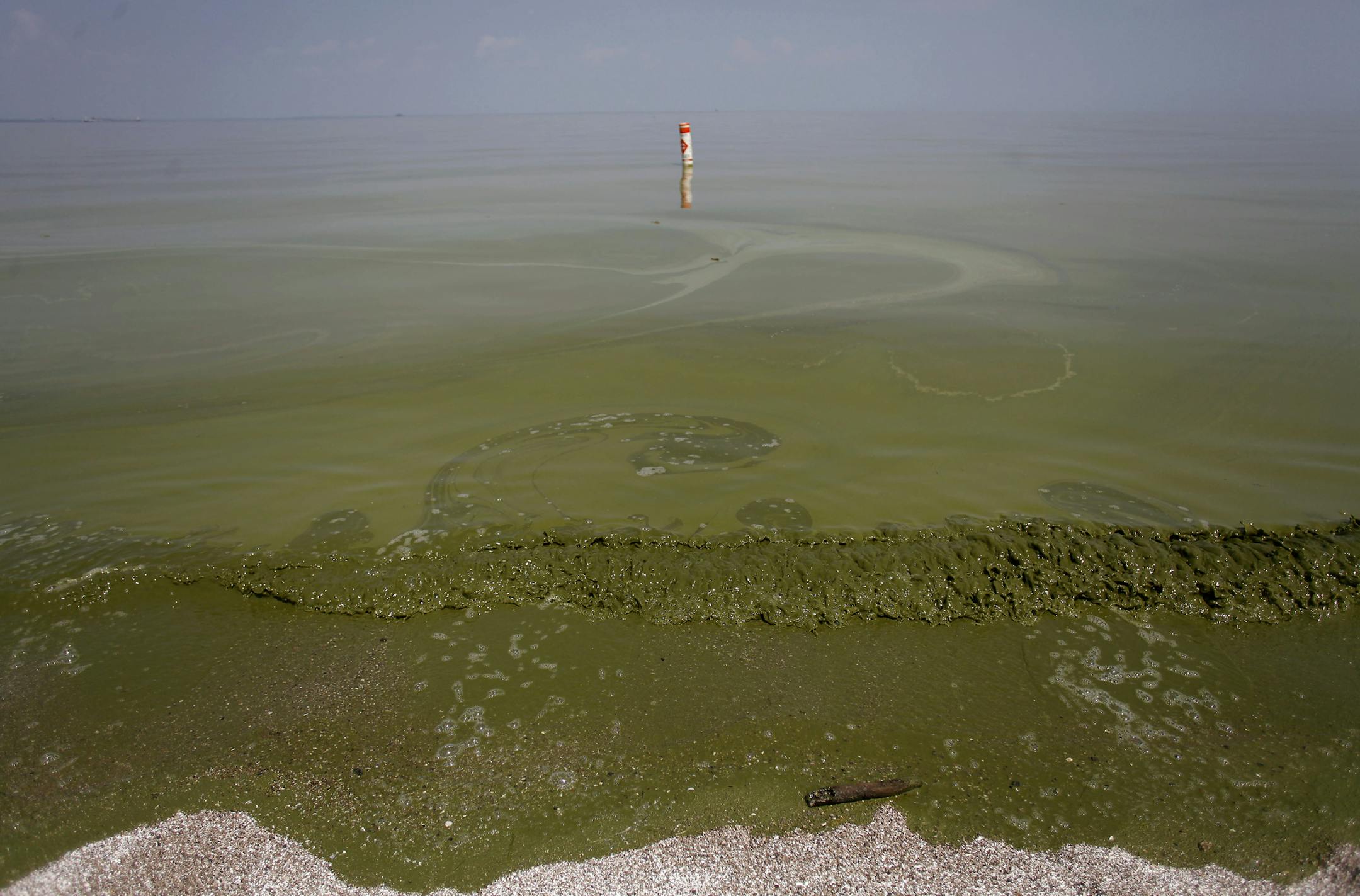
More than half a million people in the city and suburbs of Toledo, Ohio, got a break Monday: They were told that their tap water was safe to drink again.
That was two days after residents were warned that their water posed a health risk because of toxins related to an algal bloom in Lake Erie, the source of the city's water.
Isn't it a little unnerving that one day you can't use your tap water to brush your teeth or wash dishes, let alone drink, because officials say it might cause damage to your liver and nervous system, and then, the next day, the problem has disappeared?
Unless the Clean Water Act and other environmental regulations are updated and steps are taken to mitigate the causes of algal blooms in the Great Lakes as well as the Gulf of Mexico, many Americans will rightly worry about the safety of their drinking water, and more bans such as the one in Toledo are likely. The key is reducing the amount of phosphorus flowing into rivers and lakes.
The science is well understood: Pollutants, mainly from agricultural runoff and, to a lesser extent, sewage-treatment plants, stimulate growth of algae during the warm summer months. The algae in this case — a blue-green variety called Microcystis — release what are known as cyanotoxins, which can be difficult to detect and can't always be filtered out by municipal water-treatment systems.
The algae don't cause problems just for people. When they die, they fall to the lake bottom, where they decompose. This uses up most of the oxygen in the water, leading to fish kills and so-called dead zones during warm weather.
The U.S. government should remember how expensive it is to wait too long to save its water from such degradation. Lake Erie, which was known as "North America's Dead Sea" in the late 1960s, was saved mainly by the Clean Water Act of 1972, which required sewage-treatment plants and industry to limit how much pollution they discharged into U.S. streams and rivers. It was an enormous undertaking, with federal and state governments spending more than $60 billion nationwide to improve treatment facilities. This cut a major source of phosphorus, as did changes to household-detergent formulations that relied on phosphates.
The Great Lakes system, and Lake Erie in particular, now is being stressed by new sources of phosphorus from agricultural runoff that the Clean Water Act was never designed to mitigate. The heavier-then-normal spring rainfall in the booming farming areas that drain into Lake Erie increased its phosphorus levels, worsening the normal algal bloom.


