

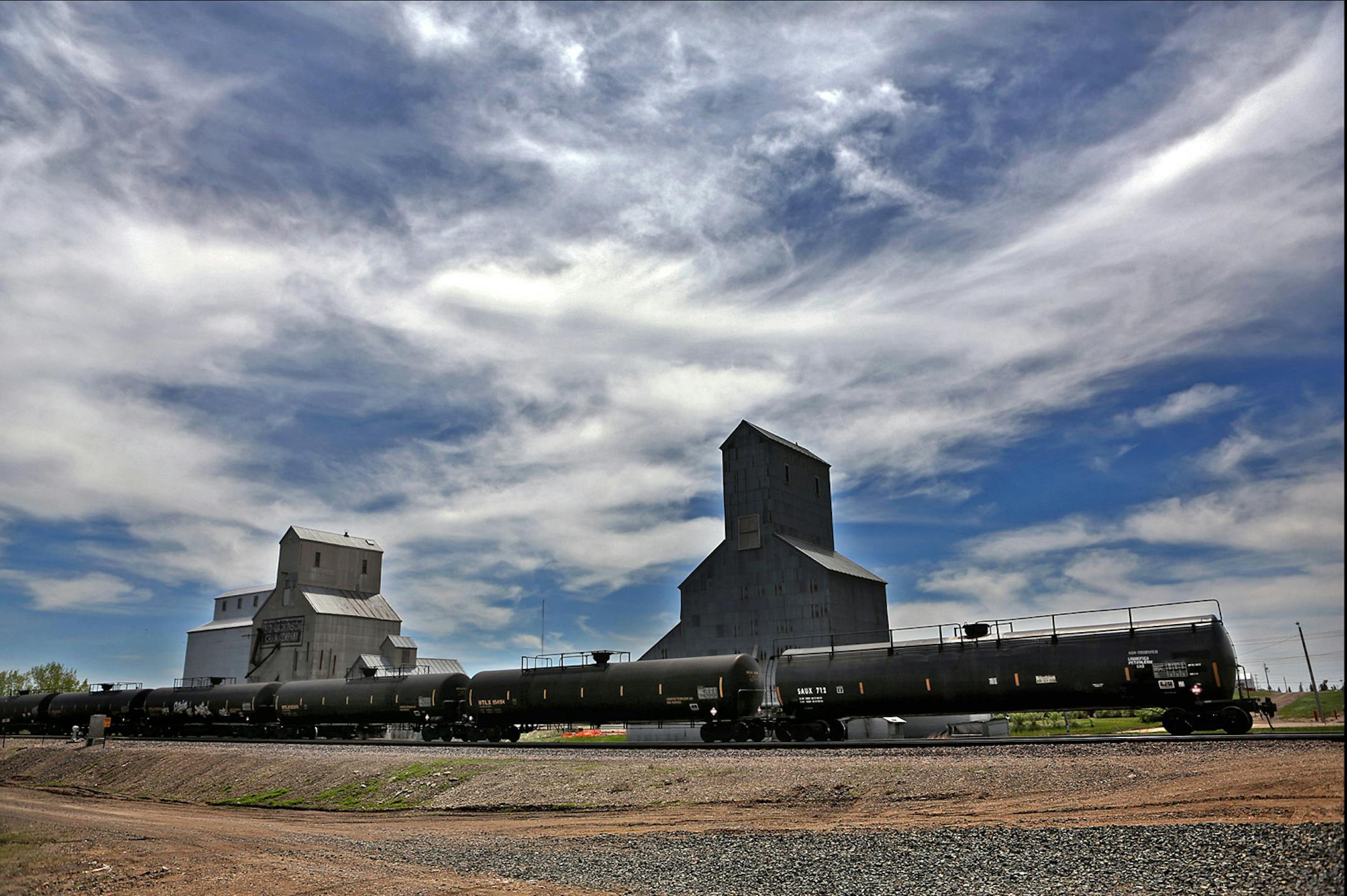
BILLINGS, Mont. – Following a string of explosive accidents, federal officials said Thursday that crude oil being shipped by rail from the Northern Plains across the United States and Canada may be more flammable than other forms of oil.
A safety alert issued by the U.S. Department of Transportation warns the public, emergency responders and shippers about the potential high volatility of crude from the Bakken oil patch. The sprawling oil shale reserve has made eastern Montana and western North Dakota the nation's second-largest oil producer behind Texas.
Thursday's announcement declares that the Bakken's light crude oil — which is often transported through Minnesota — may be different from traditional heavy crudes because it is prone to ignite at a lower temperature. Experts say lighter crudes, which contain more natural gas, have a much lower "flash point," the temperature at which vapors given off by the oil can ignite.
The oil boom in the Bakken has reduced the nation's reliance on imported oil, but it also has increased public safety concerns in communities bisected by rail lines. An estimated 11 to 12 crude oil trains depart daily from the oil region. Lacking sufficient pipelines, 69 percent of the state's oil is shipped to market by rail. The main railroads, BNSF and Canadian Pacific, have tracks through the Twin Cities.
Minnesota doesn't keep track of rail use or what trains are carrying. But Canadian Pacific and BNSF have boasted of their growing oil cargoes. In 2012, Canadian Pacific transported 53,500 cars of crude. It expects to move 140,000 to 210,000 by 2016.
That growth has echoed a national trend. The amount of U.S. oil moving by rail has spiked since 2009, from just more than 10,000 tanker cars to a projected 400,000 cars in 2013.
Thursday's warning comes after a huge explosion on Monday caused by a crude train derailment near Casselton, N.D. No one was hurt, but worries about toxic fumes prompted the evacuation of hundreds of residents.
In July, 47 people were killed in Lac-Megantic, Quebec, when a train carrying Bakken crude derailed. Another oil train from North Dakota derailed and exploded in Alabama in November, causing no deaths but releasing an estimated 749,000 gallons of oil from 26 tanker cars.


