

As presidents of Allina Health and SEIU Healthcare Minnesota, the union that represents thousands of Allina staff, we've worked through challenges in the past, and have not always agreed. However, in this time of great uncertainty, we are in complete agreement on two critical principles: People need health care coverage, and that coverage needs to actually cover the services they need.
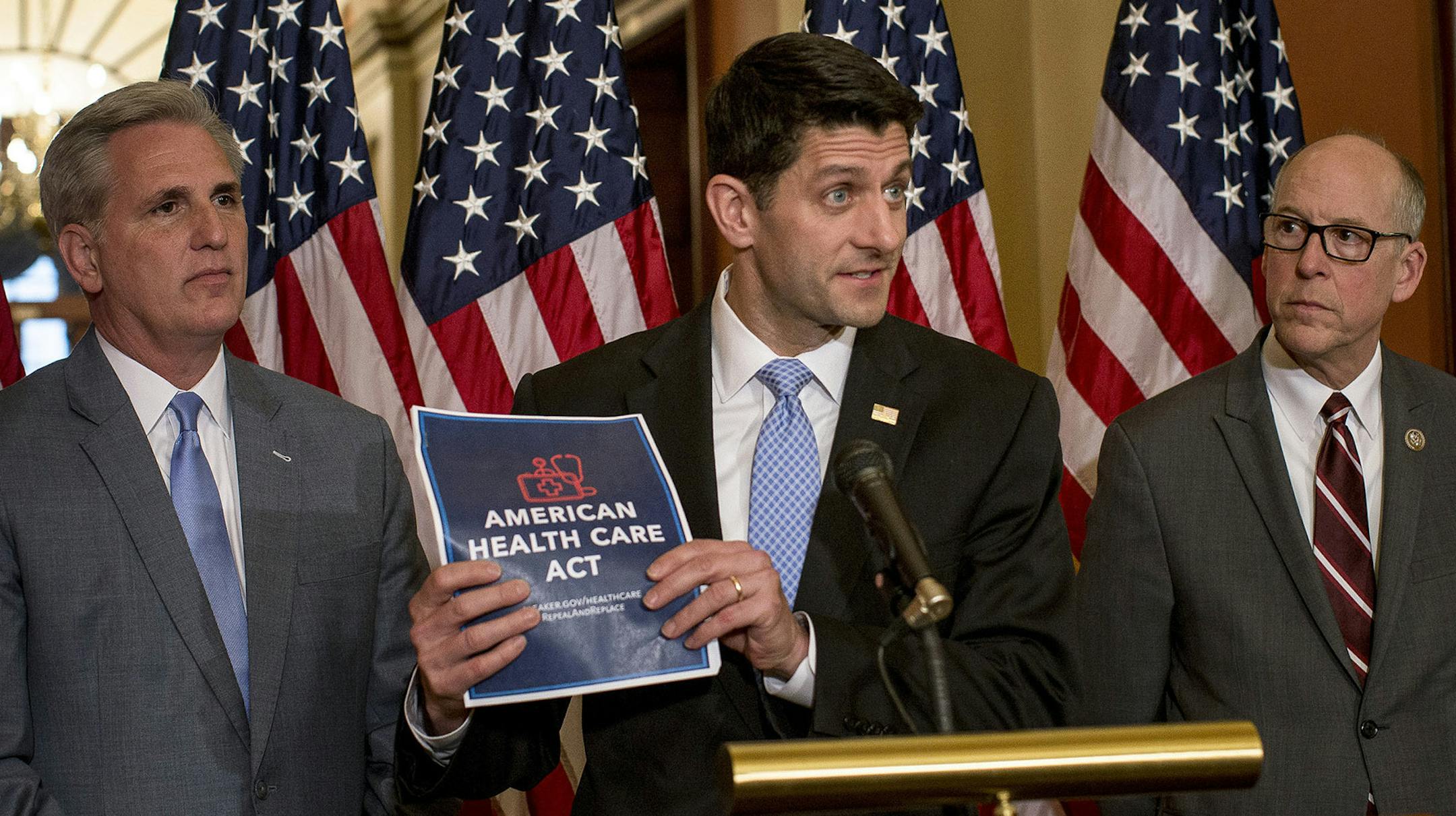
We also agree that by this measure, the American Health Care Act (AHCA), which already passed the U.S. House, misses the mark on all fronts. As the recently updated Congressional Budget Office (CBO) score unfortunately confirms, 23 million fewer people would have coverage over 10 years than under the current Affordable Care Act. Millions more would be faced with the reality of "skinny" plans that lack coverage for basic services such as mental health and addiction treatment, maternity care or rehabilitation services.
The CBO report further undermines the claim that patients with pre-existing conditions would be protected from being priced out of the market, with older, low-income Americans at the greatest risk of seeing dramatic cost increases.
In hospitals, clinics and other settings, our goal as labor and management is always to put the patient in the center of the care we deliver. As Congress continues to debate the right path forward, we hope it makes a similar commitment to patient-centered health policymaking. The stakes are high for all of us, and especially for Minnesota's nation-leading health care system. At just 4 percent, Minnesota has one of the lowest uninsured rates in the country.
That translates into more Minnesotans being able to access comprehensive care at the right time (low-cost preventive vs. high-cost crisis) and in the right place (low-cost clinic vs. high-cost emergency department). On a bipartisan basis, we have steadily been working toward this goal for decades. If there is one thing the CBO score makes very clear, it is that the AHCA would turn back the clock on our progress and dramatically increase the number of uninsured and underinsured Minnesotans again.
The federal government will no longer be a guaranteed partner in providing access to affordable health care for the more than 1 million farmers, seniors, children, people with disabilities and working-class Minnesotans who depend on Medicaid and MinnesotaCare.
What does that mean if we break that down into dollars and cents? Well, the Minnesota Department of Human Services believes we would lose $2 billion in the first 18 months of the changes to the Medicaid program and then $2.5 billion annually by 2025, with greater losses after that. The AHCA would shift an enormous burden to our state budget at a time when the need for health care will only grow as our population ages. Remember that senior citizens and their families often depend on Medicaid to make home care and nursing home care affordable. With these numbers, it is almost impossible to imagine a scenario where this would not lead to cuts in the number of people covered, benefits and eligible services.
Beyond the worrisome changes to Medicaid, all Minnesotans should also be concerned that standard insurance policies might no longer protect those with pre-existing conditions from enormous financial burdens. The singular focus in the AHCA on driving down premium costs obscures the complete financial picture for patients. À la carte insurance policies may have cheaper monthly premiums, but they also leave people exposed to significant financial risk if they need services that are not covered. We certainly don't think anyone wants to return to the days when the sickest could not get care.


