

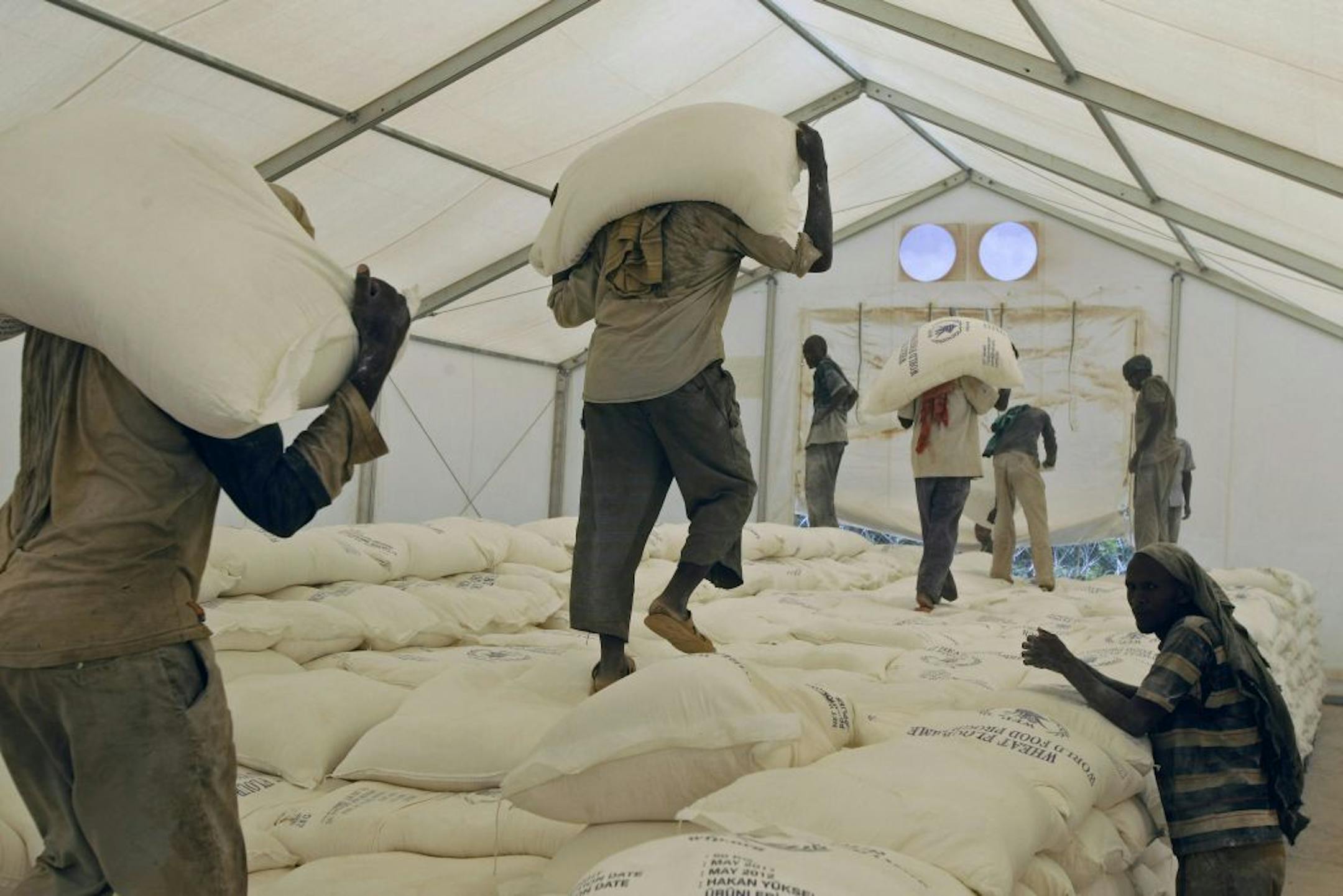
WASHINGTON - The Obama administration is intensifying efforts to deliver food to famine-stricken Somalia, easing restrictions on humanitarian aid groups so they won't be penalized if they inadvertently help Al-Qaida-linked militants battling for power in the country.
With the worst famine in decades stirring worldwide alarm, the new rules are intended to provide "more flexibility and to allow a wider range of aid to a larger number of areas in need," a senior administration official said Tuesday.
Drought threatens 3 million
A widening famine and drought threaten about 3 million people in the Horn of Africa, many in remote regions of southern Somalia. The United Nations estimates it will need $300 million worth of food, medicine and other emergency supplies over the next three months to meet the crisis.
Much of southern Somalia is controlled by Al-Shabab, an Islamist extremist group that is officially listed by the U.S. government as a foreign terrorist organization. Under the law, anyone providing aid to Al-Shabab may be subject to prosecution.
Humanitarian aid groups also have worried about a 2008 U.N. Security Council Resolution that imposed a travel ban and economic sanctions on some Somali leaders and their supporters.
The U.S. decision to designate Al-Shabab as a terrorist organization in 2008 caused some aid agencies to halt deliveries to southern Somalia for fear they could be charged with helping the militants, who have carried out suicide bombings and other attacks.
According to a U.N. monitoring report last month, Al-Shabab extracts $70 million to $100 million a year in "taxes" from groups and companies delivering aid. In the Mogadishu region, for example, the group's "aid coordinator" charged aid organizations about $90,000 apiece for a six-month pass to bring in relief supplies, the report said.


