

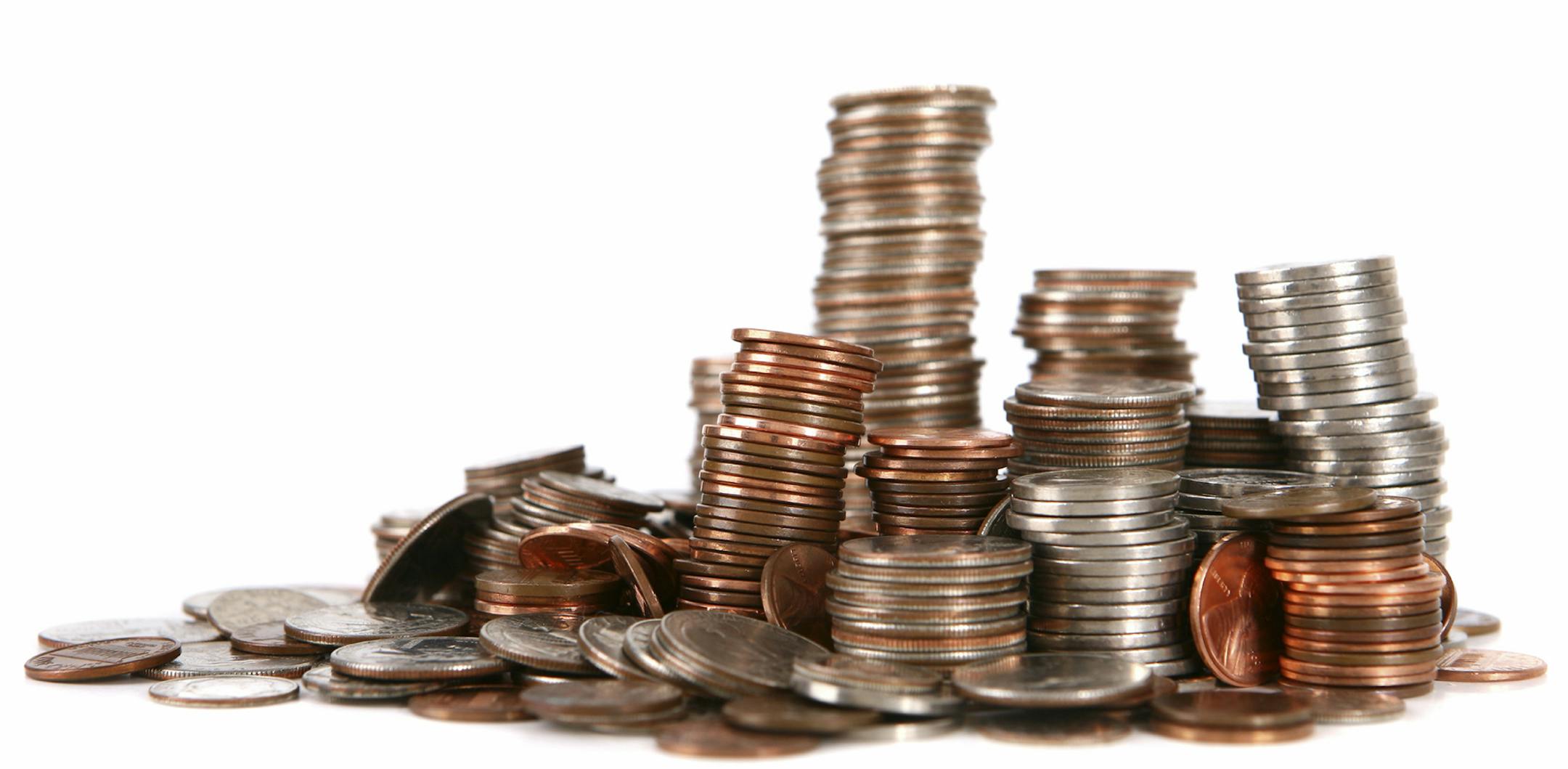
Approaching noon, I had a hankering for shrimp tempura sushi and some dumplings. At a local takeout, my bill came to $15.01. After I handed the man $20, he began counting out 99 cents to hand me along with four $1 bills. While there was a tip jar, there was not the penny container to which we've grown accustomed at checkout. I protested the prospect of putting all that change in my pocket. The cashier told me he was only following policy. Luckily, a female stranger behind me handed me a penny.
I walked away with sushi and dumplings in one hand, and a $5 bill in the other, now ready to climb aboard the campaign to "retire" the penny. Soon thereafter, I shared my experience with the "campaign manager," Massachusetts Institute of Technology physics Prof. Jeff Gore, who would like to see Congress phase out this coin.
"The penny is not useful," Gore told me. "It no longer allows you to purchase anything, yet it slows down these cash transactions, and it's just painful for me when I buy something, 95 cents plus tax, that's $1.01 or $1.02. I think I'm going to get all this change back, it's slowing down the line, and this is what originally motivated me to start thinking about why we should be retiring the penny."
Last I checked, there had been more than 182,000 visits to Gore's website, www.retirethepenny.org, where he has assembled information about his quest to make the penny go the way of the halfpenny. According to Gore, for the last eight years the U.S. Mint has been losing money by making pennies. He said it actually costs nearly 2 cents to make the 1 cent that few wish to use in transactions.
Lack of convenience is another consideration.
"There was a study done by Walgreens and the National Association of Convenience Stores, where they found that roughly two seconds are wasted in every cash transaction just as a result of handling pennies," Gore said. "In principle, you think, 'Oh, pennies should be fast,' but at some rate we're all searching for the pennies in our pocket because we don't want to end up getting 99 cents back in change. …
"It adds up. Each of us is wasting an hour or two every year handling pennies, and if you put any reasonable value to your time, then this comes out to being something like $2 billion per year that the economy wastes just handling these pennies."
If Gore gets his way, my lunch bill would have been rounded to the nearest 5-cent increment. The sushi and dumplings that totaled $15.01 would have cost $15. A bill for $15.03 would round up to $15.05. If sales tax applies, the rounding would take place after it has been added.


