

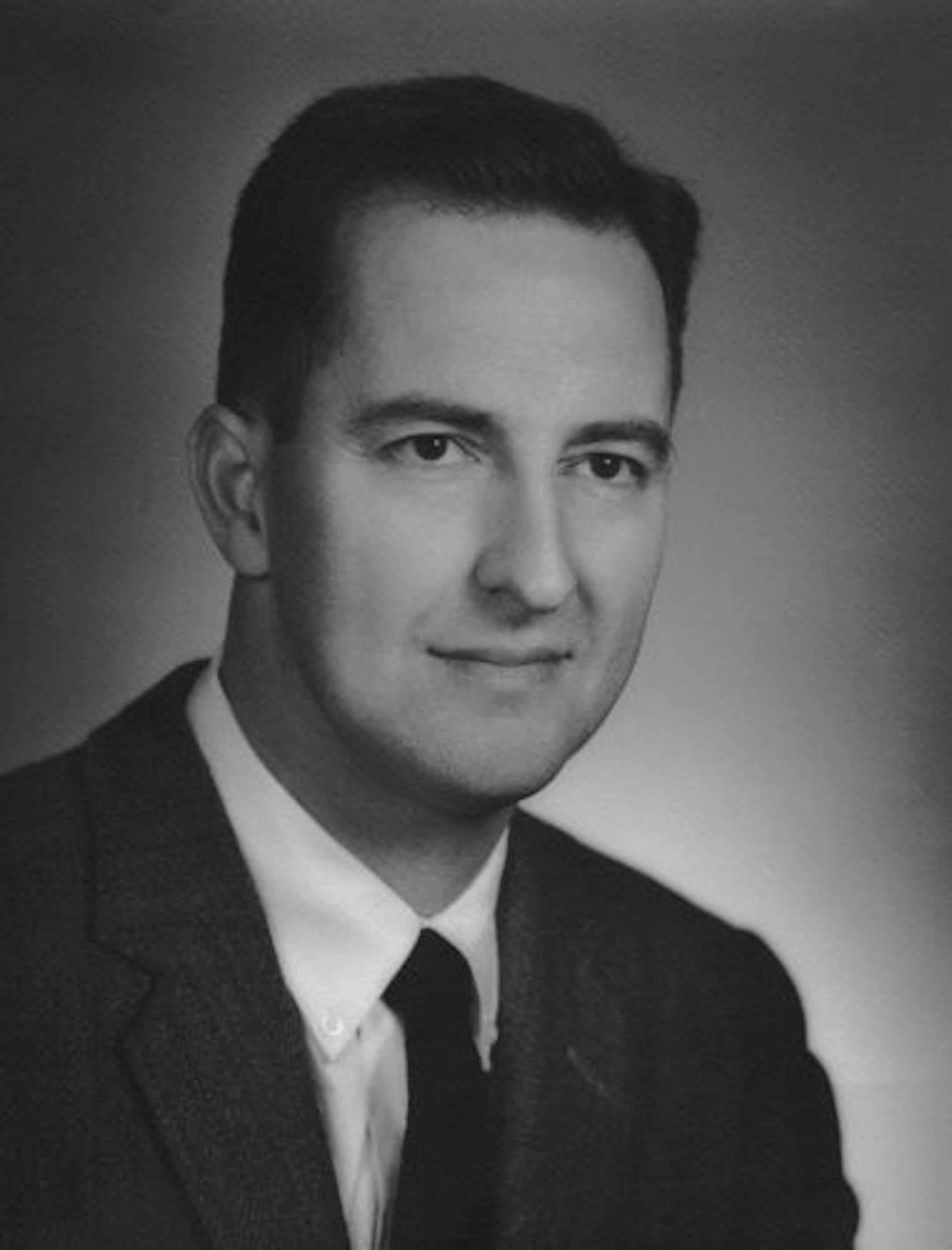
Researchers continue to benefit from David Merrell's amphibian and reptile specimen collections. Frogs he captured while a University of Minnesota professor are still examined by researchers looking into genetic malformations in the Upper Midwest.
And a classic study by Merrell, a U professor emeritus of Ecology, Evolution and Behavior, was regarded as pivotal in linking some frog mutations to different seasons of the year.
A memorial service will be held Aug. 1 for Merrell, 89, who died May 13 at his home in Roseville.
Merrell's research focused on the fruit fly and leopard frog, and centered on the genetics of the evolutionary process. He was the author of several books, including "Ecological Genetics" in 1981 and "The Adaptive Seascape: The Mechanism of Evolution" in 1994.
Charles Rodell, who was a doctoral student under Merrell and now teaches genetics at the College of St. Benedict and St. John's University in Collegeville, Minn., described his mentor as a scientific maverick who often challenged conventional wisdom with novel ideas that proved to be correct. Merrell was among the first to investigate the evolution of resistance to insecticides such as DDT in the 1950s and 1960s.
"He took particular delight in viewing problems and questions from a different angle than what was the general mode of operations at the time," Rodell said.
Much of his field work involved searching ponds and swamps for leopard frogs in central Minnesota and the Twin Cities.
"People would come around wondering what we were doing," Rodell said. "They were thinking that we were going to go fishing and were thinking we were looking for bait. We explained that, no, we were going to let these frogs go. They would think we were nuts.


