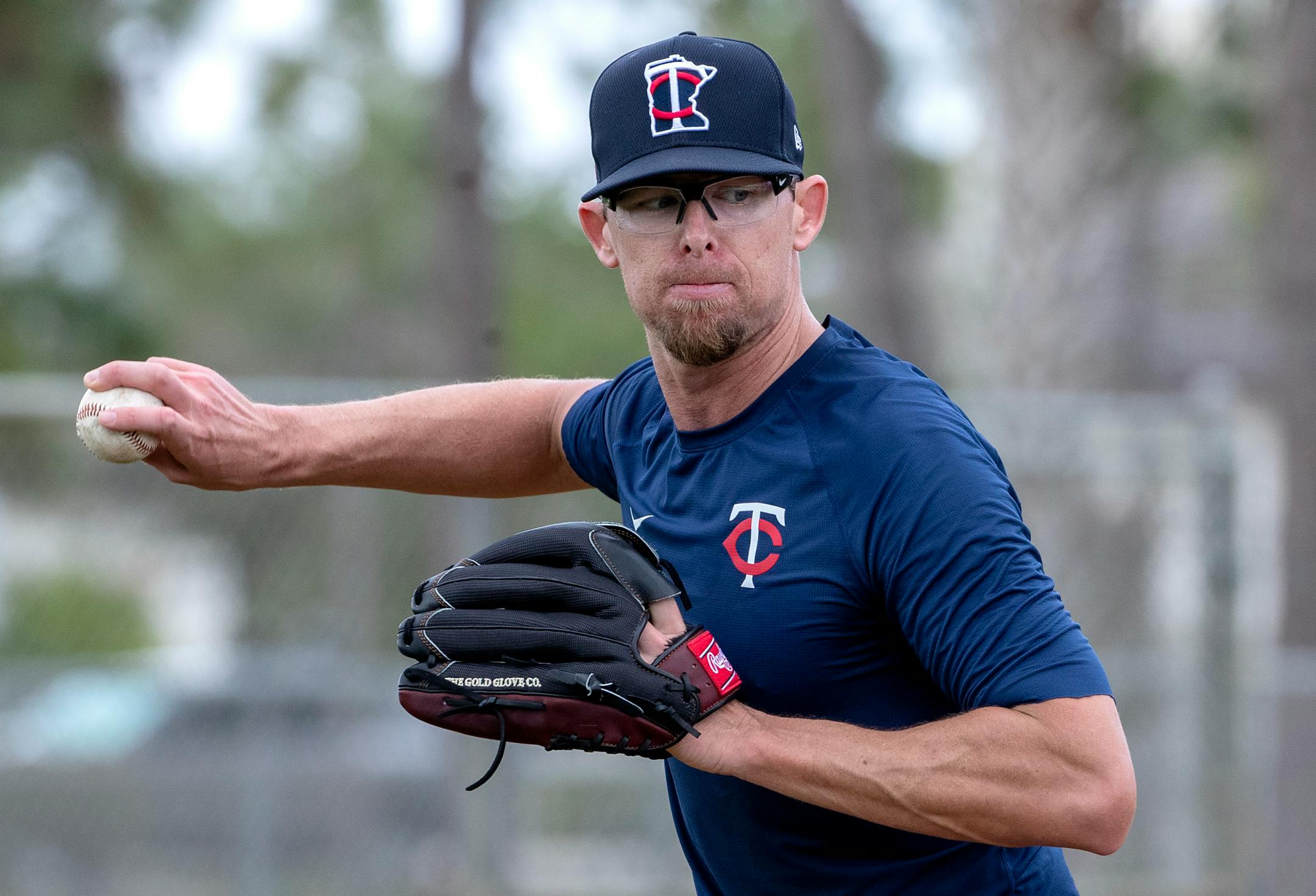
FORT MYERS, Fla. – Thad Levine likes to crack jokes, so this sure sounded like a punchline. Why did the Twins sign righthander Tyler Clippard this winter?
"Because we needed another lefthander for the bullpen," the general manager said with a straight face.
Don't laugh — it's a good reason. Clippard might use his right arm to pitch, which baseball orthodoxy says puts him at a disadvantage against lefthanded hitters. But in the past decade, Clippard has made a specialty of defying that doctrine, holding lefthanded hitters to a .190 batting average, better than noted lefthanded stars such as Clayton Kershaw, Chris Sale and Madison Bumgarner. Better than all but a half-dozen lefthanded relievers, too.
"I've always joked that I've done every role a bullpen guy can have — I've been a long guy, a setup guy, a closer and a lefthanded specialist. Not bad for a righthanded guy," Clippard said Friday, his 35th birthday. "It's fine with me. It's kind of my game now, one of my strengths."
He has others, though, like packing in a hurry, hiring movers, searching for apartments. His career path has been as unusual as his methodology.
Once a symbol of stability and a baseball rarity — a relief pitcher who stayed in one spot, Washington in his case, for a half-dozen years — Clippard has turned into a major league nomad. He has been traded six times and become a free agent four, each time switching teams. And next month, he will become the 44th player in baseball history to play for 10 major league teams.
"In six years, I've accumulated nine different teams. I don't blame people for asking me, 'Are you still playing? Where are you at?' " Clippard said. "I don't take offense to that because, listen, I can barely keep track of it."
Traded from the Nationals to Oakland in January 2015, Clippard has since played for the Athletics, Mets, Diamondbacks, Yankees, White Sox, Astros, Blue Jays and Indians. Last season, the endless road trip took him to Cleveland, where he held lefthanded hitters to a ridiculous .123 batting average. He had signed with the Indians because they looked like a good bet for the postseason, but as that wager failed, he noticed another AL Central team that seemed even more primed for an October run.