If you were to perform a Google search to determine the longest recorded lifespan for a Barred Owl you'll discover a plethora of sources all claiming 18 years, 3 months as the well established longevity record for this avian species (found in the wild). That is until recently when two Faribault area men, acting independently, made an effort to set the new record straight.
This is a story about the beginning and the end for one of nature's creatures. Unfortunately, there isn't much information about what this Barred Owl did during the course of its lifetime, but there's plenty to prove this particular Barred Owl was no ordinary bird.
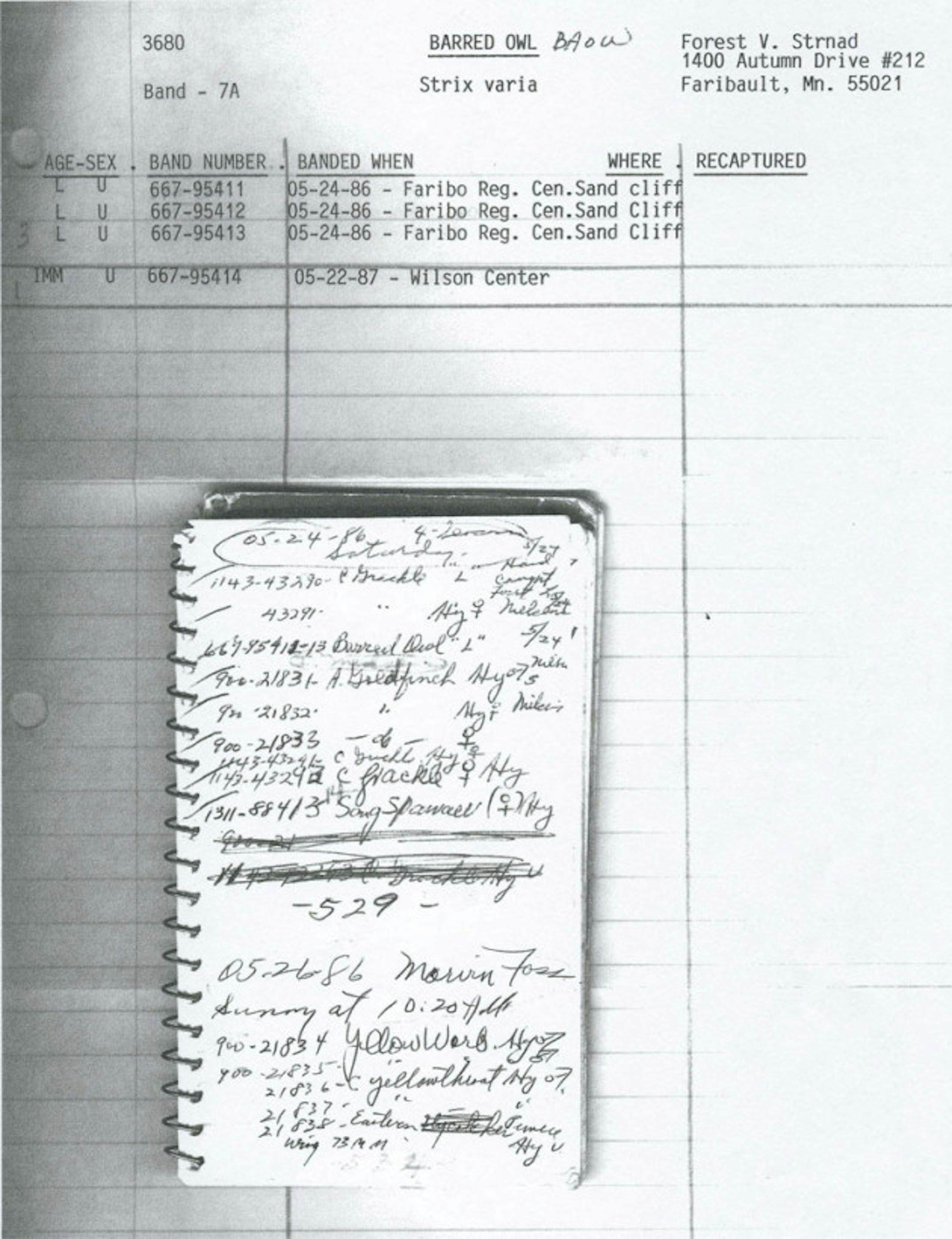
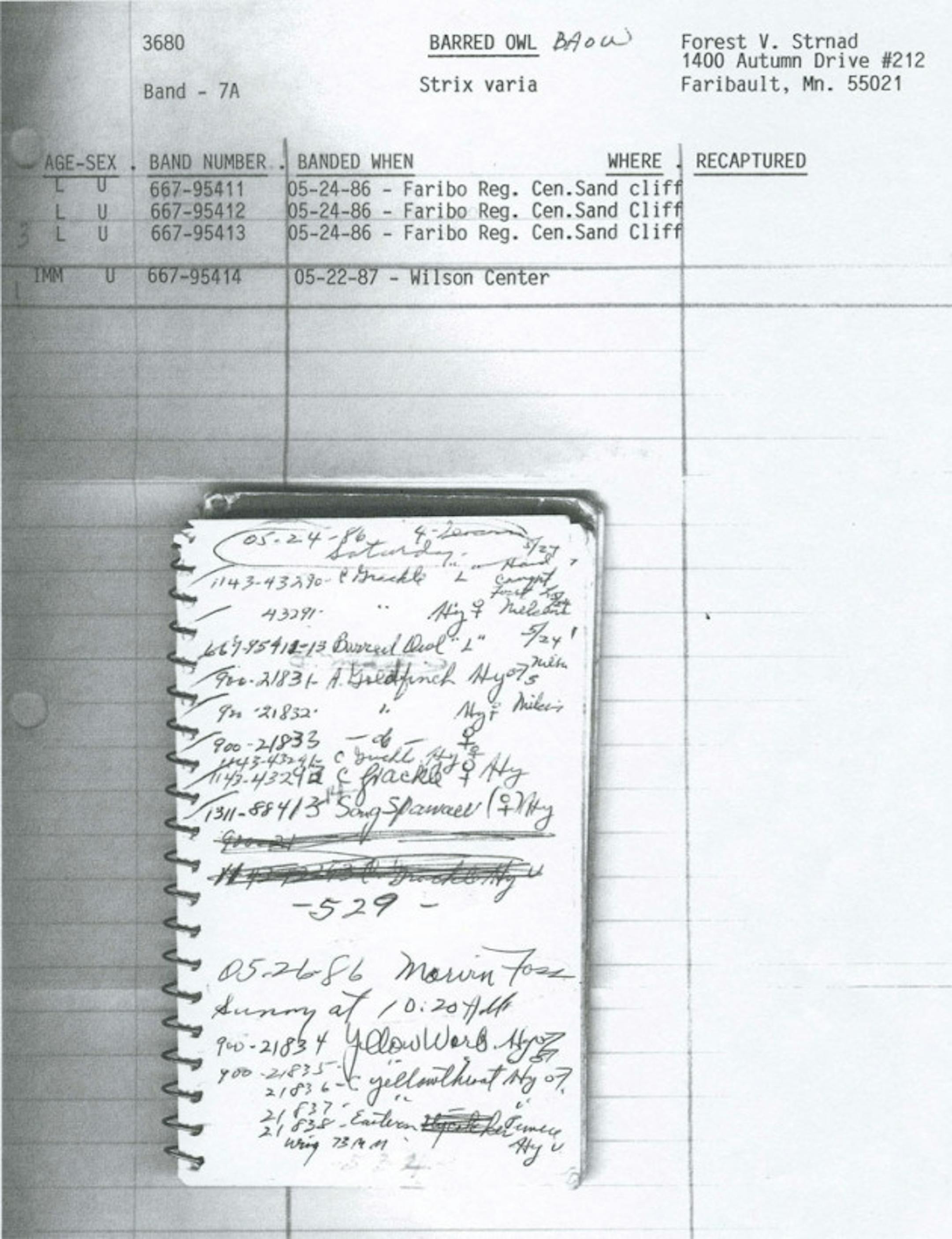
It started back on May 24th, 1986, Forest Strnad and a friend visiting from England were hiking in an area now known as the River Bend Nature Center on the southeast side of Faribault, Minnesota. As they were walking along, the two friends suddenly observed a Barred Owl quickly fly out of a tree cavity. As a Federally Licensed Bird Bander, Strnad decided to climb up the tree where he eventually found three nestling Barred Owls.
One by one he removed the young birds and brought them to the ground where he banded and recorded his amazing discovery. Once banded, they were carefully returned to the tree thinking it to be a long-shot they would hear about these birds ever again.
Such is the life of a bird bander. You leave your mark on a bird with the hopes that someday an interesting story will develop. In the case of a migratory bird perhaps it will fly thousands of miles away when it is next discovered. In the case of a Barred Owl, movement is rather minimal over its lifetime so seeing a bird travel even 20 or 30 miles might be an extraordinary circumstance.
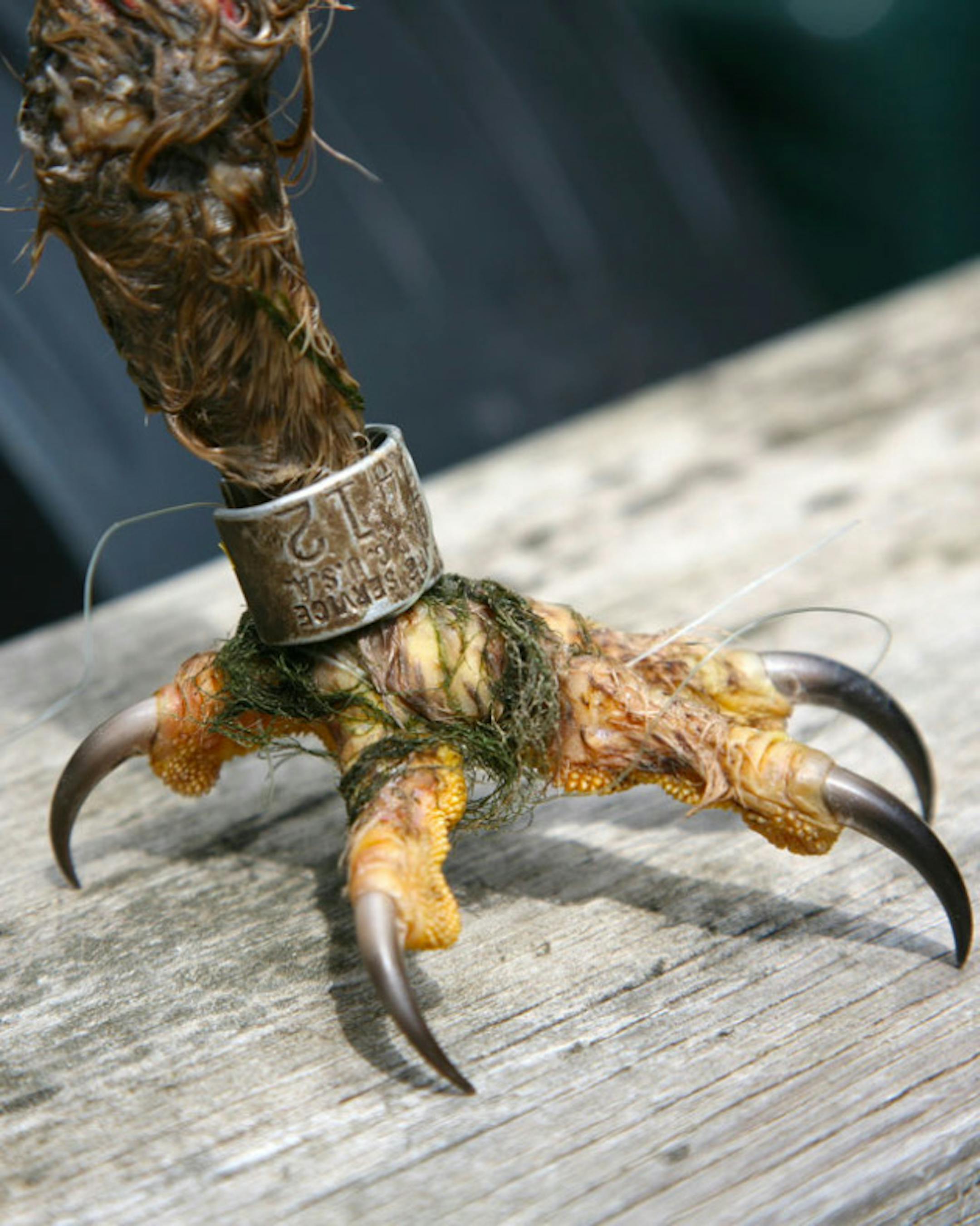
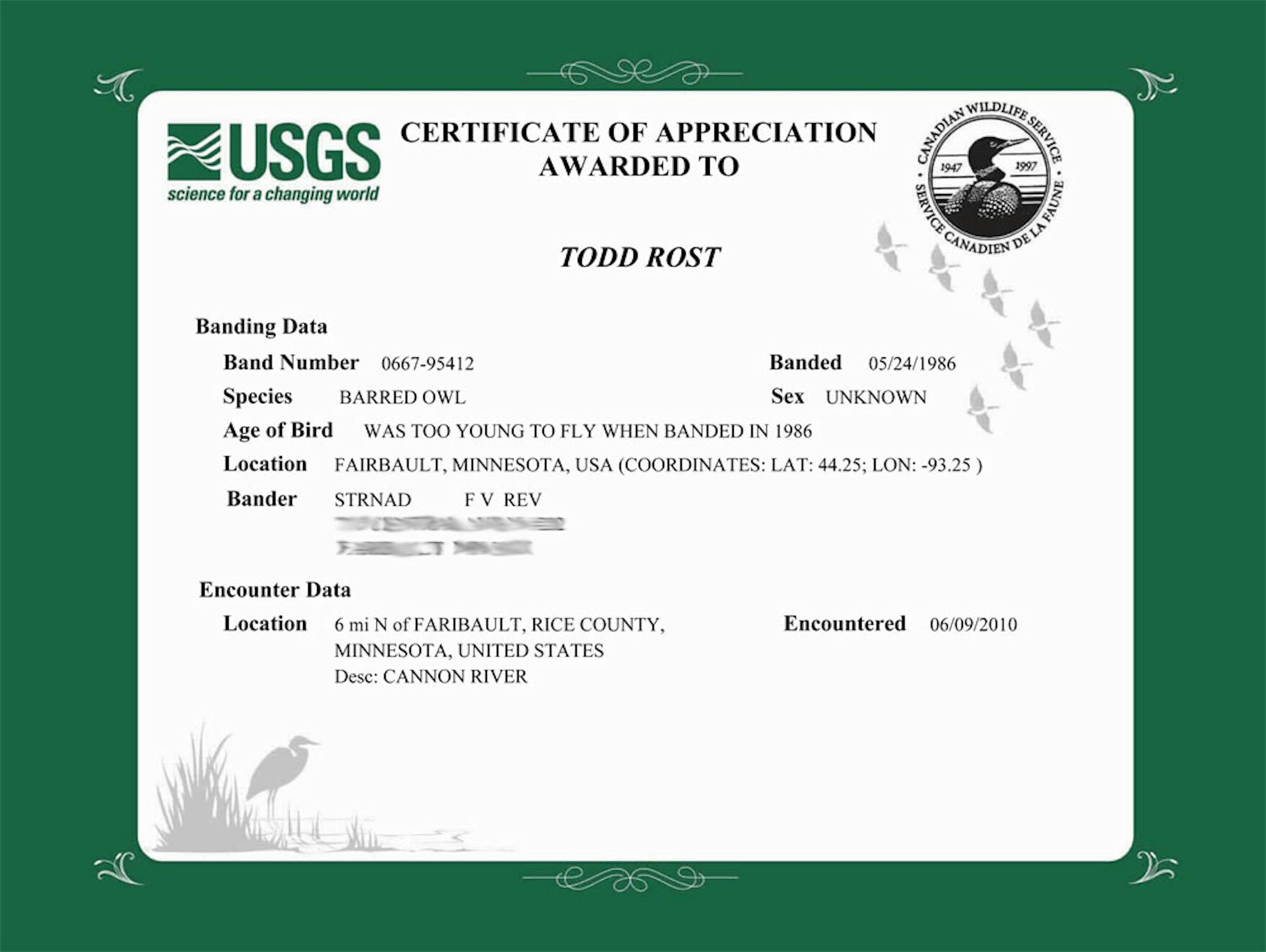
Yet, in the case of Barred Owl carrying the band numbered 0667–95412, documented distance is not what made this bird's discovery so unusual. Instead, it was the Barred Owl's age which shattered the previous longevity record by nearly six years. In fact, a Barred Owl living for almost 24 years is unheard of even in captivity.
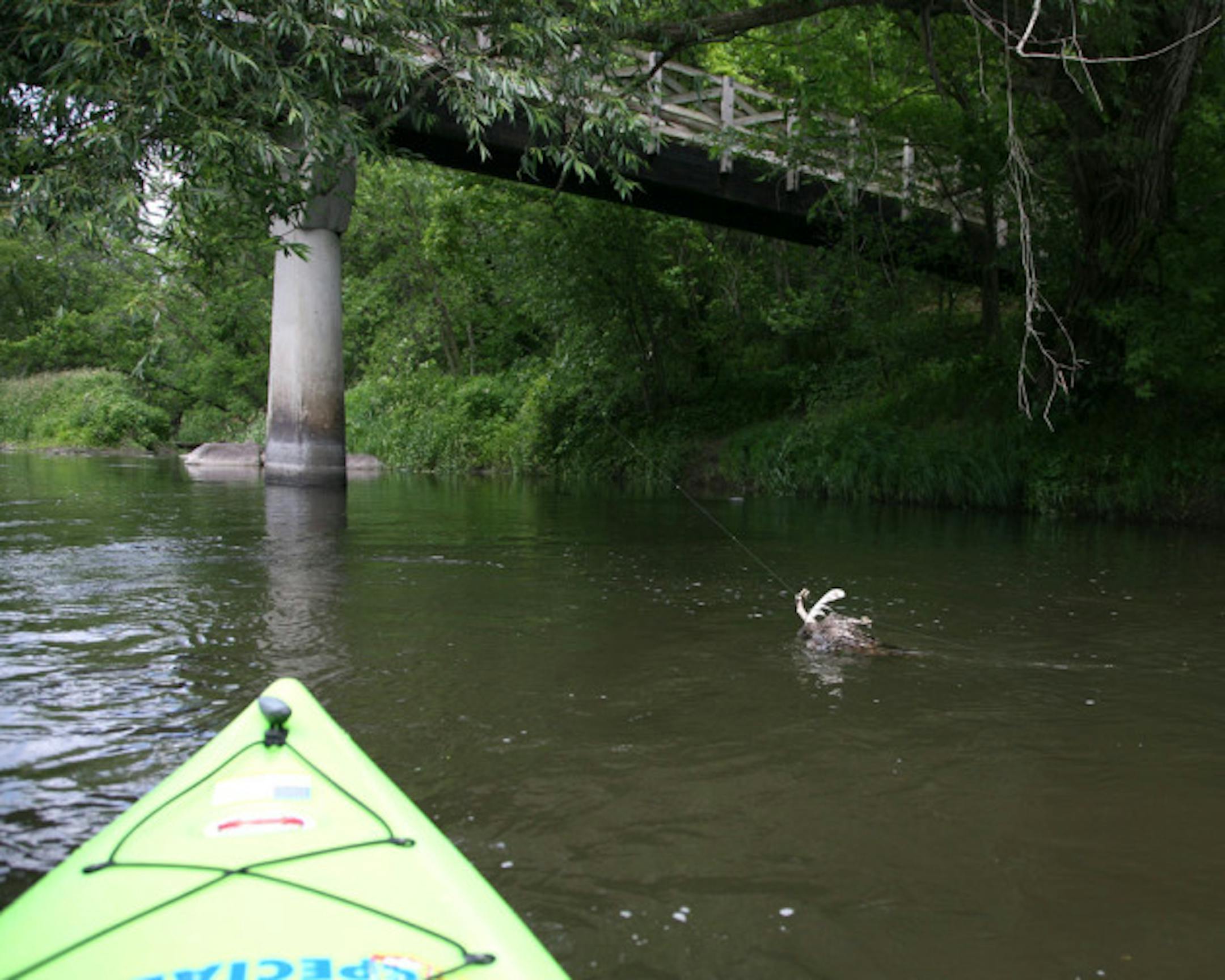
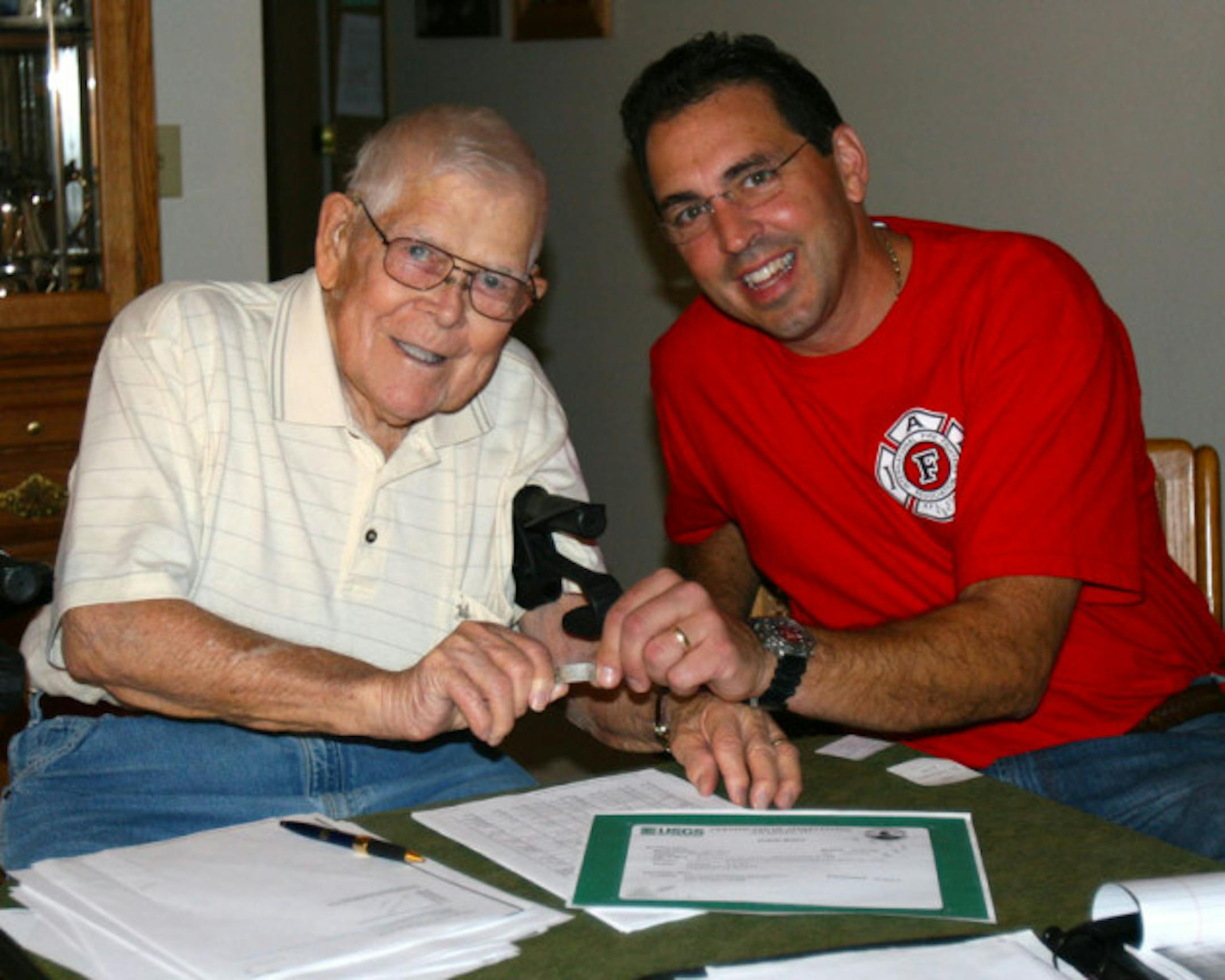
But this story doesn't get written without another critical participant. Faribault Fire Captain, Todd Rost, was working during June 2010 on a drowning recovery detail along the Cannon River when he witnessed a somewhat usual sight while kayaking. There, floating in the water, was a tangled mess of feathers and monofilament line.
Rost contacted me about his discovery concerned about how wildlife can suffer when humans are careless about our trash. Subsequent to that contact, I blogged about his discovery a year ago which can be read HERE.