
Before the spikes have even hit the turf at Hammonds Stadium, manager Ron Gardenhire has gone on the record as saying Denard Span is his 2012 center fielder.
Apparently, Ben Revere, who performed admirably in center in Span's absence, was just keeping the position warm for the incumbent.
There is probably little doubt that Gardenhire is basing some of his decision on the fact that Revere has a substandard arm. From the wisdom of the crowd, Fangraphs.com polled their readers to compile a collective scouting report on all players. Their contingency gave Revere's Arm Strength a 4. This was by far the worst rating among all center fielders and a 90-point difference between him and the leader, Rick Ankiel. Also viewed critically was his release: the Fangraphs.com crowd said that his release rated as a 28, the third-lowest mark in that category too.
It doesn't take advanced metrics to recognize that Revere has a weak arm. It takes a bit more scouting acumen to see that he has a long arm throw which delays his release. Combine these two factors and it equates to extracurricular activity on the base paths.
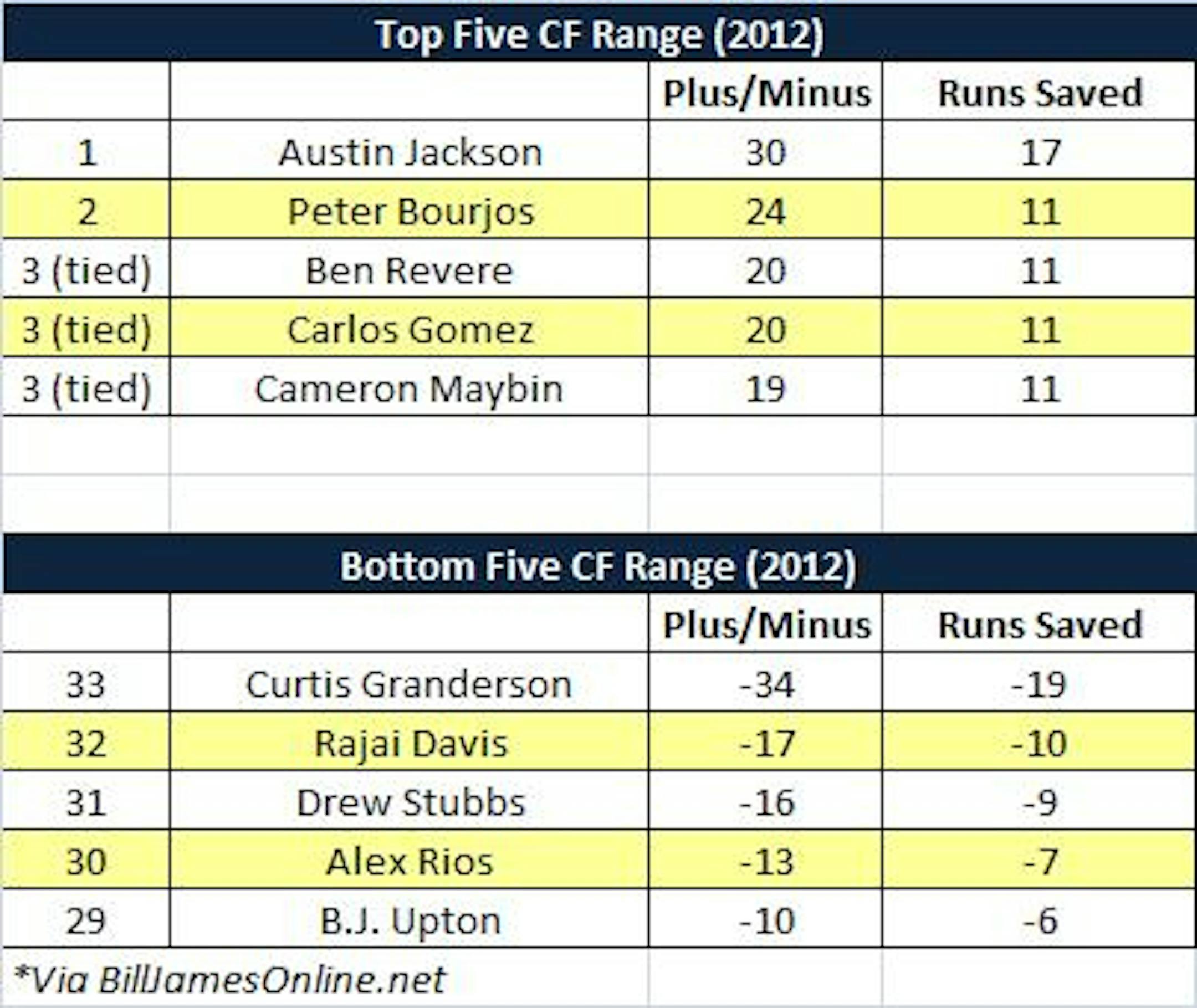
The question is what did Revere's skill set cost the Twins and does it preclude him from being the starting center fielder?
According to BillJamesOnline.net, the website which warehouses a vast majority of the Baseball Info Solution's defensive data, they peg Revere's arm as the worst among qualified center fielders in 2012 (minimum 700 innings) – adding data to the fan's observations. He managed to accumulate 3 kills (throwing out runners) but allowed 63.9% of runners who had an opportunity to advance to the next base did so during his watch.
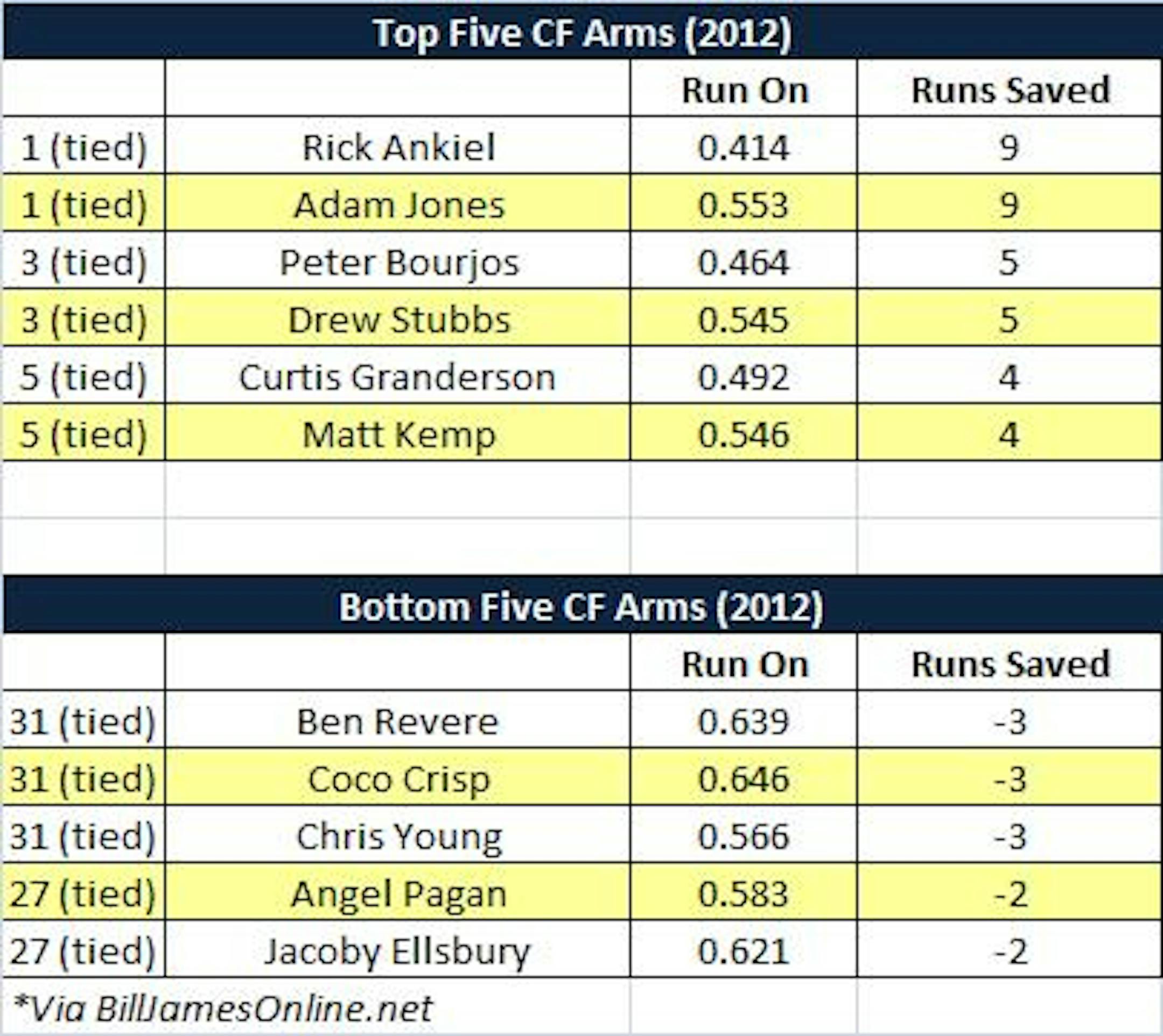
Here's what we know about Revere: He's fast. Because of this, we might also assume that he gets to many balls quickly, even those that fall to the ground. If he can get to more balls quicker than slower center fielders like, say, Rick Ankiel, one would think it would have some effect in preventing coaches from sending runners around the bases. Until we have other data available like how quickly an outfielder gets to a ball or how much velocity someone throws or how quick their release is, we are simply not going to have a comprehensive overview of how to judge someone's arm. Still, looking at how many times opposing teams have had the opportunity to advance a base on him (89) versus how many times they decided to move up (56), you have to reach the conclusion that Revere's lack of an arm has an adverse affect even if he is able to get to the ball quicker than the rest.
Allowing runners to move up has been the crux of the argument for those wanting to keep Revere out of center. After all, in addition to patrolling the deepest part of the field, a center field has one of the longest throws to home plate among the three outfield positions and has a hefty chore when throwing to third base as well. In Revere's case, opponents took note of his arm strength last year and used it to their advantage, wheeling around second-to-third or third-to-home. Understandably, if opposing teams recognize this opening, they will like walk through it at a high rate and put themselves in scoring position whenever possible.