



With a bullpen that is holier than the Pope, the Twins have been hosting an audition with many of their arms this spring hoping to fill some of the openings.
Many of the early front-runners have likely exited the race early. Some, like Joel Zumaya, had the misfortunate of being bounced out due to injury. Others, like Terry Doyle and Jason Bulger, have just failed to perform. As a lot of the field continues to falter for one reason or another, Kyle Waldrop has emerged as a potential candidate to head north with the club.
After coming up through the system working as a starter, Waldrop has made a quick ascension to the upper level since being converted to a reliever. Recently dispatched into short-term work, he has thrived by throwing an impressive sinker that has damaged infield turf all over the minor leagues. In 2010, his first season at the Triple-A level, 64 percent of opponents' batted balls were of the ground-ball variety. This past year, he upped his ground ball rate to 66 percent at Rochester and, in his brief September call-up, he was inducing grounders at a 75 percent clip with the Twins.
So far this spring, Waldrop and ground-ball-riffic ways has made quite the impression on the coaching staff and teammates. According to MLB.com's Rhett Bollinger, following a cage session against the righty, Danny Valencia finished and told reporters that he has "late, heavy sink" which makes it tough to elevate the ball.
Many ground ball pitchers seem to share this description from opponents, coaches and scouts alike. It seems more baseball speak than actually explaining why hitters are having troubles putting the ball in the air against him. Let's take a look at Waldrop and see what factors into him becoming a ground ball monster.
Following yet another clean outing in Fort Myers, manager Ron Gardenhire said of Waldrop "I think he just gets outs. He works quick and gets outs with a good angle." Despite not dripping with much insight, Gardenhire's assessment may have more to do with understanding how he is accomplishing this scorched-earth policy.
The six-foot-five Waldrop has an excellent release point. In his major league debut last year, the Sportsvision's pitch f/x camera system says that, on average, he released his pitches at six feet, seven inches high.
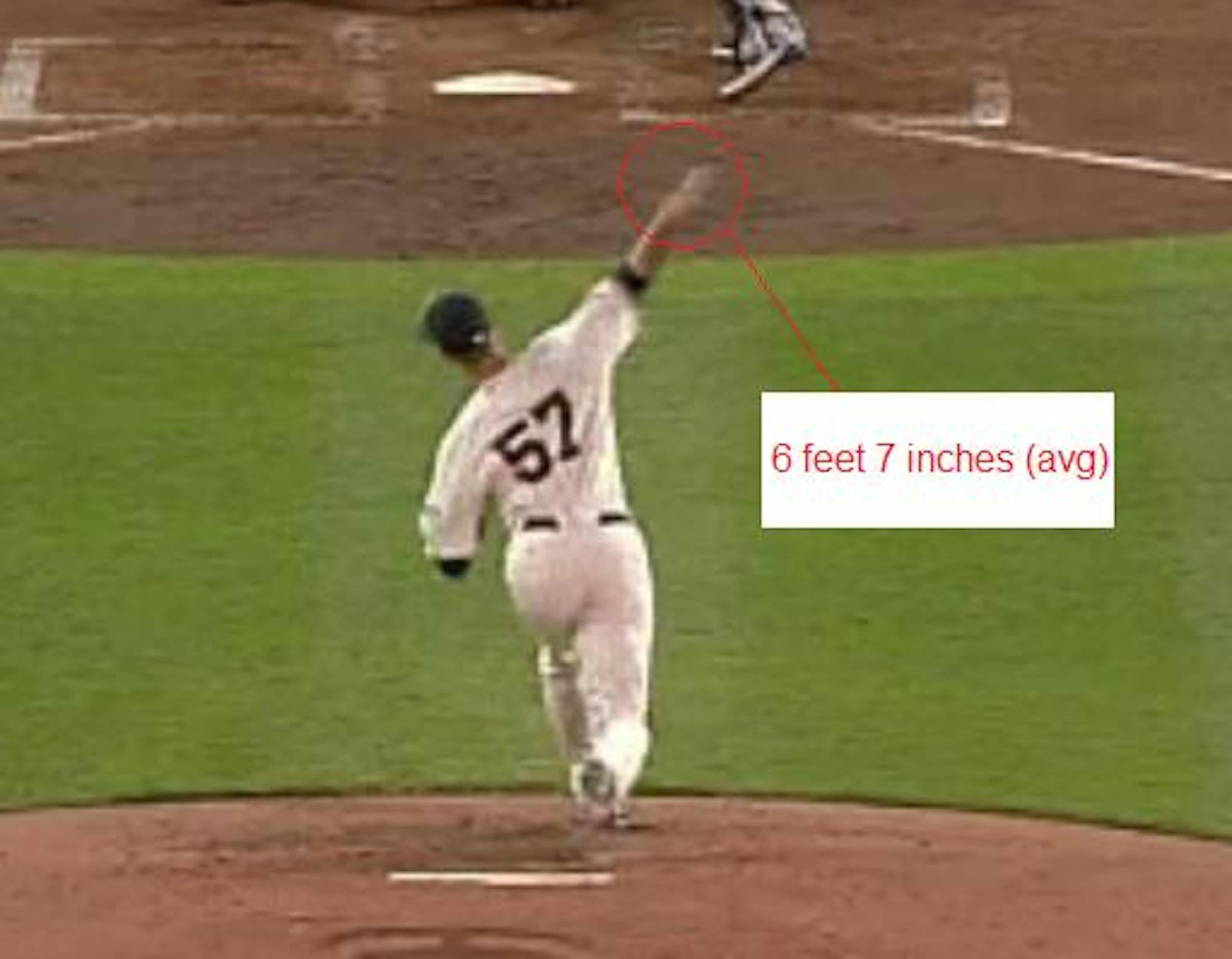
That is a very high release point. To put that in perspective, Jon Rauch, baseball's tallest indivudual at six-foot-ten, releases his pitches at six feet, seven-and-a-half inches high. In Ted Williams' The Science of Hitting, published well before the avent of pitch f/x in 1970, the legendary hitter wrote that the majority of pitches are released somewhere between five feet, eight inches and six feet, six inches. Using that as a guideline, both Waldrop and Rauch are clearly above average in that department.


