As Seth Stohs mentioned yesterday, while the rest of us at Twins Daily were all stark raving mad about Kyle Gibson's performance in the Arizona Fall League, another Twins prospect was making noise even further south. Outfielder Aaron Hicks, who is playing winter ball in Venezuela, is off to a fast start this offseason, matching the expectation he set from his in-season performance at New Britain.
Of course, not long ago, Hicks was in danger of falling off the "top prospect" radar although. Heading into the 2011 season, Baseball America dropped him from 19th to 45th despite a terrific first full season at the low-A level in Beloit. Then, as if Baseball America's rankings had influence, Hicks lost some power and over 30 points in the batting average at Ft Myers the following year.
The criticism on Hicks's approach is that he could be too passive at times. Hicks boasts a high strikeout rate and a significant portion of those (39%) in 2011 were of the caught-looking variety, an indication that he was not aggressive enough with two strikes on him. Of course, the other side of the coin is that it has led to a 14% career minor league walk rate – a solid pillar supporting his .379 on-base percentage. While walks are en vogue with OBP-ers, there are those in the system who would like to see him use his six-foot-two athletic frame to transfer some power into the ball.
His 2010 season at Beloit had him smacking eight home runs but that total dwindled down to five after his foray with the Miracle in Fort Myers. Part of the reason for the drop off simply had to do with the offensive difficulty of the Florida State League. As the Star Tribune's Phil Miller explained this year, hitting is dern tough way down south:
When he transitioned from high-A ball in the Florida State League to an even more polished level of competition of the double-A Eastern League, rather than being buried by the tougher pitching Hicks elevated his game. His matriculation to double-A ball could have also been a hindrance - given the significant leap in talent - but Hicks did not allow it. He hit a healthy .286/.384/.460 with 13 home runs.
Where did this production come from? Was it simply a course correction after leaving the Florida State League or did Hicks make adjustments elsewhere?
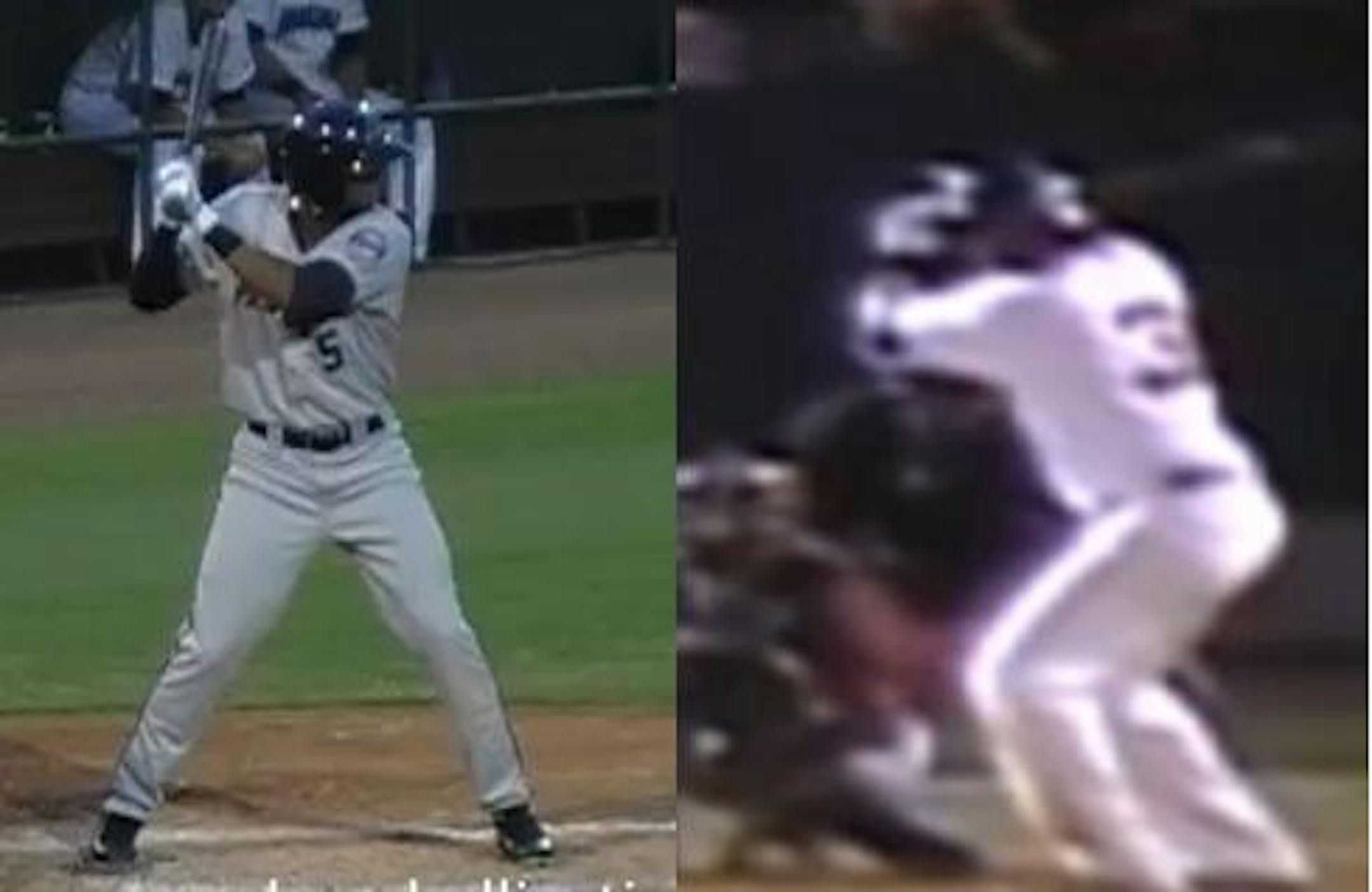
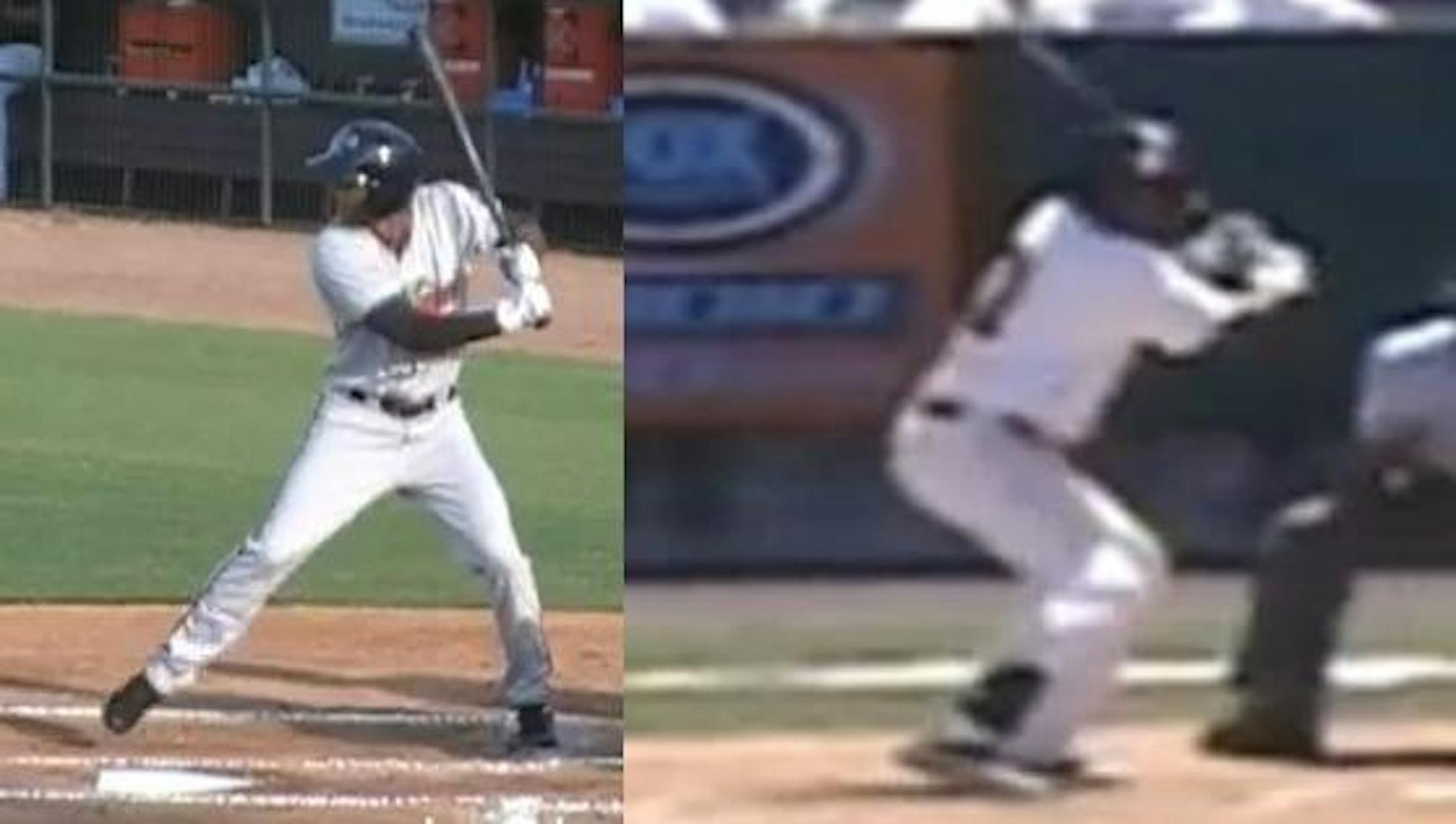
Being a switch-hitter, Hicks has had two sides of the plate in which to polish his mechanics and both have undergone some interesting transformations since 2011.
Hicks from the right: