
Future of Twins.TV could change as soon as next year

As part of MLB’s new contract with ESPN, the Disney-owned company is expected to take on the distribution of local streaming rights, commencing in either 2026 or 2027.

The Minnesota Star Tribune
September 19, 2025 at 12:24AM
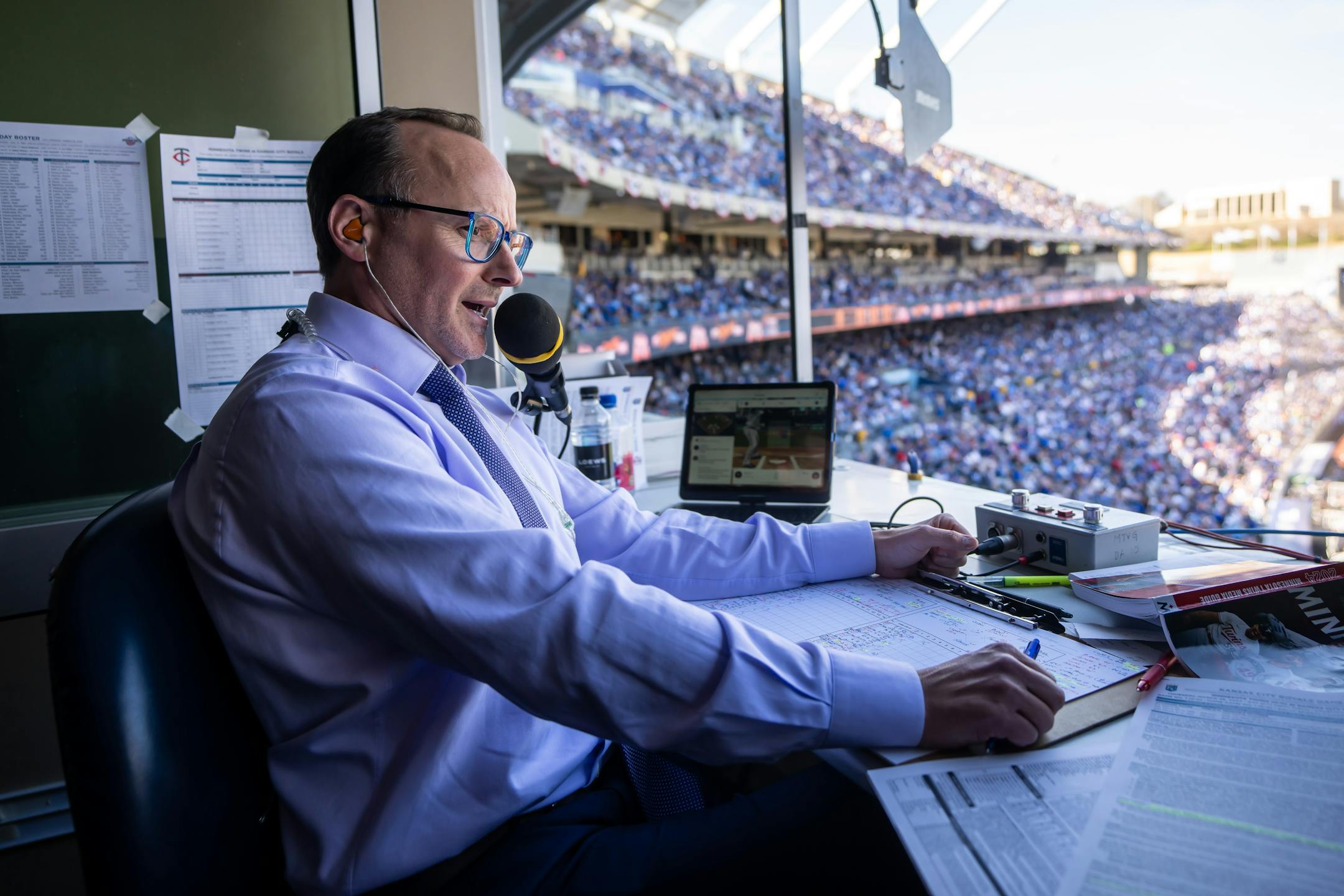
While the future of Twins.TV could be changing as soon as next season, Cory Provus is likely stay on as the play-by-play and voice of the Twins. (Minnesota Twins)

The Twins have the worst record in the American League since their sell-off at the trade deadline in July, so it’s understandable if people who work at Target Field are eagerly counting the days until the season ends.

But the feeling isn’t universal.

“We had a production meeting yesterday, and the guys were saying, ‘We can’t wait for next year,’” said Drew Halverson, the Twins’ senior director of broadcasting. “It’s honestly been a lot of fun to come up with new ideas and put them on the air.”

Yes, the Twins didn’t know what to expect when they broke ties with their longtime broadcast partner, now known as FanDuel Regional Sports, and took their broadcasts in-house.

They hired MLB.TV to handle distribution of their games online and launched Twins.TV as the streaming address.

That arrangement may change next season.

According to MLB Commissioner Rob Manfred earlier this week, MLB is close to finalizing agreements with ESPN, Netflix and NBC Universal for national broadcasts of regular-season and postseason games, and the Home Run Derby. As part of their new contract with ESPN, the Disney-owned company is expected to take on the distribution of local streaming rights, commencing in either 2026 or 2027, for the five teams that have severed ties with FanDuel — the San Diego Padres, Arizona Diamondbacks, Colorado Rockies, Cleveland Guardians and Twins.

Games will still be available on satellite and cable packages as they were this season, and available on streaming at what is expected to remain roughly the same price point — $99 for the Twins’ package, or $199 for the entire major league package.

ADVERTISEMENT

The Twins haven’t revealed how many subscribers they signed up this year, or how much revenue they collected for it. But it’s likely that the profit was only a fraction of the $54 million their regional sports network paid them as recently as 2023.

Those networks used to collect monthly fees from every cable and satellite subscriber, whether they wanted the channel or not. But as those numbers plummeted, networks rely on their content attracting subscribers. It’s an à la carte media world now, and the Twins’ disappointing season likely cost them a substantial number of TV viewers.

But whether MLB or ESPN is the platform for Twins games going forward, the broadcasts themselves are expected to remain in the hands of Halverson, producer Trevor Fleck, play-by-play man Cory Provus, the rotating staff of analysts, and the production team they built this season.

“I’m thrilled with the product we put together for our fans,” Halverson said. “RSNs are regional sports networks, but really, their format is national. This is not a knock at our former partner at all, but they have formats they use in each of their local channels. We weren’t really able to make it uniquely reflect Minnesota. So we really welcomed the chance to make these broadcasts our own.”

For instance, some in the production department had been involved in digitizing old radio broadcasts of Twins games, a treasure trove of history featuring things like Rod Carew’s debut, Cesar Tovar playing all nine positions in a 1968 game, or Jim Kaat’s 12-inning, 176-pitch outing.

“And they noticed as they listened to those games that the radio guys wouldn’t go to commercial every time there’s a break in the game,” Halverson said. Broadcasters “Herb [Carneal] and Halsey [Hall] would just keep talking through the break, tell stories. And we thought, if they can do it, why can’t we?”

From that idea was born the Insider story-telling, or Provus’ Warning-Track Walk, or more recently, a baseball tutorial called “The Mor-U-Neau,” with former MVP Justin Morneau giving his insight into details of playing the game.

Halverson wouldn’t discuss individual contracts for the on-air broadcasters, but said the team currently intends to keep using a rotating panel of analysts alongside Provus. (They tested an analyst-only series, too.)

A number of games were sold separately by MLB as part of their national agreements with Apple TV and Fox, but Twins.TV still televised five or six games per week. If the channel is hosted by ESPN — the Twins have been assured that Twins.TV subscribers won’t have to buy streaming rights to ESPN, if they don’t want to, in order to watch games on the ESPN app — the arrangement is likely to be temporary.

Manfred, testifying at the bankruptcy hearing for Diamond Sports, which has now morphed into FanDuel Sports, talked of his vision of offering consumers “one-stop shopping” for MLB games, paying to watch individual teams, or on a monthly basis, or simply buying an individual game, all of it blackout-free.

That would require all 30 teams agreeing to pool their local TV rights, something that the bigger-market teams, some of whom own their own networks, might be reluctant to do.

Whether that sort of arrangement eventually evolves in MLB remains to be seen. In the meantime, Halverson said, “we’re already generating new ideas to make the games appealing to Twins fans even more.”

about the writer

about the writer

Phil Miller

Reporter

Phil Miller has covered the Twins for the Minnesota Star Tribune since 2013. Previously, he covered the University of Minnesota football team, and from 2007-09, he covered the Twins for the Pioneer Press.

See Moreicon

More from Twins

See More
card image
Mike Janes

Winokur, a 6-foot-6 shortstop and center fielder, hit .226 with 17 homers, 68 RBI and 26 stolen bases in high Class A this year.

card image
card image