

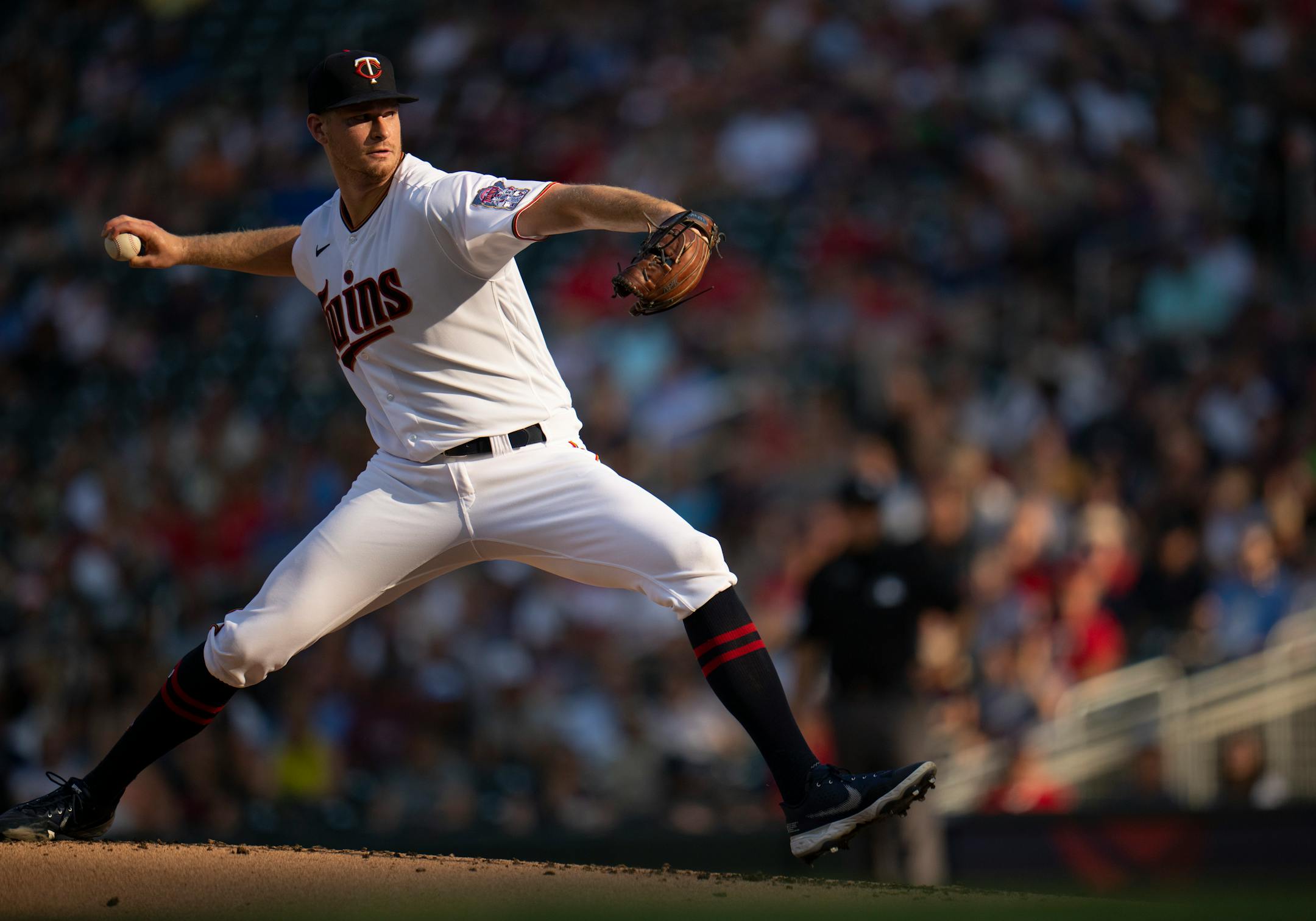
Even in defeat, Joe Ryan's introduction to Minnesota on Wednesday was the sort of event that stirs soaring optimism in a fan base. Is there anything more bewitching, particularly for a last-place team, than the promising debut of a starting pitcher who might be around for years?
"It didn't look like it took a lot of effort for him to just go out there and pitch well," Twins manager Rocco Baldelli said after Ryan's five-inning, three-run start against the Cubs. "There's a reason why we wanted to acquire this young man. … It was fun to watch him go."
Now, if only the Twins can find four more like him.
OK, that's an exaggeration, but not by much. For President of Baseball Operations Derek Falvey and General Manager Thad Levine, the 2021-22 offseason will be about rebuilding the pitching staff, and particularly the starting rotation, practically from scratch. How many of next April's starting five are currently in the Twins' organization?
"Gosh, I hope it's a few. But I can't say that for sure," Falvey conceded, because the entire minor league system has been just as afflicted by injury this summer as the big-league team. "I would say there are going to be external acquisitions. I can't imagine there wouldn't be."
That's why Ryan's performance, and a month's worth of starts still to come, is so notable. The Twins always knew their 2021 pitching rotation would be temporary, given that three of the pitchers in it weren't under contract beyond this October. Instead, the entire rotation, and even the top three options behind the starting five, was eventually wiped out by injury (Kenta Maeda, Randy Dobnak, Devin Smeltzer, Lewis Thorpe), poor performance (J.A. Happ and Matt Shoemaker) and trades (Happ and Jose Berrios), with few obvious solutions behind them.
The original plan was for natural successors to the departing pitchers to emerge this summer. But Josh Winder's shoulder wore down, and Jhoan Duran's elbow grew sore. Matt Canterino's pitching elbow flared up, too and Jordan Balazovic's bad back delayed his season and hampered his development. Only Bailey Ober, who hasn't allowed more than three runs in his past seven starts, has established himself as a major leaguer.
Between the COVID shutdown of 2020 and the ensuing rash of injuries in 2021, this generation of top pitching prospects has found the climb to Minnesota to be particularly slow.


