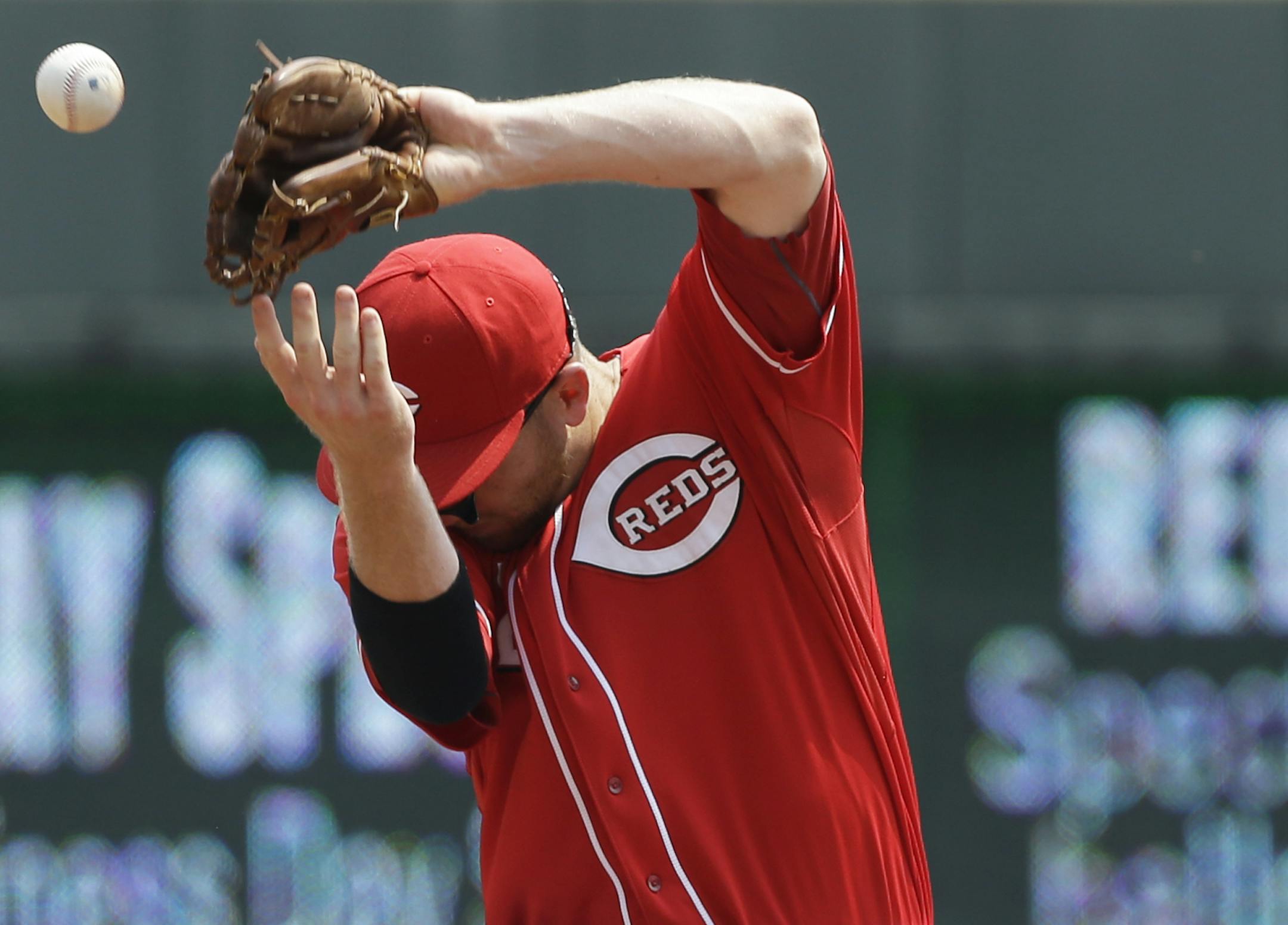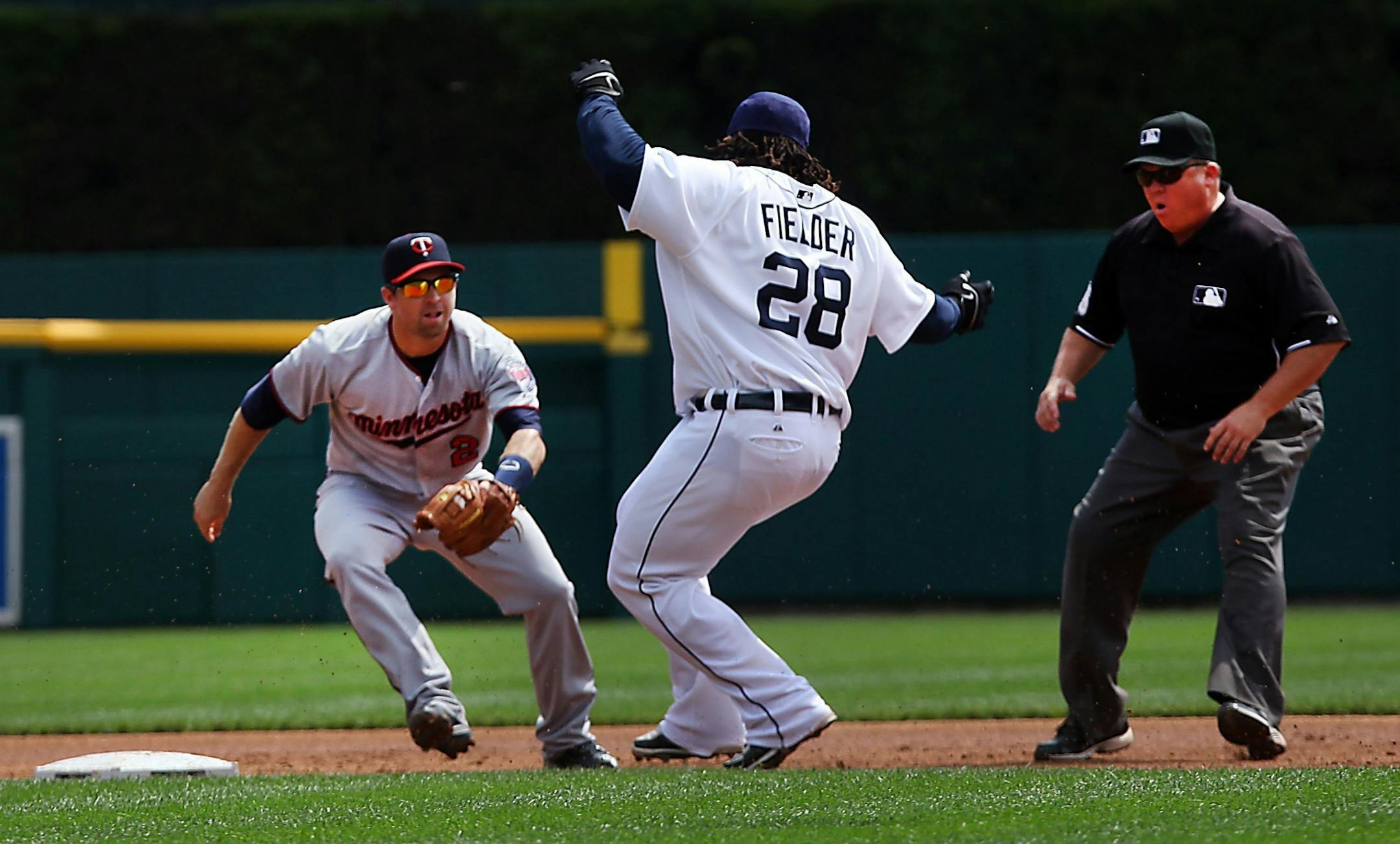
The baseball spun out of Brian Dozier's glove before he could flip it to second base last Wednesday, and the batter and baserunner were both safe. Moments later, Dozier fielded Prince Fielder's ground ball cleanly, but his throw pulled first baseman Chris Colabello off the bag.
And just like that, Dozier had experienced an incident that's becoming as rare as hitting for the cycle, as unusual as a triple play: He committed two errors in one inning.
That's hard to do in the modern major leagues, where the notion of tallying a fielder's mistakes seems to be as out of date as polyester jerseys. The Twins, with 55 errors going into Friday's game, are on pace to break the franchise record for fewest errors this season — 74 committed by the 2002 Twins — but it's not just them. Errors are being recorded with record-breaking infrequency all around the majors.
American League teams are averaging .556 errors per game in 2013, and the Twins, charged with .437 per game, are markedly better than that. In 1999, teams were charged with .703 errors per game, so there's been a 38 percent reduction from then. The skyrocketing number of strikeouts has something to do with it — there were 5,000 more strikeouts in the majors last year than a decade earlier, greatly cutting the number of batted balls to be fielded — but errors are way down even on balls put in play.
Around the majors, an error is committed on one in every 46.4 balls in play this year, well down from the one-in-38.5 rate of 1999.
There's little doubt that better fielders playing with better equipment are likely responsible for the reduction in errors. But, face it: What's the first factor that you think of?
"Everybody says it's the scorer, no doubt," said Stew Thornley, the baseball historian who, along with former Pioneer Press sportswriter Gregg Wong, serves as official scorer at Target Field. "I'm sure that's the perception. We hear it all the time."
It's more than perception, however. Thornley is part of a three-scorer advisory committee that is attempting to standardize offical scoring in all ballparks. "Our objective is to make an error called in one park to be an error everywhere, so it's a level playing field," he said.