

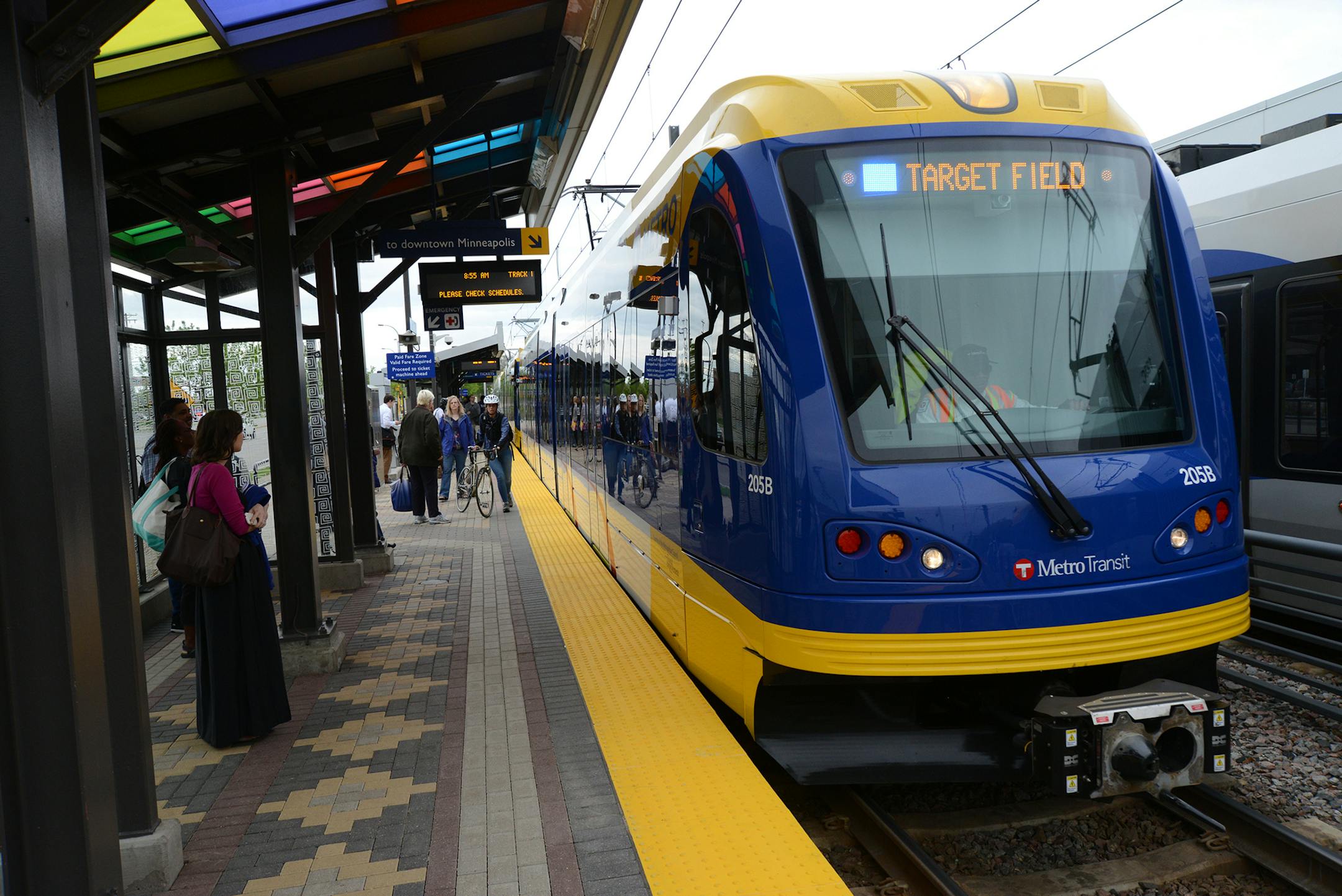
Transit advocates were buoyed by last week's election of Democrats, both in Minnesota and Washington, which they believe could help get more buses and trains rolling around the Twin Cities.
From the governor's office to the Minnesota House and the U.S. Congress, a slate of new leaders could plug a deficit at Metro Transit, fund light-rail lines and pump more money into local rapid bus improvements. The defeat of Republican gubernatorial candidate Jeff Johnson, a light-rail opponent who had promised to "dismantle" the Metropolitan Council, means the regional government will likely remain intact. The Met Council operates Metro Transit.
"[Tuesday was] a very big day for transit and particularly light rail," said Hennepin County Commissioner Mike Opat, who was not on the ballot last week.
Transit has proved contentious at the Capitol in recent years. The Republican-controlled legislature blocked any new funding to help build the Southwest and Bottineau light-rail projects, which would connect downtown Minneapolis with the southwestern and northern suburbs.
Republicans also proposed phasing out the state's $90 million general fund appropriation for the Met Council last session, which the agency said would result in steep cuts in bus service. That was ultimately scaled back.
Rep. Frank Hornstein, DFL-Minneapolis, said transit funding would likely be a priority of the new DFL majority in the House — in addition to new revenue for roads and bridges.
"I think that we are going to be looking at making sure that public transit gets the resources that it needs for a growing region," said Hornstein, who was the DFL lead on the House Transportation Finance Committee and a possible chairman this session. He hopes to secure funding to pay for rapid bus lines and Metro Mobility, a service for people with disabilities.
The council expects to have an approximately $61 million deficit in the 2020-2021 budget cycle largely because of rising Metro Mobility costs and lower than forecast revenue from motor vehicle sales taxes.


