

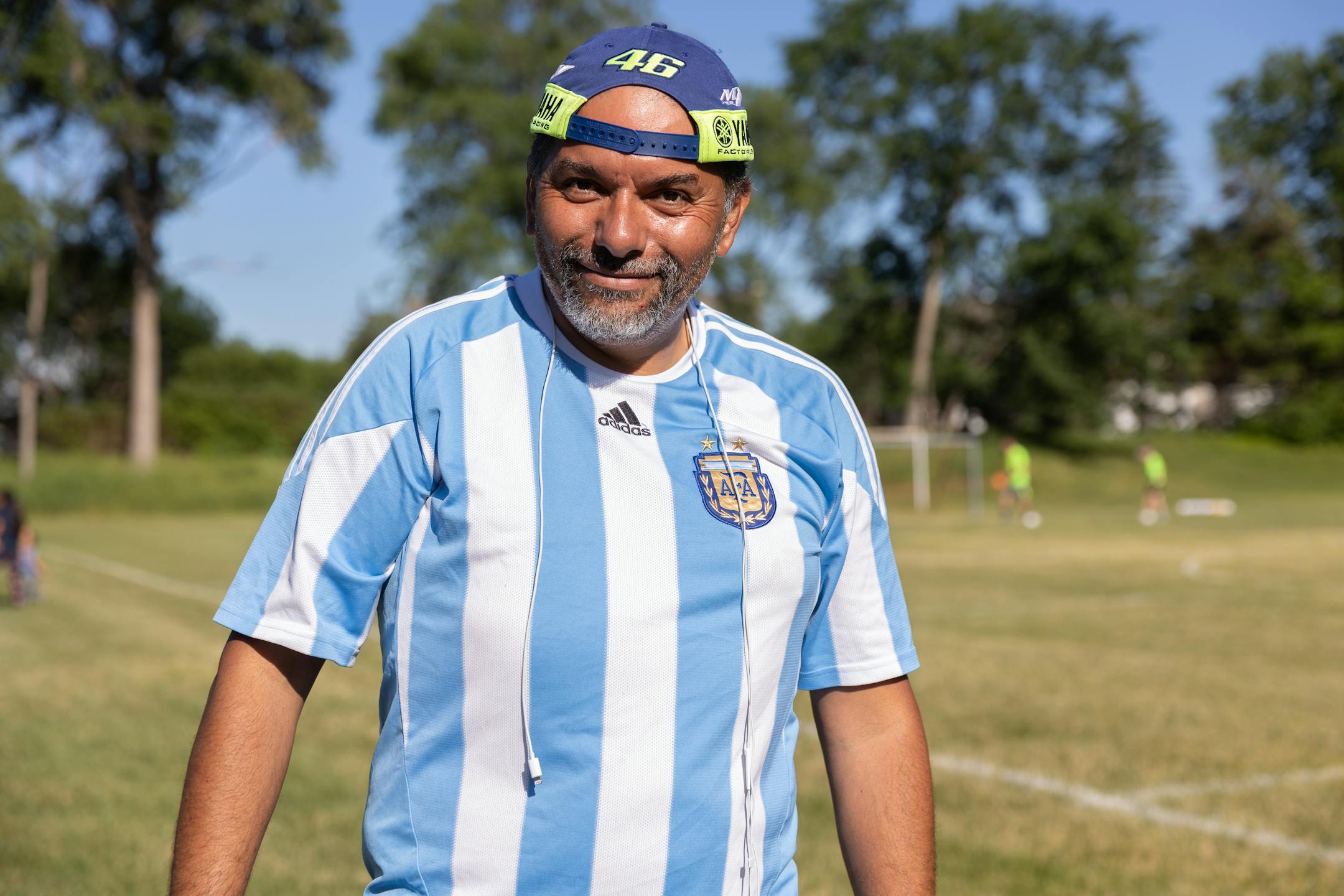
Growing up in Argentina, Gustavo Rosso played soccer in the streets like almost every other kid. There were no barriers. It didn't require money or a parent to sign you up or drop you off. It didn't even require special cleats. All that was needed was a ball.
But as a parent of soccer-aged kids in Minnesota, Rosso realized that a lot of kids here don't have opportunities to play like that. So he decided to do something about it. He successfully pitched the idea of a no-cost, no-barriers camp to different park systems. Recently, 25 kids showed up for the first Futbol Fan MN camp in Bloomington.
"In Minnesota we're lucky to have a diverse state where different minorities can feel welcome playing soccer," Rosso said. "From African to Hmong to Asian communities and people native from this country."
Park programming costs money. There are T-shirts, field fees and coaches. But thanks to a Metropolitan Council grant program that began in 2019 to increase diversity and inclusion in parks, Rosso's camp is just one of several free programs offered this summer at various Minnesota parks systems.
Individual parks systems apply for grants and implement the projects. In 2021, the Met Council approved just over $2 million in grants for 23 programs. The programs include a drowning-prevention class in St. Paul, a ski class at Battle Creek Regional Park, and a project to create more welcoming ways to access Theodore Wirth's Eloise Butler Wildflower Garden and Bird Sanctuary.
The grants coincide with more parks systems using their own money to fund full-time staff who work in equity outreach. Most of the 10 parks departments associated with the Met Council, including Minneapolis' and St. Paul's parks systems, employ a full-time equity specialist. Some smaller departments share that position with their city councils.
Diversity and equity outreach is a big job: Three out of every four visitors to state and national parks are white, according to the Pew Charitable Trusts. A survey by the National Recreation and Parks Association showed that the biggest barrier to inclusivity is funding, followed by staffing. Met Council research in 2019 showed that investing in staff development and hiring diverse employees helps youths access parks more equitably.
Since outdoor spaces promote public health and personal well-being, it's critical that everyone has equitable access to parks, said Met Council researcher Darcie Vandegrift.


