Twin Cities journalists push for control of their on-air image

Young reporters are breaking away from a long tradition in local news of stations dictating how they can look on TV.

The Minnesota Star Tribune
October 6, 2025 at 11:00AM
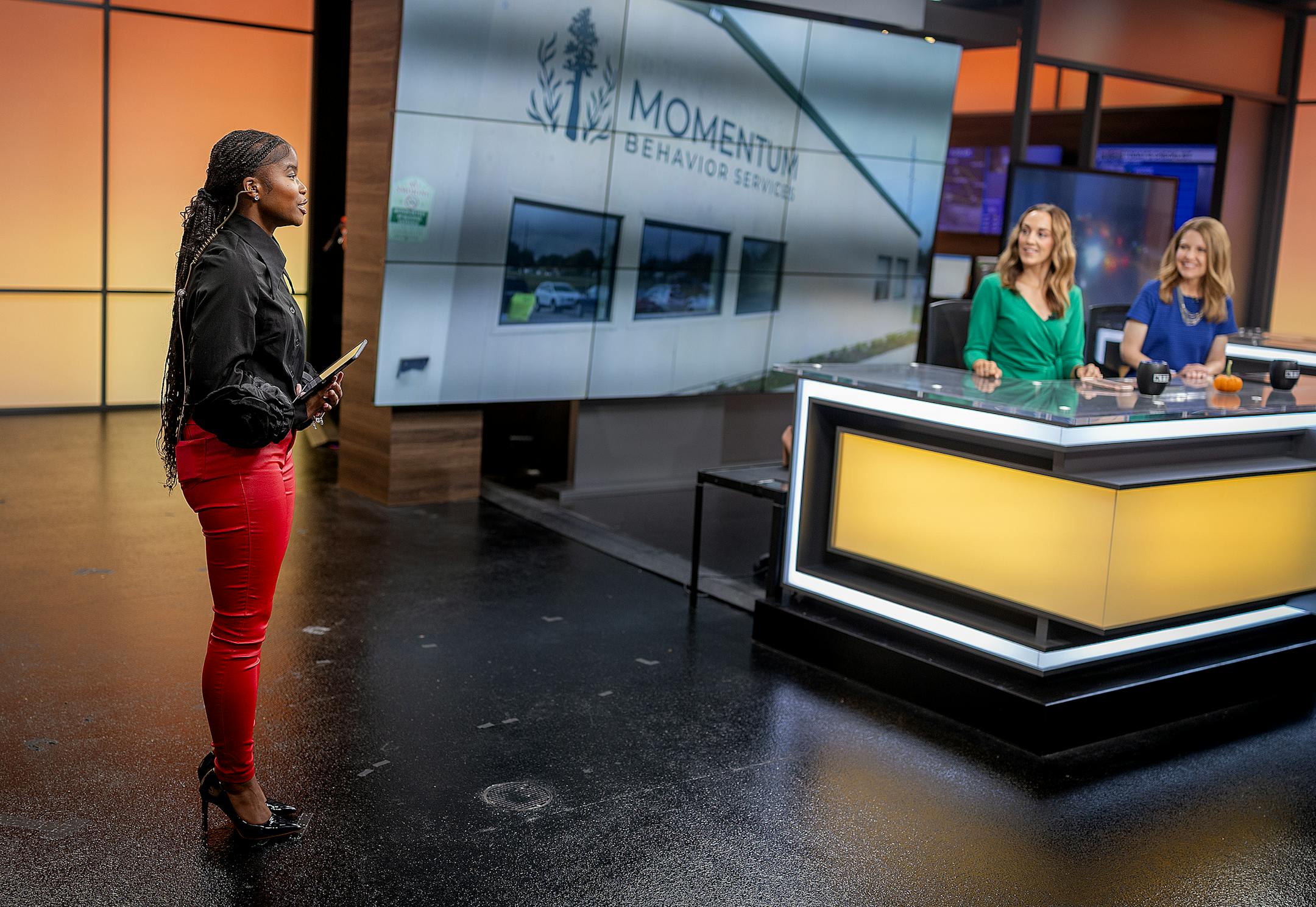
KTTC TV journalist Aaliyah Demry reports live with anchors Kelsey Marier, left, and Jess Abrahamson, right, at the station during the morning show. (Elizabeth Flores/The Minnesota Star Tribune)

Bianca Caputo is excited about launching her TV journalism career. She just hopes her tattoos won’t get in the way.

“It’s something I’ll have to bring up when I apply to places and see what their philosophies are,” said the college senior, who got inked her freshman year at the University of Minnesota with a valentine, a tarot card and a line from Billy Joel’s “Vienna” on her upper arms. “A lot of people who watch TV news that are older may not understand that tattoos don’t necessarily mean I’m edgy. ”

In the past, tattoos and piercings may have run afoul of station policies. Contractually, management continues to control most talent’s on-air looks, from haircuts to wardrobe. But bosses across the country are relaxing the rules, adjusting to a new generation’s desire for self-expression.

Former ABC News White House correspondent MaryAlice Parks covered the Trump and Biden administrations with a nose piercing. At KOKH in Oklahoma City, reporter Alexis Young shows off long, acrylic fingernails with themes that range from back-to-school to local sports teams.

“Thank you for accepting me,” she said last month while showing off her painted nails on “Good Morning, Oklahoma.” “I love coming as me.”
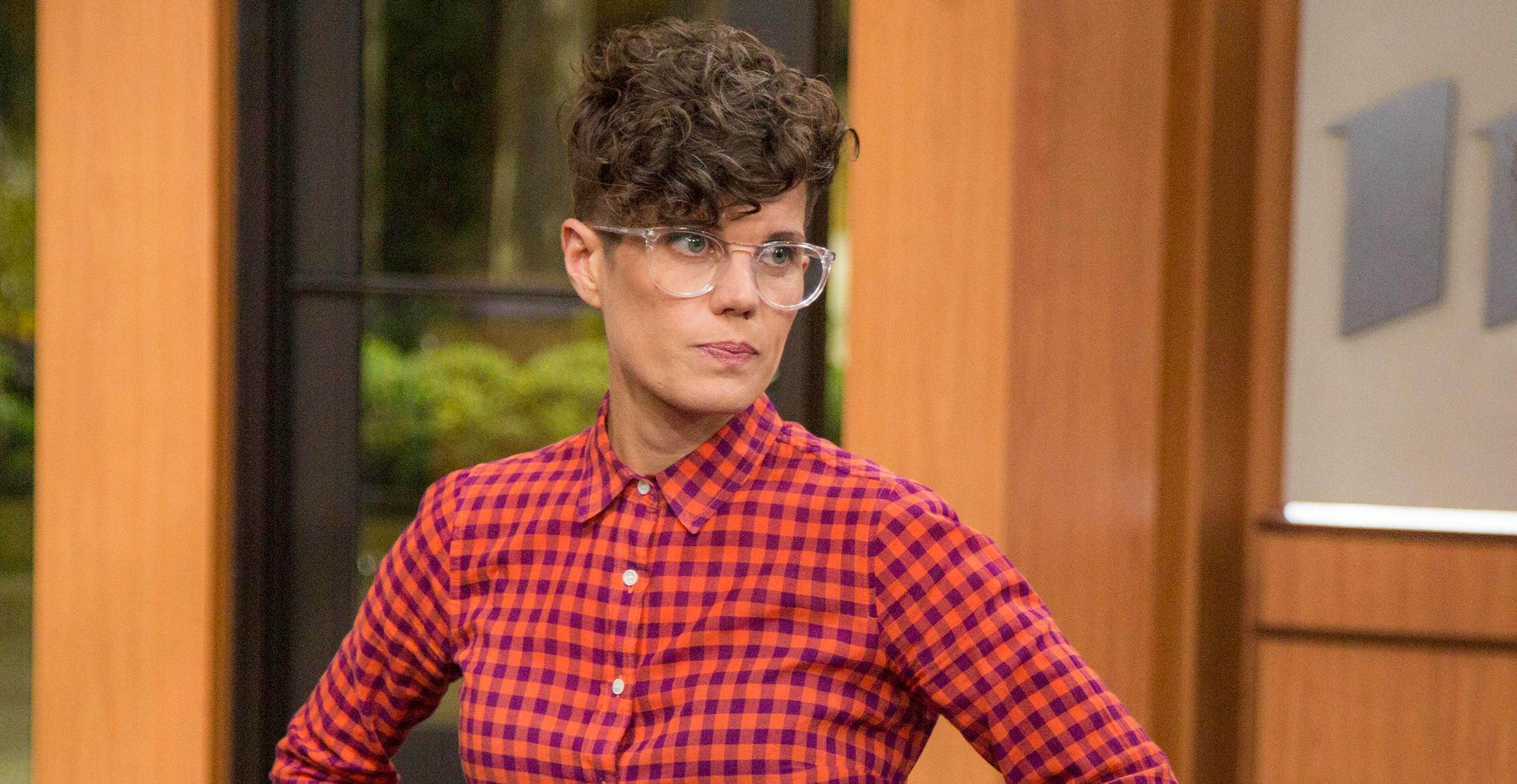
Jana Shortal (KARE)

In the Twin Cities, Jana Shortal can be seen anchoring newscasts in skinny jeans, pocket squares and flats. She sported a David Bowie T-shirt the day after the rock icon died.

Minneapolis native Aaliyah Demry isn’t afraid to wear her hair in braids and mix in street wear when she’s doing the morning shift at KTTC in Rochester.

“I remember one lady saying that when she started at KSTP, they had no option but to wear a dress,” said Demry, who joined KTTC last year after graduating from St. Cloud State University. “Now we have the option of dressing a little more fly.”
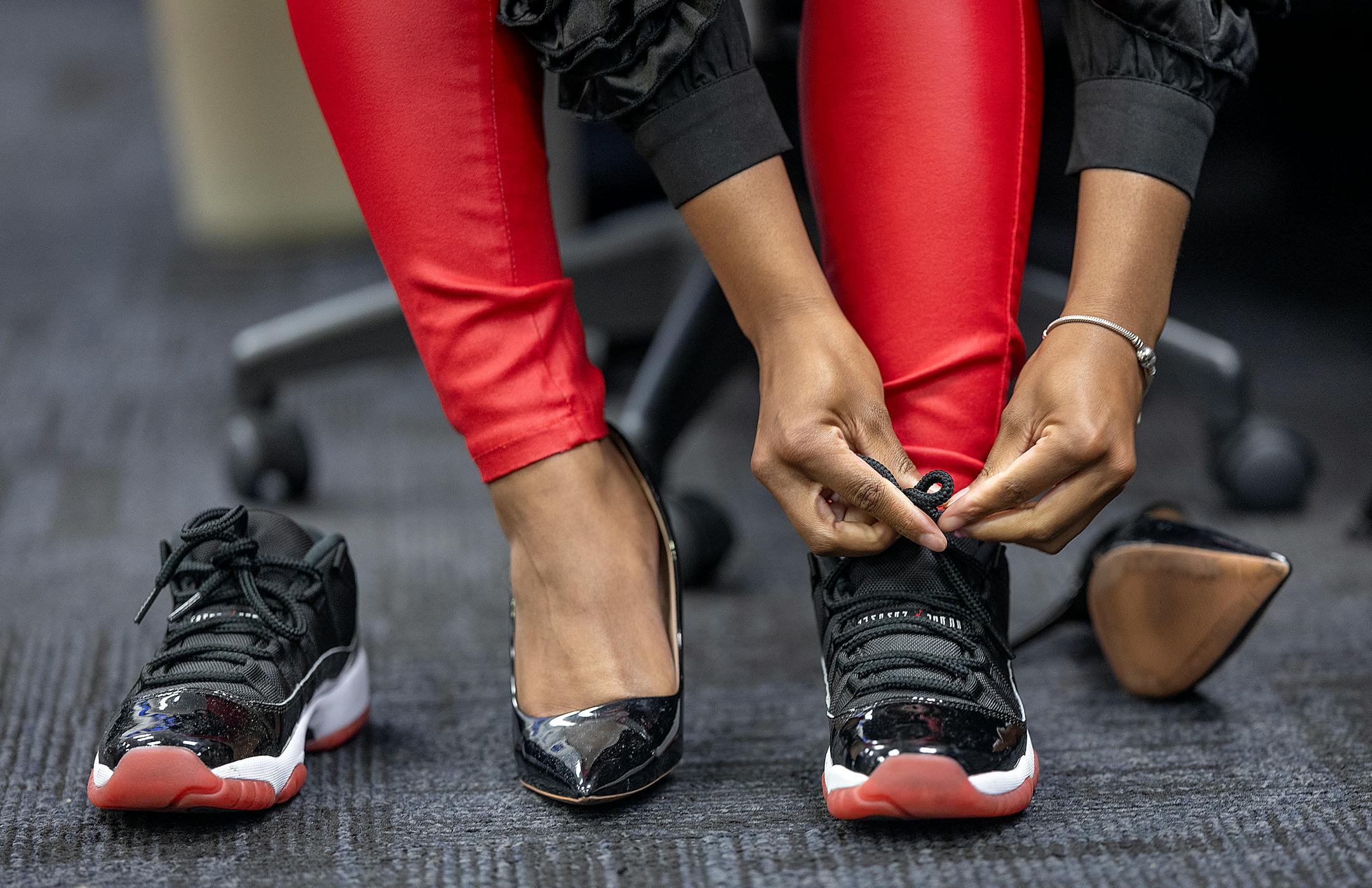
KTTC TV journalist Aaliyah Demry changes from her on-air heels into sneakers in Rochester, Minn. (Elizabeth Flores/The Minnesota Star Tribune)

Veteran anchors look at the new trend with a mix of admiration and bemusement. They laugh while sharing anecdotes about the scolding they used to get for certain fashion choices. They weren’t so funny at the time.

When Joie Chen was at CNN in the early ’90s, she randomly decided to have her bangs cut short.

“My boss screamed at me for 20 minutes straight about how I should never do a thing like that again without consulting her first,” said Chen, who later anchored “America Tonight” on Al Jazeera America. “She finally slowed down and said, ‘But it actually looks great.’”

Fashion consultants were not unusual.

“At CNN, someone would essentially come to our houses and toss out clothes,” said Chen, who also had a clothes adviser at Al Jazeera. “It was like an episode of ‘What Not to Wear.’”

Minnesota native Georgia Fort remembers an incident from roughly 10 years ago when she was reporting in Columbus, Ga. She had gotten a flat tire on the way to her station and didn’t have the 90 minutes it took to straighten her hair.

“I still was well groomed and very presentable on the air, but I got reprimanded,” said Fort, who serves as president of the Center for Broadcast Journalism in St. Paul. “I was told if I did it again, I would be written up for it.”

Georgia Fort in 2022. (Jeff Wheeler/The Minnesota Star Tribune)

Fort and other Black female journalists started fighting for the right to wear their natural hair. They got help from the CROWN Act, legislation that California passed in 2019 that outlawed discrimination based on hair textures and hairstyles. More than 25 states, including Minnesota, have since adopted a similar act.

Under Title VII of 1964’s Civil Rights Act, a TV station cannot prevent a reporter from making wardrobe choices based on religion. But it wasn’t until 2018 that a journalist, Tahera Rahman in the Quad Cities, regularly wore a hijab on the air. Rahman, who now works in Austin, Texas, has since been joined by several others including WCCO’s Ubah Ali.

“We claim to be a profession that prides itself in diversity of thought and telling stories from multiple perspectives,” Fort said. “Yet when it comes to how we look, we expect people in the industry to conform to a European standard.”

The battle to break tradition comes at a time when the media is desperate to connect with younger viewers who might relate better to someone who dresses and looks like them.

According to the Pew Research Center, only 9% of adults 18-49 followed local TV news in 2024, down from 23% in 2016.

“When I was starting out, my bosses didn’t give a damn what I thought. They’d just say, ‘You’re lucky to be here. Shut up,’” said the University of Minnesota’s Scott Libin, a former news director at KSTP and WCCO. “Now management says to its younger reporters, ‘Tell us what the future holds.’”

Viewers today are more likely to see their favorite reporters and anchors in more casual clothes. Men, who have always faced less scrutiny, ditch their ties or wear earrings. For women, tailored jumpsuits and trousers are no longer taboo.

Dana Adams, who runs Adams Broadcast Consulting, applauds the shift. But she advises clients to steer clear of any look that would distract from stories.

“If a viewer is spending more time thinking about your hair or jewelry than the story you are telling, that’s not a good thing,” said Adams, a former anchor in New York and Los Angeles. “Keep it simple and elegant.”

Former Fox 9 News anchor Alix Kendall came across a TV anchor on her screen recently with thick false eyelashes.

“Every time she blinked, I had to look away. It drove me crazy,” Kendall said. “I’m all for people having more freedom, but if you want to be on TV, you have to assume there’s a limit.”

During her 25 years at Fox 9, Kendall stuck with the traditional trends of her era: blazers and brightly colored dresses. But she still endured public criticism that made Joan Rivers’ red-carpet commentary seem like love notes.

Alix Kendall, from her early days at KMSP, with Tim Sherno. (KMSP)

After one haircut, which she got preapproval for from her news director, her Facebook account got inundated with negative comments.

“Frankly, I didn’t lose any sleep over any of them,” said Kendall, who recently launched the podcast, “Life Unscripted.” “I actually got more sleep because I didn’t need to spend so much time blow-drying my hair anymore.”

Female TV journalists have always had to deal with the public’s opinions on how they come across. It rattled “Twin Cities Live” co-host Elizabeth Ries until she got into her 40s.

“In my 20s, I was so mortified. I internalized so much shame that I couldn’t even talk about it,” she told the Star Tribune two years ago. “It’s not that I don’t care as much, but my attitude is like: ‘If you’re a person who will take the time and the energy to send that type of message, all is not well and good with your soul.”

Adams wonders if younger TV journalists, who often share their personal lives and looks on Instagram, will ever be able to handle the heat.

“In my career, you had to have a thick skin or you were going to have a hard time,” she said. “These young journalists today are so sensitive....They’ve been raised in an era where everyone gets a trophy. They’re not prepared for the real world.”

Caputo is one 20-something who does seem prepared. There are certain areas she’ll never compromise on. Fashion isn’t one of them.

“At the end of the day, I’ll take out my nose ring and cover my tattoos if I need to,” she said the day before her first real job interview. “But I hope I can find a newsroom where I can be my authentic self.”

about the writer

about the writer

Neal Justin

Critic / Reporter

Neal Justin is the pop-culture critic, covering how Minnesotans spend their entertainment time. He also reviews stand-up comedy. Justin previously served as TV and music critic for the paper. He is the co-founder of JCamp, a non-profit program for high-school journalists, and works on many fronts to further diversity in newsrooms.

See Moreicon