

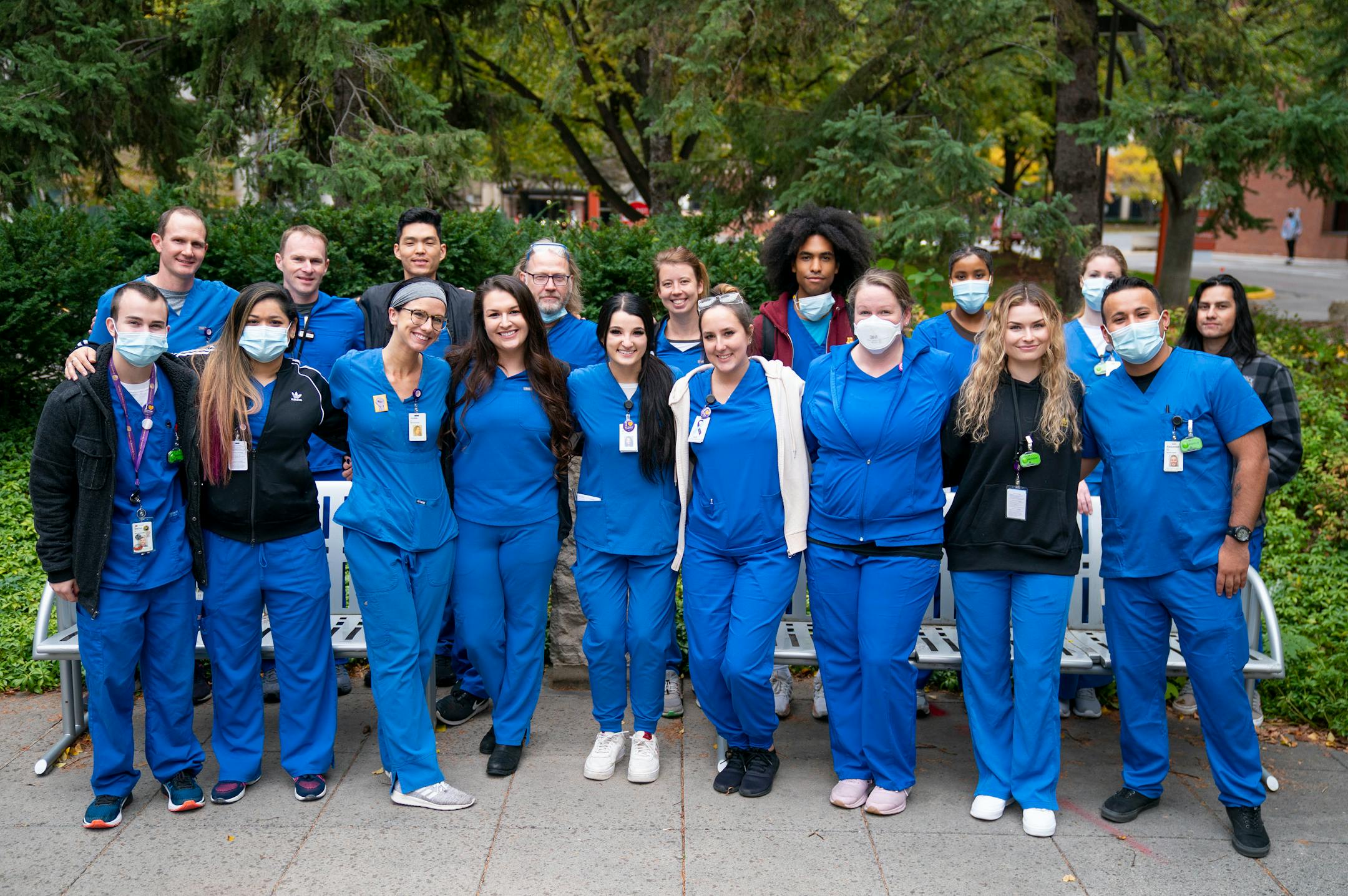
A looming strike by 400 Twin Cities mental health workers underscores the pressure hospitals are under as patients with complex psychiatric conditions clog up emergency department and inpatient beds.
A chronic shortage of psychiatric beds in Minnesota has left hospitals boarding patients in mental health crises in their ERs for hours, days or even weeks. But COVID-19 increased depression and anxiety in the community, which in turn put more pressure on a burned-out hospital workforce, according to workers preparing for next week's three-day strike.
"We've already lost too many good workers because of the challenges we are facing, and we are ready to strike for the health, safety and dignity of ourselves and our patients," said Dana Disbrow, a psychiatric associate at M Health Fairview's University of Minnesota Medical Center.
The strike starting Oct. 3 involves the U hospital along with Allina Health's Abbott Northwestern Hospital in Minneapolis and the Fridley campus of Mercy Hospital.
Health officials said problems have worsened during the pandemic to increase pressure on hospitals, including a lack of outpatient care. More than 30% of Minnesota adults with symptoms of depression and anxiety were unable to access counseling or therapy when they needed it in the 12 months ending October 2021, according to the Kaiser Family Foundation.
The unmet need sent more people in crises to hospital with limited capacities. A survey by the Minnesota Department of Health found on one day in May that 77 people with mental health treatment needs were waiting in ERs for beds to open up — just in Twin Cities-area hospitals with psychiatric units.
Hospitals have responded with plans to increase psychiatric capacity. Children's Minnesota is slated to open a pediatric inpatient unit in St. Paul later this fall. And the state health survey was part of the approval process allowing Fairview and Acadia Healthcare to build a 144-bed psychiatric hospital at the Bethesda campus in St. Paul. The facility will partly replace the shuttered St. Joseph's Hospital in St. Paul, where Fairview operated more than 100 psychiatric beds before its closure.
Mental health workers argued that better pay, benefits and safety guarantees are needed as well, given the rising complexity of patients with psychiatric conditions who are admitted to hospitals. The burnout risk shows in the rising number of job openings for psychiatric technicians in Minnesota. The 402 openings at the end of 2021 represented 20% of all jobs, according to the Minnesota Department of Employment and Economic Development.


