0:39
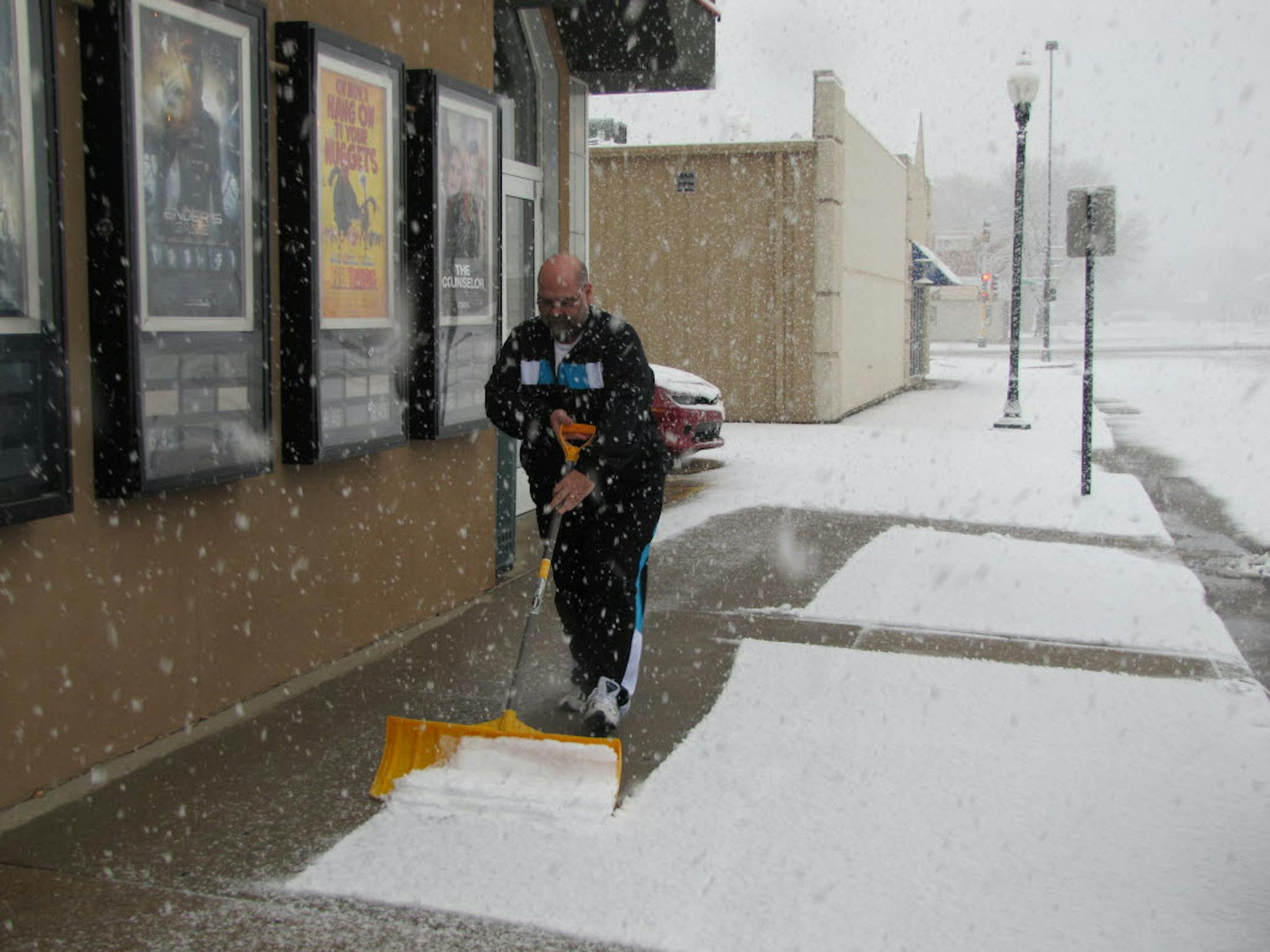
0:39The Twin Cities escaped the worst of the snow that slapped the Upper Midwest overnight, with less than two inches of accumulation in most areas, according to the National Weather Service Forecast Office. "Metro roads are wet but no snow accumulation," tweeted Kevin Gutknecht, communications director for the Minnesota Department of Transportation, shortly after 4 a.m. Wednesday. "Slow down, drive according to road conditions." But Minnesotans living in the southwestern and west central part of the state weren't as fortunate. Pipestone and Lyon counties were hit especially hard with snowfall totals ranging from 7.5 to 10 inches, according to the weather service. Nearly five inches fell in Darwin, a small town in Meeker County. Roadways in those areas "could be a challenge," Gutkneckt tweeted. Slick conditions have made for a troublesome rush hour for motorists in the south and west metro. At 6:35 a.m., Chanhassen police shut down part of Hwy. 5 at Powers Blvd. after a spin out and crash involving up to five vehicles blocked the road.The early rush hour was littered with crashes and spinouts, including a pair on I-494 in the vicinity of Hwy. 212 and in the I-35/Hwy. 280/Hwy. 36 commons in Roseville. Bridge decks and ramps were problematic throughout the metro as temperatures hovered right around the freezing mark.
To the north of the metro, the State Patrol shut down northbound I-35 north of North Branch where at least one person died in a rollover crash around 5:30 a.m.
It's not a record for the state's earliest snowfall (that would be Sept. 24, 1985) or the shortest snow-free stint (that would be 137 days, from May 25 to Oct. 8, 1925). But is it noteworthy in a state whose residents love to grumble about the weather?As with most climatological matters, the answer is yes — and no.
Sure, it was barely half a year ago that southern Minnesota got dumped upon. In fact, the Minnesota State Climatology Office declared the 17.2 inches that fell on Dodge Center, Minn., on May 2-3 the largest official 24-hour May accumulation in state history.
And now … well, as we like to say, it could be worse. Snow halfway into autumn is hardly unheard of, as those who were around for the 1991 Halloween Blizzard can attest. (Despite the name, that storm dropped more snow on Nov. 1 than Oct. 31: a full 18.5 inches, making it the Twin Cities' snowiest November day ever.)
Greg Spoden, state climatologist with the Department of Natural Resources, called November "a transition month, a time when we begin to receive enough Arctic air mass for the precipitation to be snow."
So, by some measures, we're right on track. The average date for the first measurable snow is Nov. 4, while the average date for the first 1-inch snowfall isn't until Nov. 18. The only year with an official November snow measurement of 0.0 inches was 1963, although we got only a trace in 2009. And Nov. 5 has brought us fairly large snowfalls, including a record 4.2 inches in 1959.
If you're tempted to grouse, keep in mind that we're less than a week away from the anniversary of the 1940 Armistice Day Blizzard.