

A power struggle potentially involving millions in public and corporate money has intensified since the end of the NCAA Final Four over who should be in charge of developing and organizing future high-profile events in the Twin Cities.
The nonprofit Minnesota Sports Corp., which served as the local organizing committee for the Final Four, wants to recast itself as a "Regional Events Catalyst" to develop events and enhance those already coming. With that goal in mind, Kate Mortenson, CEO of Minnesota Sports Corp., has hired a lobbyist to promote the effort and is seeking $2 million in state funding to maintain the organization with the same Final Four staff.
But opposing that plan are convention bureaus for the metro area's biggest cities: Meet Minneapolis, Visit St. Paul and the Bloomington Convention & Visitors Bureau. Meet Minneapolis has hired its own lobbyist to quash Mortenson's plan to create the new regional group.
Mortenson's plan is raising questions about the need to spend public and corporate money on an organization that would compete with similar groups already in place, and which have proved successful in drawing events like baseball's All-Star Game, the X Games and the Super Bowl.
A board meeting is scheduled Monday to discuss the future of Minnesota Sports Corp., but Mortenson said those discussions are private and wouldn't comment on them. Mortenson, who is paid a six-figure salary, says her own role has yet to be determined.
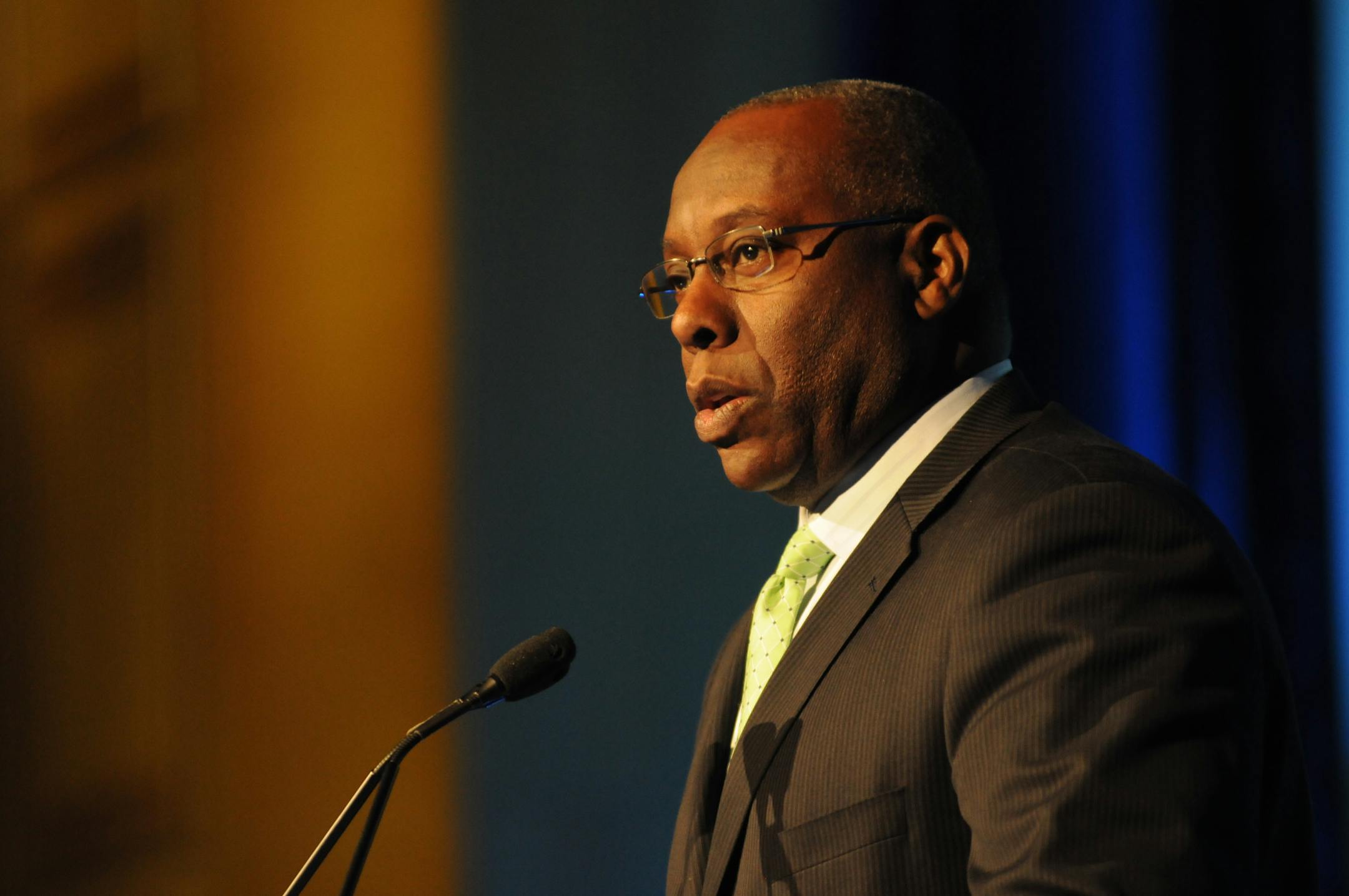
Melvin Tennant, president and CEO of Meet Minneapolis, questioned the need for Minnesota Sports Corp. — on whose board he sits — to continue. His convention bureau is the state's largest, with 70 full-time staffers and an annual budget of $14 million, nearly 30% of it in public funding.
"I will continue to advocate [the Meet Minneapolis] board's position, that another organization is unnecessary," he said Friday.
Terry Mattson, CEO and president of Visit St. Paul, said the region "would be better served by enhancing what already exists rather than spending on another, new organization." Such a group, he said last week, would be a "step backwards in what already brings success. That's just working cross purpose to what we really need here."
![Meet Minneapolis' annual meeting at the Minneapolis Convention Center with Melvin Tennant, their CEO and president ] Richard.Sennott@startribune.com Richard Sennott/Star Tribune. , Minneapolis Minn. Thursday 03/08/12) ** , (cq)](https://arc.stimg.co/startribunemedia/6WIWRRUN6WOHDAQKRYKSQNNNDI.jpg?&w=1080)


