1:41
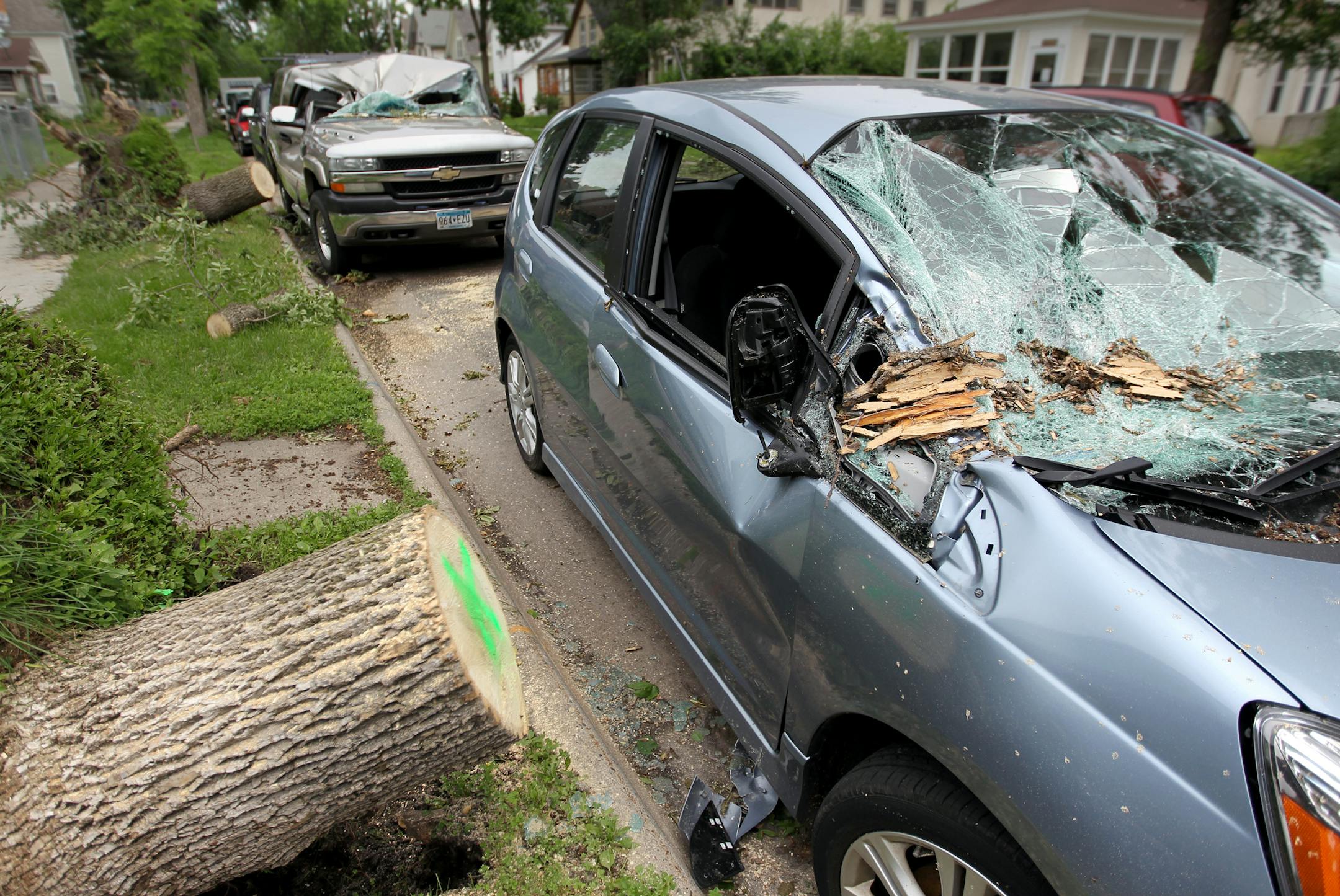
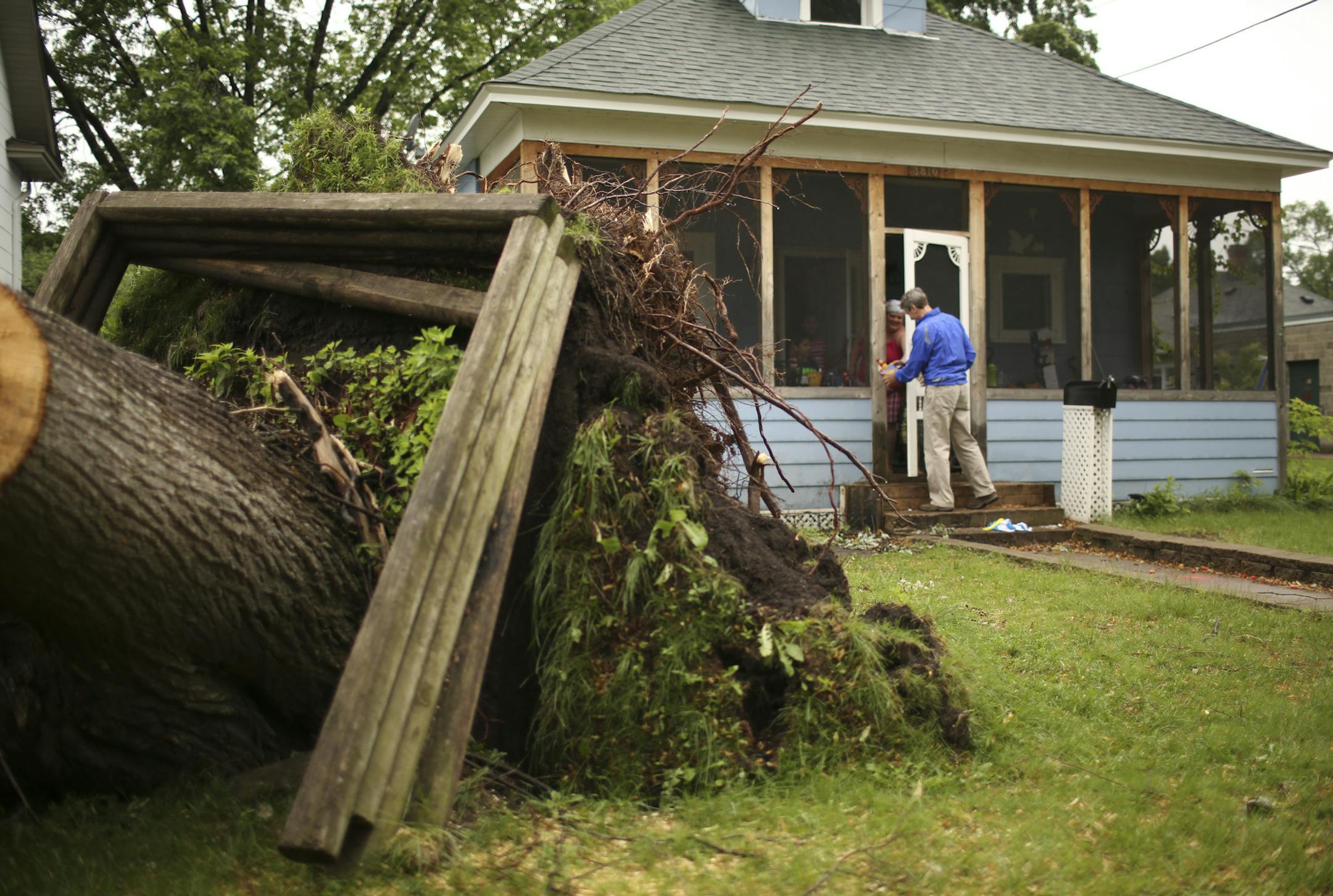
1:41While neighbors gathered Monday to mourn the loss of hundreds of trees being cleared by crews, Mayor R.T. Rybak said he wants to consider a number of preventive measures that could soften the blow of the city's next major weather event.
Those measures could include burying power lines, building sidewalks differently or planting different species of trees, he said as he surveyed the damage.
"If you have half a million people without power in a metropolitan area for several days, what does that mean for productivity?" Rybak said outside of Everett's meat shop on 38th Street, where the freezers were back up and running.
Minneapolis crews have removed some 800 trees just to reopen city streets since the storms that started Thursday night, and now are turning their attention to hundreds more boulevard trees that are leaning on structures. The city doesn't yet know how many boulevards and park trees went down. Then workers will address worrisome trees remaining on boulevards that have a lean, a crack or other issues.
St. Paul officials said they lost about 500 trees, including a landmark catalpa that stood just off Hamline Avenue in the Macalester-Groveland area, where it helped to frighten kids at Halloween.
Burying lines is costly
Looking at some nearby power lines, Rybak asked, "Is that the most effective way for us to guarantee power to a city deeply dependent on it?" After several incidents in recent years, including two inner-city tornadoes, he observed that they are a "pretty tentative way" to transport energy.
Rybak was careful to say that he wasn't calling for any particular change, but rather merely asking the question. Burying power lines is expensive. Xcel says they cost between 10 and 20 times more than overhead lines. A state agency recently ordered Xcel to bury lines that would have gone over the Midtown Greenway, at an extra cost of about $17.5 million.
"The main issue is how do we make sure we do the best job possible to get a reliable energy source," Rybak said. "That could mean just securing these and protecting them in a different way. It could mean burying them. It should mean also looking more at local generation, so in these crises, people who are smart enough to get non-grid sources" don't lose power.
![Minneapolis Mayor R.T. Rybak took to the streets of south Minneapolis Monday afternoon, June 24, 2013 to assess damage in some of the neighborhoods hit hardest by the recent storm. While touring south Minneapolis to assess storm damage, Mayor R.T. Rybak stopped to talk with David and Sarah Hoffner, who were biking home with their kids from Lake Nokomis in the rain. He visited with them about damage to their neighborhood and when they got their power restored. ] JEFF WHEELER •](https://arc.stimg.co/startribunemedia/LCA6HNOILQOWM3ZTYLXTPSKJSI.jpg?&w=1080)