

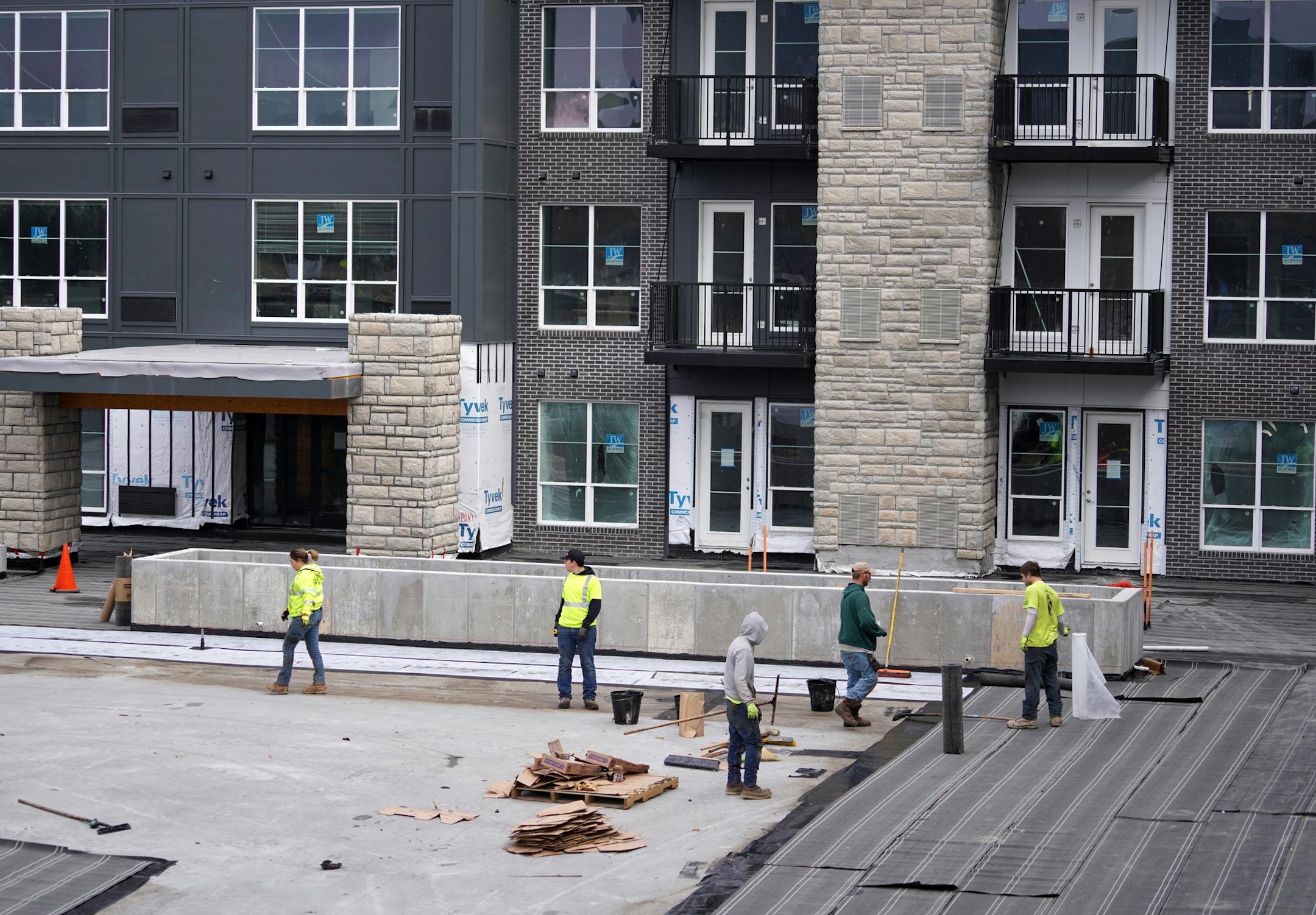
Fewer tenants in the Twin Cities metro are having trouble paying their rent than expected, but with job losses piling up and thousands of new units coming online this year the average apartment vacancy rate in the Twin Cities metro is likely to triple by the end of the year, according to an annual State of the Multi Housing Industry update from the Minnesota MultiHousing Association (MHA).
"We thought we'd see more signs of stress," said Cecil Smith, MHA president and a Minneapolis building owner and operator.
He cited a survey of 36,500 market-rate rentals in the Twin Cities metro that shows as of May 6 rents had been paid in 95% of the newest, highest-quality buildings (Class A); 93% in older, less-expensive buildings (Class B) and 88% in buildings that are even older and in less desirable locations (Class C).
Those figures were better than expected and slightly higher than in April, said Smith, who attributed that improvement to expanded unemployment benefits and better communication between renters and property managers. The group expects June payments to be equally strong, and said there was "no traction for rent strikes."
Brent Wittenberg, vice president of the Twin Cities office of Marquette Advisors, said renters in Class B and C properties are having the most trouble making rents because of significant job losses in retail and hospitality sectors while owners of Class A buildings aren't seeing as many unpaid rents to date because their renters are less likely to have experienced a job loss.
With nearly 32,000 new apartments expected to be completed between now and 2022, "a market adjustment" was already in the offing, Wittenberg said, but with 350,000 COVID-related jobs losses in the Twin Cities metro he predicts a more significant increase in the average vacancy rate across the metro in the current year.
Based on current assumptions, including an expectation that only 80% of the planned units will actually get built over the next three years, the average vacancy rate across the metro is expected to triple to 10.6% by the end of the year and remain elevated through 2024. Those figures will vary dramatically by submarket, and he called his assessment "highly speculative."
"There will be winners and losers in a market like that," he said.


