

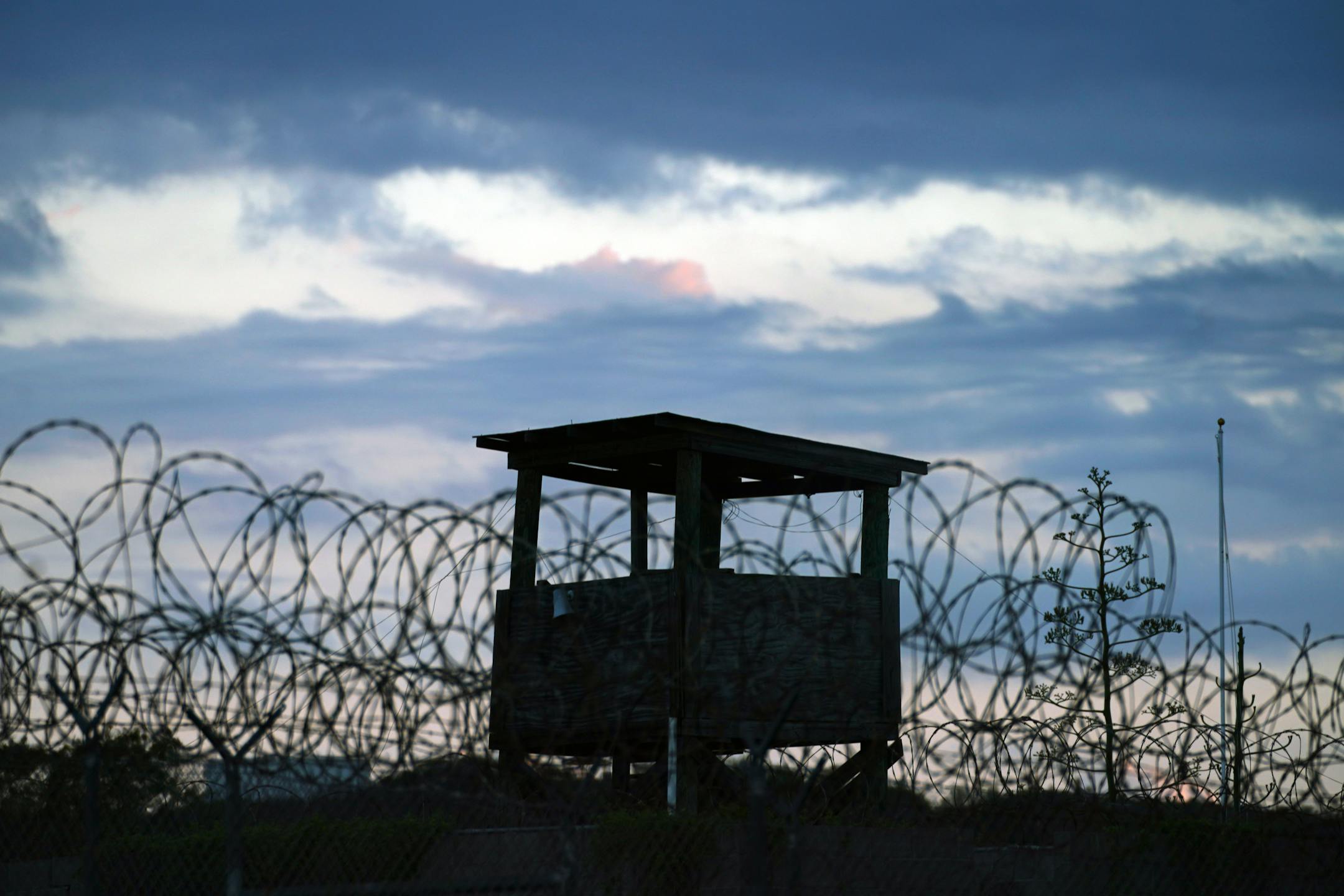
On Jan. 11, 2002, a U.S. military plane landed at our base in Guantanamo Bay, Cuba, and the first men deemed "the worst of the worst" by then-Vice President Dick Cheney were brought into the now-infamous detention center. Jumah Al-Dossari, a citizen of both Bahrain and Saudi Arabia whom I would eventually represent, arrived a few days later. He was held as an "enemy combatant" based on the accusation that he was a member of al-Qaida, a claim made without substantiation or allegation that he had done anything to harm the U.S., its citizens or its allies.
Similarly, most detainees at Guantanamo were not said to have committed any hostile acts against the U.S. or its allies. Yet 20 years after the first prisoners were brought there, Guantanamo remains open largely because of congressional intransigence.
The U.S. chose Guantanamo to detain people captured in the "war on terror" after the Sept. 11, 2001, attacks, primarily because it was not on American soil. The government's theory was that holding foreigners outside the U.S. would prevent our courts from exercising jurisdiction over claims by the detainees, effectively ensuring that those held would have no enforceable rights.
But in 2004, the Supreme Court ruled in Rasul v. Bush that detainees could file habeas corpus petitions, which allowed them to meet with lawyers. By then, the government's assumption that those held in Guantanamo would be revealed as high-value terrorists had unraveled. Even the facility's commanders admitted many detainees had just been in the wrong place at the wrong time.
When I first met Jumah in October 2004, I didn't believe that all Guantanamo detainees were, as Donald Rumsfeld had described them, the "best-trained vicious killers." Still, I was nervous. My anxiety quickly dissolved. Jumah looked too gaunt to be a physical threat, and his smile was disarming. And we were quickly chatting about American movies ("Jumanji" was his favorite), his daughter and Egyptian cuisine. At one point, he asked if I was Jewish, based on my first name. When I told him no, he looked disappointed. "I heard the best lawyers were Jewish," he said, before adding, "I'm sure you're good, too."
During our visits over the next year, Jumah and I talked about family and romantic relationships. Over time, he had learned a lot of English from the guards, particularly slang. Jumah also gained a command of racial epithets from the guards, but he made me promise not to tell his mother he knew those bad words.
However, it was not all gallows humor and easy conversation. Jumah described abuses such as being beaten unconscious and having an interrogator smear what she said was menstrual blood on him, accounts corroborated by reports from U.S. personnel. But he said his most painful experience was being held in long-term solitary confinement.
In October 2004, on my fourth visit to Guantanamo, Jumah was despondent. After being released from the hospital following a hunger strike, he had been returned to isolation, contrary to what a doctor had promised. An hour into our meeting, he asked me to leave the room so he could use the bathroom. Soon after leaving, I started feeling anxious and cracked the door to the cell open. I saw Jumah hanging by his neck, unconscious, with blood flowing from a gash in his arm. He had emergency surgery and survived.


