

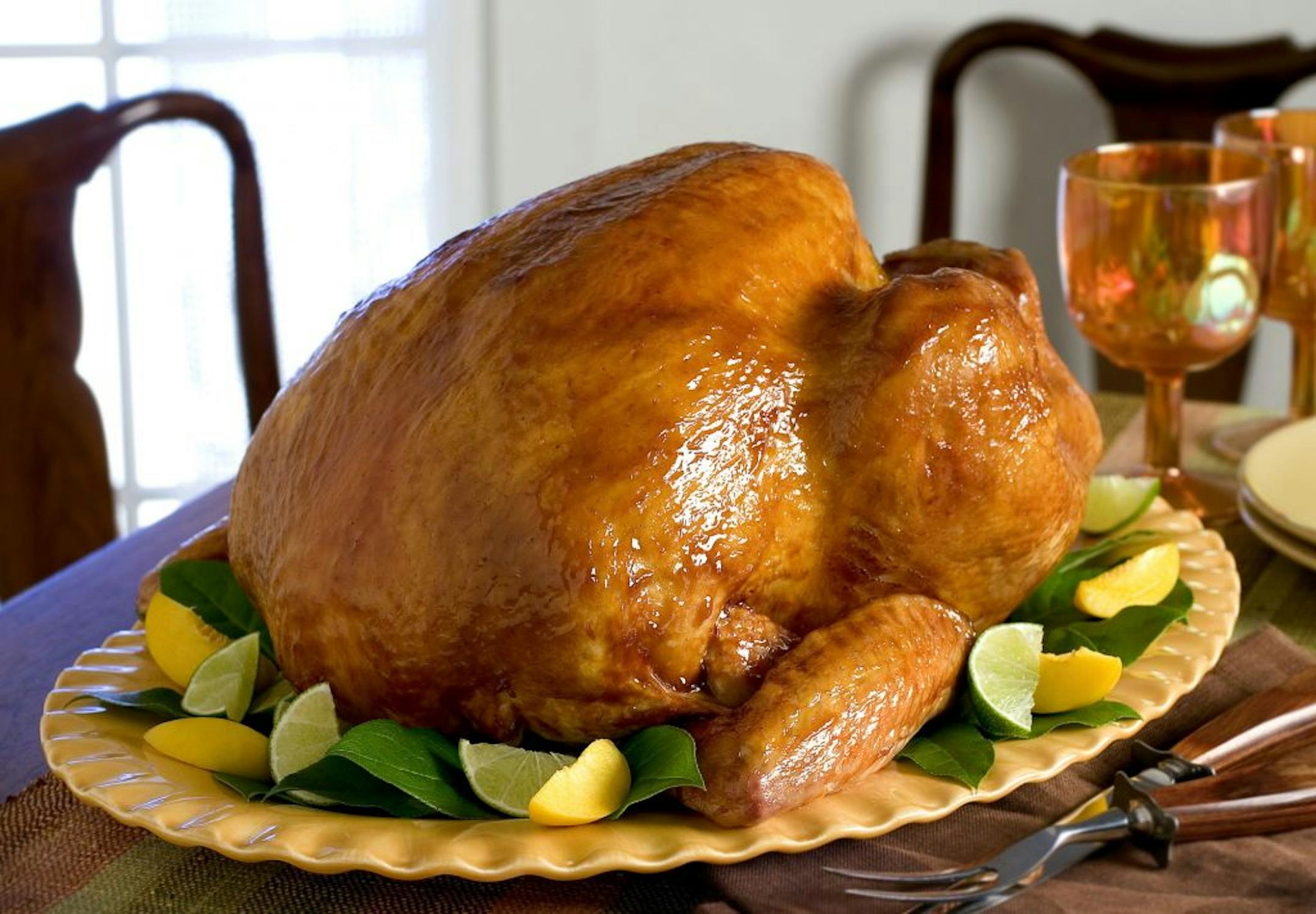
Thanksgiving is widely considered a day for turkey.
But because so many of us cook it only once a year -- and then there is a lot of pressure to get it right -- a number of home cooks suffer from a bad case of turkey anxiety.
It needn't be so. Turkey is relatively easy to get right. Short of dropping the cooked bird on the floor or forgetting to remove the plastic bag of giblets (both of which are oft-repeated Thanksgiving horror stories), there are basically only two things that you can get wrong: You can undercook the turkey or overcook it.
Undercooking is easy to fix -- cook it longer. If a meat thermometer inserted into the thigh (without touching the bone) does not read 165 degrees, keep cooking it. Few things are worse than undercooked turkey, including overcooked turkey. Overcooked turkey is just dry, which might be one reason so many people insist on serving it with gravy. It's a way to moisten the meat, just in case.
Thawing the turkey
The most important thing to remember about turkey is, if you buy it frozen, give it plenty of time to thaw. The safest method is to defrost it in the refrigerator, which takes 24 hours for every 4 or 5 pounds of turkey.
If you realize you don't have time to thaw it in the refrigerator, you can defrost it by submerging it completely in cold water, after first making sure it is tightly wrapped so no water gets in the package. It only takes 30 minutes per pound to thaw it this way -- six hours for a 12-pound bird, 10 hours for a 20-pounder -- but the water must be changed every 30 minutes and the turkey must be cooked immediately after it is defrosted. If you don't have enough time to thaw it in water, you can defrost it in a microwave oven by following the appliance's instructions, but keep in mind that many large turkeys will not fit a typical microwave.
Roasting the turkey

