

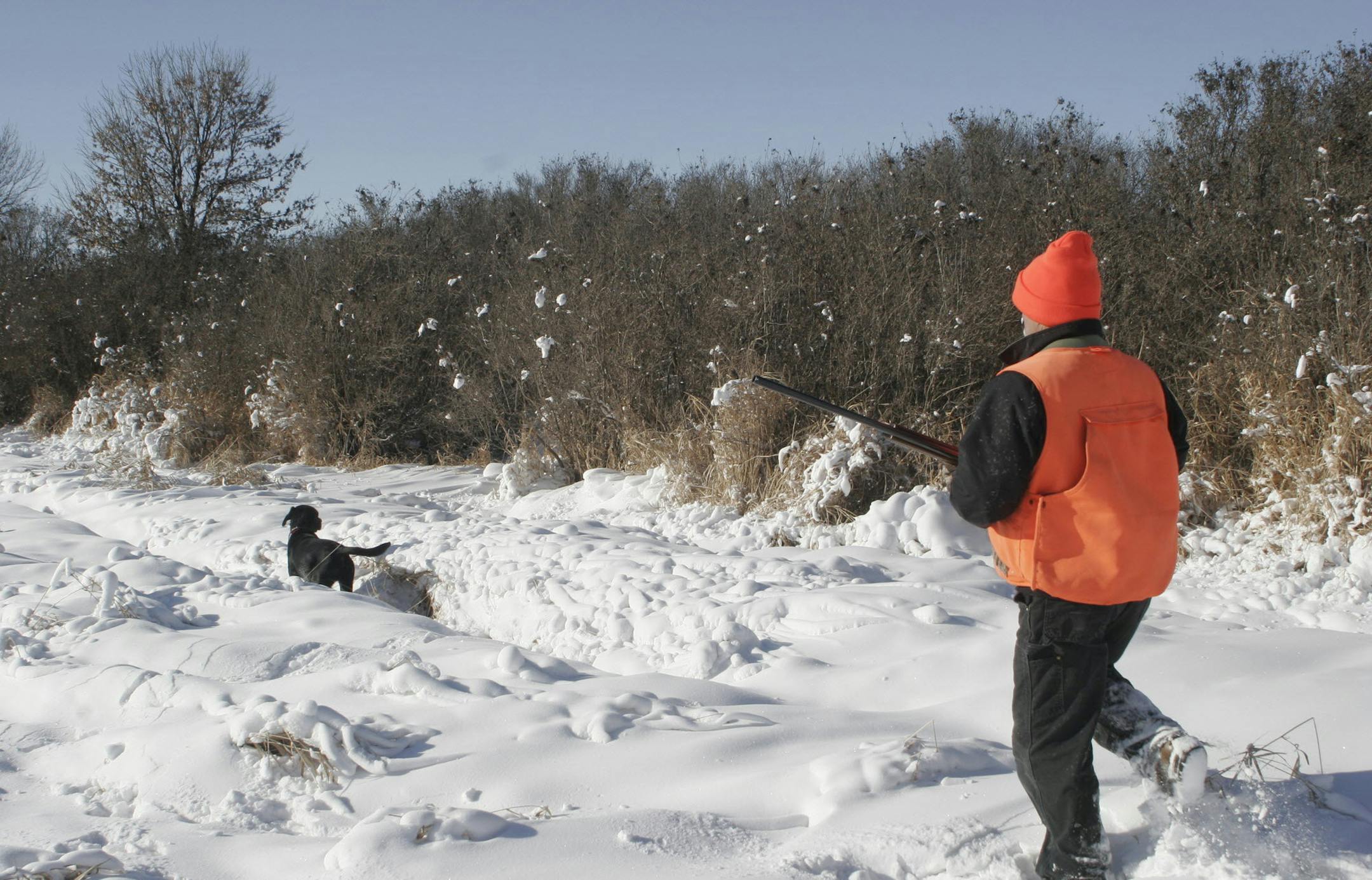
The rooster pheasant exploded from a thick patch of chin-high cattails and rocketed across the frozen slough — a splash of iridescent red and copper in a drab-brown landscape.
I shouldered my 12-gauge shotgun and snapped off a single shot before the bird disappeared from view. With my Labrador retriever leading the way, we crashed through the cattails and spotted the downed bird on the ice 60 yards away.
The dog skidded across the pond, snapped up the prize, and returned with another late-season ringneck to be savored later at the dinner table. Hunting public lands in southwestern Minnesota, I finished the day with my three-bird bag limit — and never saw another hunter.
Such are the joys of late-season pheasant hunting. Though December can offer some of the best ringneck hunting of the season, remarkably few hunters take advantage of it. The number of pheasant hunters generally falls dramatically from the opener in mid-October, meaning many of the state's 75,000 pheasant hunters miss out on some fine hunting. The season ends Jan. 3.
Yes, the temperatures are lower, and there certainly are fewer birds. And the roosters that remain often are wary and can flush wildly at the sound of a slammed truck door.
But some die-hard ringneck hunters actually prefer this month to October.
"I love every day of hunting, but late season offers hunting opportunities that early season doesn't," said Scott Rall of Worthington, an avid ringneck hunter, Pheasants Forever chapter president and former member of the Lessard-Sams Outdoor Heritage Council.
Sloughs generally are frozen, which allows hunters access to areas that are inaccessible in October and November.


