

Opinion editor's note: Star Tribune Opinion publishes a mix of national and local commentaries online and in print each day. To contribute, click here.
•••
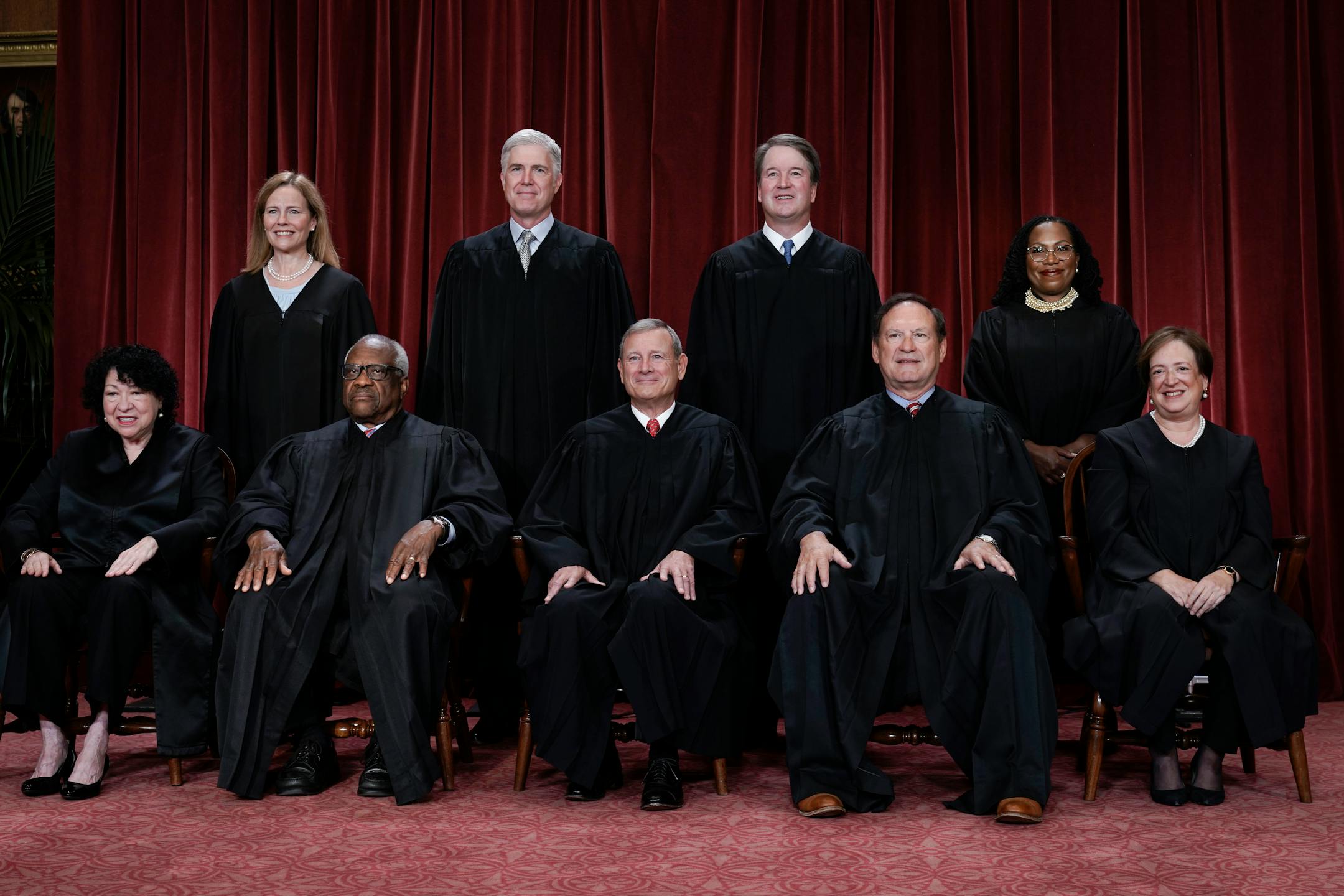
"Nobody has ever done more for right to life than Donald Trump," the former president told the conservative commentator David Brody last month. "I put three Supreme Court justices, who all voted, and they got something that they've been fighting for 64 years, or many, many years."
Trump sought three things in his judicial appointees, or as he sometimes called them, "my judges." First, he wanted justices who would overturn Roe v. Wade. Second, he wanted "jurists in the mold of Justices Antonin Scalia, Clarence Thomas and Samuel Alito." Third, he wanted judges who would be loyal to him.
Opponents of abortion got what they wanted when the Supreme Court overturned Roe v. Wade, and the ramifications of that decision can't be overstated. But did Trump get the rest of what he wanted from the justices he appointed?
Almost six years after the first appointment, we can begin to form an answer: not entirely. While conservative, none of his three appointments are nearly as conservative — nor as consistently conservative — as Justices Thomas and Alito. The Trump appointees are also not as unified as they might initially appear. Given that they could serve for decades and hold the balance of power on the current court, understanding the distinctions and differences among them is crucial, both for policymakers looking to draft laws and regulations that will be upheld, and for lawyers deciding which cases to bring and how to litigate them before a reshaped Supreme Court.
How do the Trump appointees compare with Justices Thomas and Alito? Thomas stands for unfettered originalism — a commitment to interpreting provisions of the Constitution based on their original public meaning at the time of their enactment, with little regard for limiting factors like legal precedent. Alito, less committed to an originalist ideology, consistently votes for the conservative policy outcome in any given case. The Trump appointees, in contrast, cannot be easily characterized as either hard-core originalists or blanket partisans.
Take Trump's first Supreme Court pick, Justice Neil Gorsuch. When observers speak of a "3-3-3" court, Gorsuch is the third member of the conservative trio. In this sense, he is an heir of sorts to Scalia, whose seat on the court he occupies; he "shares Justice Scalia's legal philosophy, talent for vivid writing and love of the outdoors," as noted by Adam Liptak.


