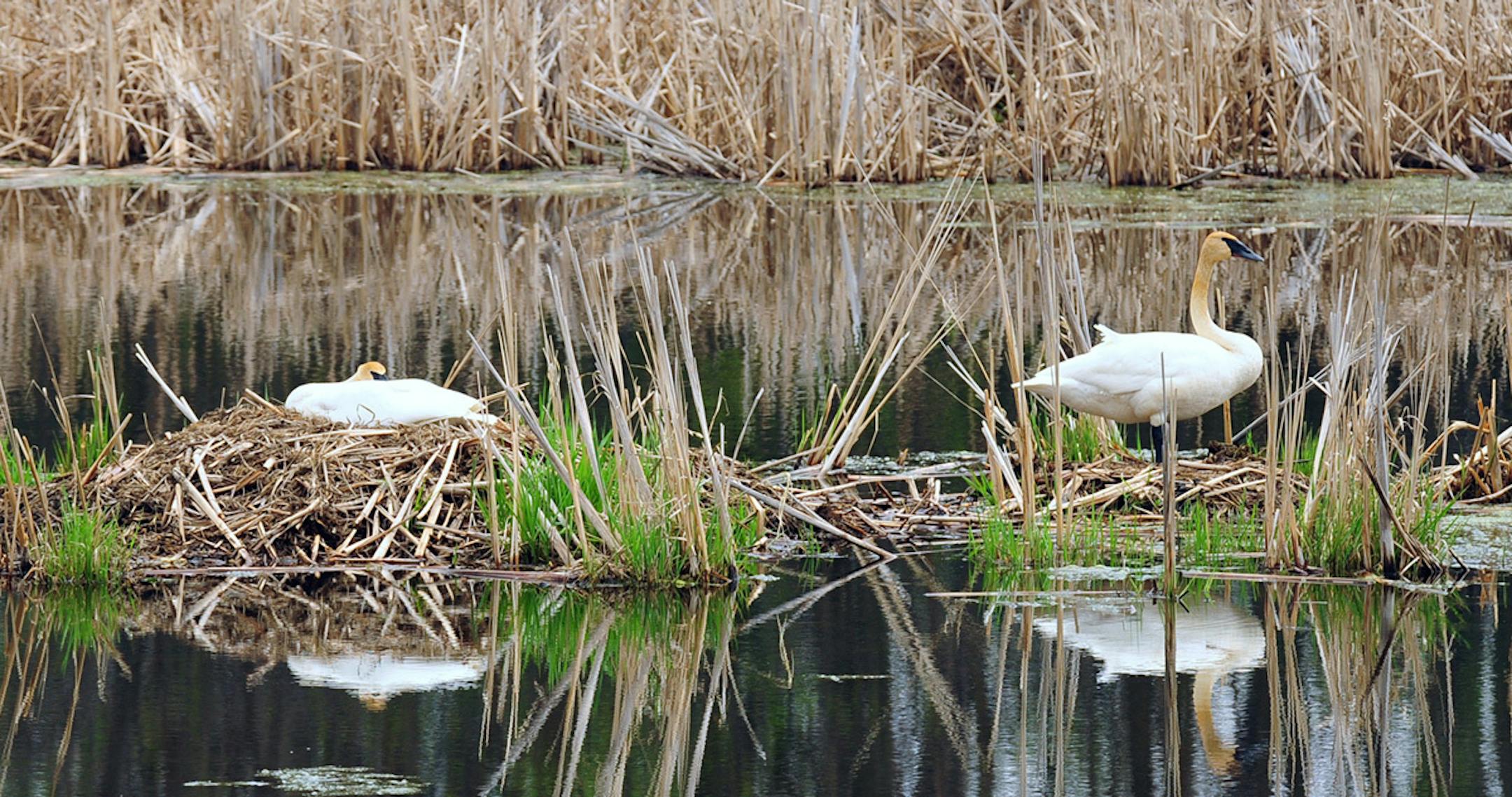
Q: I keep an eye on the local wetland and there has been a pair of swans on its small lake on many days. I'm wondering if these might be different birds passing through or could they be the same swans? And might they stay and nest here?
A: These are good questions, and not knowing the answers I turned to someone who does.
"If it's just a single pair of swans, then they are not migrants," says John Moriarty, senior manager of wildlife for Three Rivers Park District, noting that several pairs of trumpeter swans nest within a mile of your wetland area, so the birds you're seeing might be one of those pairs.
Moriarty suggested that the walking trail along the lake you watch might make it unattractive to the swans, but if they find a good spot, they may stay to raise cygnets.
And he ended with this heartening news: "There will be more nests in the metro area in the future as the state population of trumpeter swans continues to grow."
Avian fidelity
Q: I enjoy the cardinal's springtime song and it inspires me to ask whether cardinals mate for life.
A: Cardinals are fairly unusual in the bird world, since a pair typically remains together all year long — they don't split up after the breeding season, as many other species do. The male and female remain as a pair unless one of them dies, but then the survivor will seek another mate. This, in the bird world, is the definition of "mating for life." Cardinals have such a frenetic nesting season — a pair raises two broods during the summer — that they need to pair up and begin nesting quickly.
Bargain binos
Q: I've made a vow that this is the year I'm going to start bird-watching for real. I was looking at binocular prices and they seem so expensive. Is there any way around this?