

Faced with a self-inflicted wound that is hurting agriculture, manufacturers and, not incidentally, his party's chances in November, President Donald Trump has announced a $12 billion bailout to farmers who have become collateral damage in the trade war he started. It is truly, as one Minnesota soybean farmer put it, "a Band-Aid on an arterial bleed."
Trump started this, recall, by saying that trade wars were easy to win. That is proving not to be the case. Much of what has ensued since he started antagonizing U.S. trade partners around the world was predicted by those who know this terrain far better. What started early this year with punitive tariffs on a few dozen products has cascaded to more than 10,000, damaging trade relationships and disrupting markets in the process.
In response, even Wisconsin Republican U.S. Sen. Ron Johnson ripped Trump's policies, saying, "This is becoming more and more like a Soviet-type of economy."
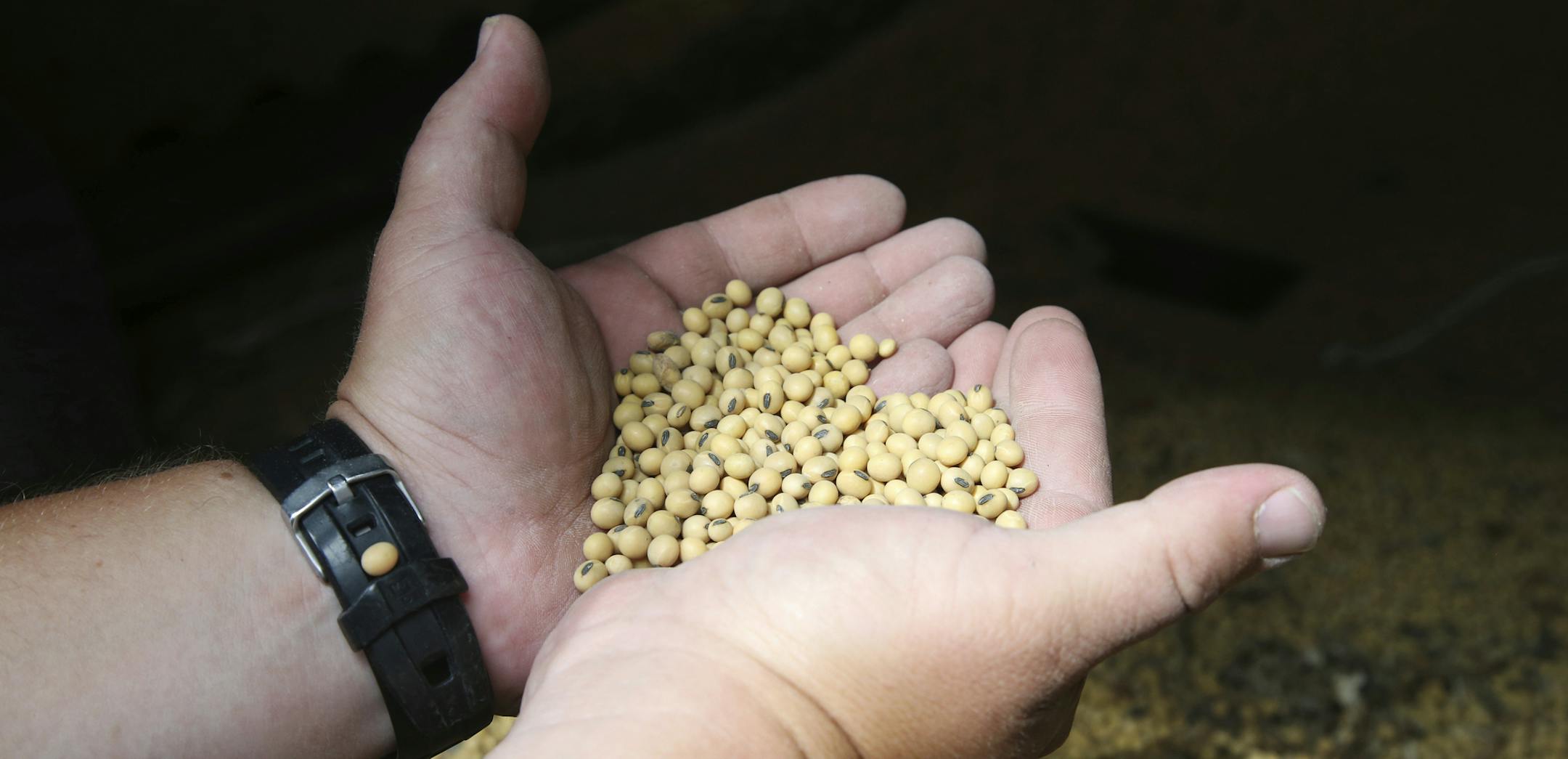
Now Trump is clearly looking for ways to limit the impact on American producers and consumers. But the bailout is a bad proposal. It sets an unsustainable precedent, creating expectations that other industries will be able to tap taxpayer resources to offset the cost of Trump's trade assaults. It also won't begin to mitigate the harm to farmers. This week, a Star Tribune reporter found a pair of soybean farmers who, between the two of them, have seen their crops lose $350,000 of value as China's retaliatory tariffs took hold and soybean prices plummeted.
One also must question where this money comes from. Congress appropriates money to federal agencies, usually with some purpose in mind. How was Trump able to lay hands on an unencumbered $12 billion? And what congressional directives will be left unfulfilled from the funds he is diverting to buy time with this nation's farmers?
Of course, there is the strong likelihood that the $12 billion itself is more Trumpian smoke and mirrors than reality. As Republicans and farmers alike pushed back against the notion of a handout instead of a solution, Larry Kudlow, head of the president's National Economic Council, quickly downplayed the figure. Kudlow told one interviewer, "I don't think it's going to get near to $12 billion. I think the sums are going to be much lower."
Trump has asked for patience, and as evidence that he is beginning to turn things around, pointed to a deal struck with the European Union on Wednesday. But that too requires close scrutiny. As with other "agreements" Trump has reached with North Korea and China, there may be less here than meets the eye. Many details have yet to be worked out.
Still, any rapprochement between this administration and Europe is welcome. For now, it does temporarily halt extra tariffs between the two entities as talks continue. Trump has backed off his threat to extend tariffs to automobiles. In return, the E.U. has promised to buy more American soybeans. Of course, there is good reason for that. The punishing level of Chinese tariffs has made devalued U.S. soybeans a bargain on the world market.


